
You Can Be Our Brother
Built on a robust theology of sexuality, Beyond Awkward Side Hugs casts a vision for strong, gendered relationships inside the church.
Reading Bronwyn Lea's new book Beyond Awkward Side Hugs: Living as Christian Brothers and Sisters in a Sex-Crazed World took me back to a precious moment in one of the golden summers of my early 20s. My family had become friends with a new family that moved into our church and our neighbourhood—dad, mom, two teenaged daughters, and an adolescent son—and the dad occasionally invited me to go boating with them between my sweaty weeks of laying sod. The friendship and mentorship I felt learning to drive a boat with him was an experience of Christian fellowship and joy, but the moment that Lea's book brought me back to happened off the water.
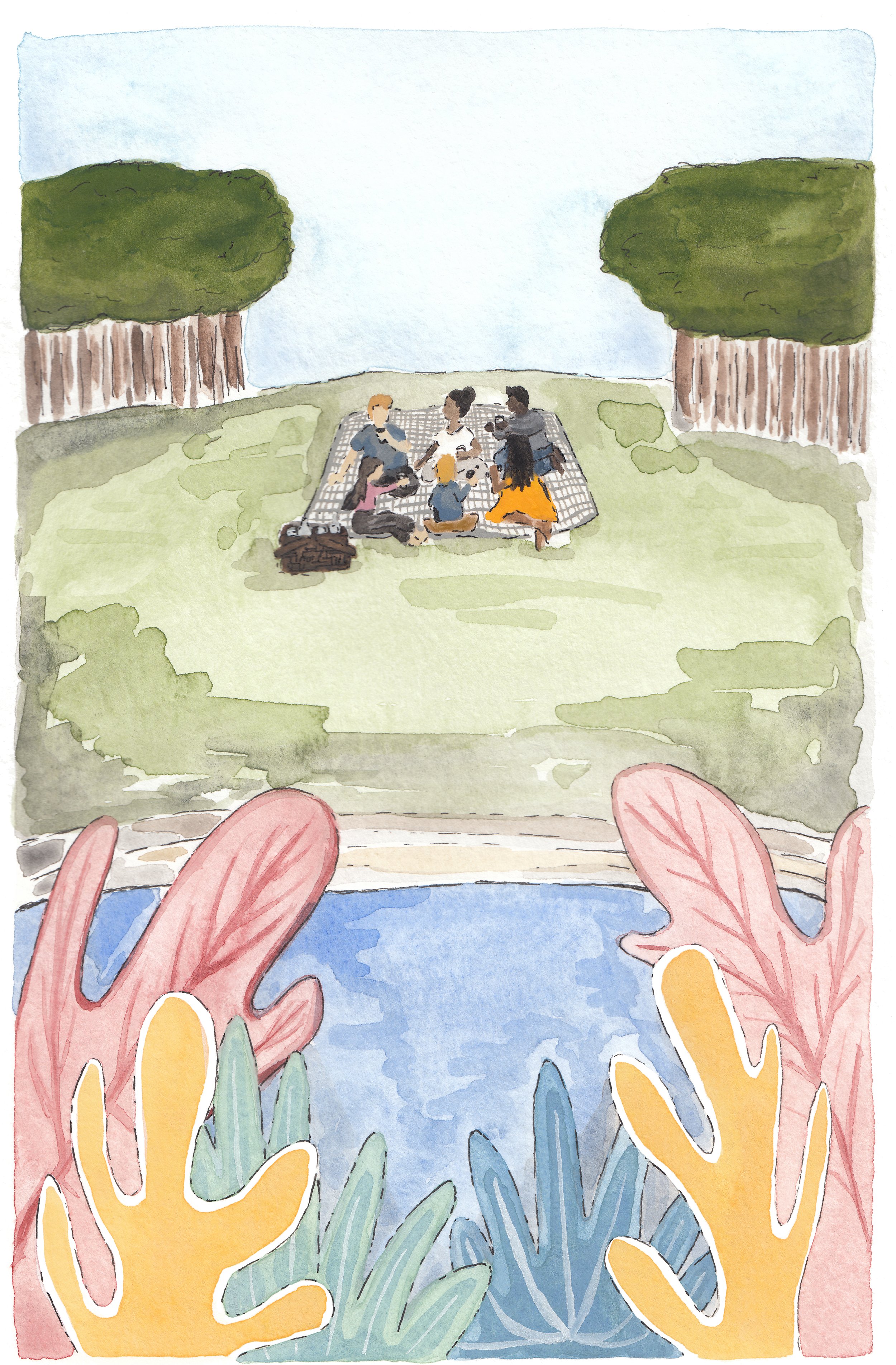
It was the kind of simple, profoundly awkward moment that Beyond Awkward Side Hugs treats with sensitivity and hope: I finished tying the boat up and came to join as the family crowded elbow to elbow around a picnic table for lunch, but the only available space was next to the two girls. I was a single guy, older but not much older, and...well, as Lea diagnoses in her introduction, "the world we live in is conditioned to see the erotic possibilities in any human interaction." What could I do except hover awkwardly, excluded, but at least innocent of anything that could be misinterpreted? Grace intervened when the girls made extra space for me, saying "You can be our brother! Come, sit here." I've never forgotten the transformative power of that simple invitation, which reframed how our interaction was gendered and folded me into the closeness of the family around the table.

In Beyond Awkward Side Hugs Lea challenges her readers in the contemporary church to take up the transformative power of being members of God's household. North American culture is suffused with stories glorifying eros, the passion of romantic love, and without a countercultural vision for other relationships between genders, our Christian communities tiptoe gingerly around them. There are plenty of resources to support Christian men and women in marriage, Lea points out, but although we want to live out all our relationships faithfully, we lack a blueprint for how to build strong, gendered relationships inside the church. Wesley Hill writes movingly in Spiritual Friendship: Finding Love in the Church as a Celibate Gay Christian, for example, about how his decision to remain celibate put him on the outside of a church life that orbited around the nuclear family. People left outside our normal relational blueprints can seem strange or mysteriously threatening, as Lea humorously observes: "if it's better to marry than to burn with passion, does that mean the unmarried might spontaneously combust?"
In the Gospels, Jesus issues his own gracious invitation that redefines the model of family for Christian community. Told that his biological family was looking for him, Jesus declared to those listening, "Here are my mother and my brothers! For whoever does the will of my Father in heaven is my brother and sister and mother." Lea tackles the consequences of this declaration with thoughtfulness and sensitivity. Beyond Awkward Side Hugs is built on a robust theology of sexuality, a biblically-informed understanding of what it means to be male and female, and applies that theology to immensely practical stories and questions that Lea has encountered during more than twenty years of ministry and pastoral counselling. The result is an effective weaving together of principles and practice, knowledge and wisdom.
Another strength of Beyond Awkward Side Hugs is that Lea does not oversell her message. It's one thing to use the language of family—and I've been in several churches that frequently do so—but one doesn't create family with a name, and practicing that kind of love is challenging. Addressing issues of sex and sexuality clearly, Lea lays out how this vision of Christian family has implications for marriage ("Is My Spouse My Sibling or My Soul Mate?"), friendship ("Can Men and Women Be Just Friends?"), pastoral relationships ("What About All the Horror Stories?"), dating ("Will You Drive With Me?"), and beyond. In each chapter she acknowledges the uncertainty or fear behind the questions and dynamics that make Jesus's call to Christian family a difficult, risky one to live out. However, Lea persuasively argues, there is too much potential for blessing in God's family not to pursue it: "We need not have fear-based, sexualized patterns of avoidance and hair-trigger regulation because we have the option to choose another pattern—a familial pattern with deep, rich, life-giving ways for us to love one another with a clear conscience." This takes shared theology and values lived out publicly, in practices of community that safeguard against abuse; Lea describes how her home church replaced all the solid wood doors in their offices with glass-paned ones to achieve "literal transparency."
That said, ideas matter as well as practice, and Lea's application of the concept of spiritual family rests in part on an idiosyncratic understanding of sexuality that she draws from Debra Hirsch's Redeeming Sex: Naked Conversations about Sexuality and Spirituality. The definitions that Lea quotes are worked out in the later chapters of Redeeming Sex, which unpack Hirsch’s concept of the "social sexuality" that "lies at the heart of all person-to-person interaction" with nuance and personality. In the context of Beyond Awkward Side Hugs, Hirsch's definitions accomplish their basic purpose for Lea of separating language about "sexuality" as a biological matter—being male or female—from "sexuality" as expressed in romantic intimacy, but they prompted more questions for me than they answered. Inspiring the courage to ask such questions is part of Lea's goal, though, and Beyond Awkward Side Hugs draws its readers into an important dialogue in contemporary Christianity that recognizes our embodied nature as human beings. After a history of looking away, we need to look directly at the presence of gender (my preferred term) in the Christian life, and perhaps now is the time: the COVID-19 pandemic kept many of us from being in proximity to our biological and spiritual families, and as we reunite, it's worth thinking deeply about the sheer physical pleasure of being together.

I'm not sure that the model of family for Christian community is as forgotten as Lea implies, but it's lost its saltiness, especially as we reckon with how real and hurtful the divides of race and gender are in our society. Seeing fellow Christians as "brothers and sisters" is supposed to overcome those divides, but too often it just veils them in platitudes. Most of Lea's examples sounded familiar to my experience in white Christian churches, and it struck me how much our racial divisions separate us from the spiritual truths that could help heal them. What would a book like this one look like from the perspective of the Black church in North America? When Paul writes about showing love among the Christian community, he describes the church as "one body with many members" (Romans 12), and admonishes his readers that love must be “sincere" or "without hypocrisy," depending on the translation. The only way for Christians to guard our sense of spiritual family from exhaustion and hypocrisy is to have a clear and expansive vision of the family of God. Here we experience intimacy that isn’t chosen by us or based on finding others like ourselves, but is transformed by being routed through Jesus: whoever is his mother and brother and sister is also mine.
I'm grateful to Lea's Beyond Awkward Side Hugs for articulating the beauty of that vision in such a practical, winsome way. For me, it takes my mind’s eye back to a small, crowded picnic table on a sunny riverbank.
Beyond Awkward Side Hugs: Living as Christian Brothers and Sisters in a Sex-Crazed World by Bronwyn Lea (Nelson Books, 2020)
Text: Joel Faber
Art: Becky Chai