
Within and Without
Editor’s note: Some of the images in this piece are higher quality than usual for web display, and loading times may vary.
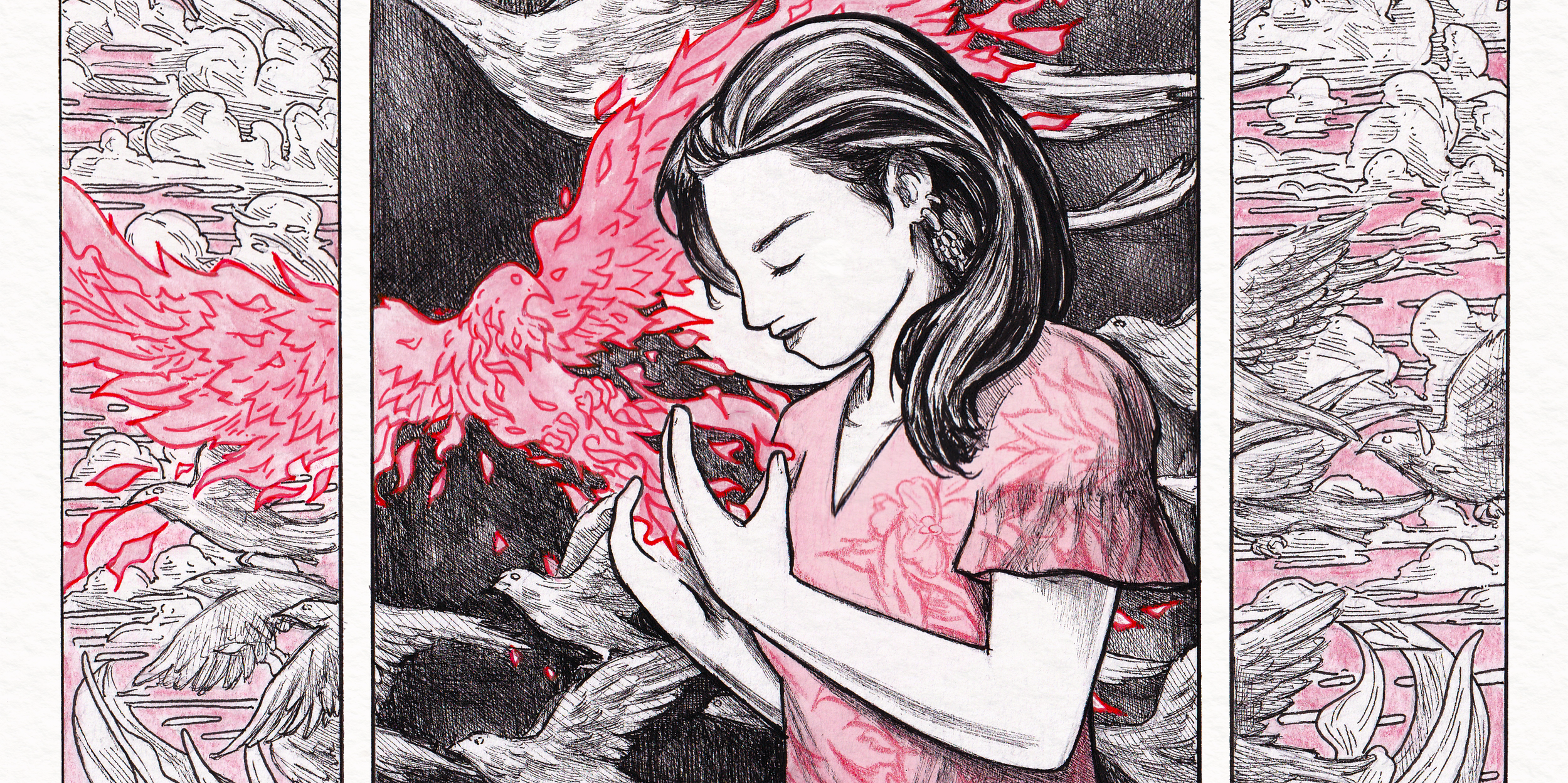
At the start of time the act of creation was cosmic in scope, the light overcoming the darkness. And so, it is similar with all creation subsequent. The mason and the rock, the potter and the clay, order overcomes the chaos of nothingness. In the beginning this was inevitable, for God, order is brought to nothingness because this is His character. Not so for us who are prone to chaos and confusion. This is our fall, we act not according to what we were made to be.
I’ve been drawing since I was a child. I have a long line of hidden and unhidden artists in my family. Some became professional in Asia. Paintings adorned the walls in the houses of my aunts’ and uncles’, along with their signatures in the corners. But they don’t talk about them often, it’s a gift of both joy and grief. My family tells the story of my father’s upbringing. My grandma would strike his hand for him to use the right instead of the left. Left-handedness is thought to contain some creative gene being mapped to the right hemispheres of the brain. But left-handedness is a burden to society, difficult to get around, messy, and unproper in proper professions. So, my father became right-handed.
“Son, you won’t make money as an artist, go into business,” my father tells me, “there’s nothing to be had here, no future, no utility.” I recall the paint in the studio of my art instructor and the smell of pine and turpentine. The floors would creak, the paint chipped at many edges, and light would fracture in through cracks in the windowpanes. Then they softly land on beautiful oil paintings, glazed and pristine, framed in twists and twirls of ornate gilded gold. My instructor cried, yelling to my father, “You’re wasting his gift! You are withholding it from the world!”
I became an accountant. I can still write with my left hand and eat with it too. I still draw sometimes. And within this “sometimes” is still the question of “what was I made to be?”
For us, every artistic endeavor is a battle of wills. Both within and without. Our creation is not inevitable. The artist must struggle against the material they have chosen, till in stages, the material is overcome to uncover the reality of the vision in the mind. How do I execute what I’ve envisioned mechanically? Where do I shade, what color, focal points? This is the struggle without. Then there is the struggle within. Why am I drawing this, what do I hope to uncover, what does this mean to me? In this way the artistic process is often painful because the artist leaves a part of themselves in everything they create. They aim to conquer the struggle within and without, to leave their mark on their creation. This is a loving painfulness because it gives itself over to what was made, a sharing of a part of themselves.
I don’t draw that often anymore: sometimes it’s too painful to face the struggle within. Too often the gift has been rebuffed, discouraged, unappreciated. Friendships had become cold, family members I had given artwork to had passed away. Others were perplexed why I had drawn them something in the first place, and didn’t know what to make of it. One told me, “it’s just not very good.” I resigned myself to draw sparingly, to hide this part of myself which had little utility; my world and my art would remain insular to save myself from any grief or rejection.
Then I had fallen in love, and every gift felt like it had no cost. My vision of the world expanded, and I was encouraged to be all I could be, art and all. Poetry, music, art—accepted! Loved! What a marvelous return and exchange. Now the world was bright with possibility, and there was no need to hide. Even so, just as in the fall of that age long ago, this light turned to darkness. I felt all my possibility now ended: the world has narrowed, and there is no vision. Unfinished now are hundreds of pieces. Stories that are ended, sketches that didn’t come to fruition, cards and gifts that remain unsent and ungiven. Friends no longer friends, even the dearest, family that seems no longer to be family. If my art had parts of my soul poured into them, like the birth of creation, then these are all little deaths.
We gift ourselves in relationship with others, and art is an extension of such a gift; in its severance, we die. For a part of us is found in our lives with others. In an age of commodification, we like to think of people as replaceable, but they are not. The solution, of course, is not to love. Don’t draw for them, don’t let them kill parts of who I am, I told myself. Hide myself away so that I am unseen. Perhaps that is better.
The battle within makes it difficult to continue. Does a good work last? Was it beautiful if things have died or passed away?
I thought I would never draw again. But I feel that drawing this would be meaningful: it’s for a friend from my house church and she’s leaving the country to care for her aging parents. She’s been such an integral part of our church group. She cooked with us, cried with us, and she prayed for us. She cried for me. She prayed for me. She’s strong but also full of fears too, leaving all her world behind to go back to India. In a way Toronto is all she’s known for so long. She’s built her whole life here; she’s given up so much to be here. She asks for courage.
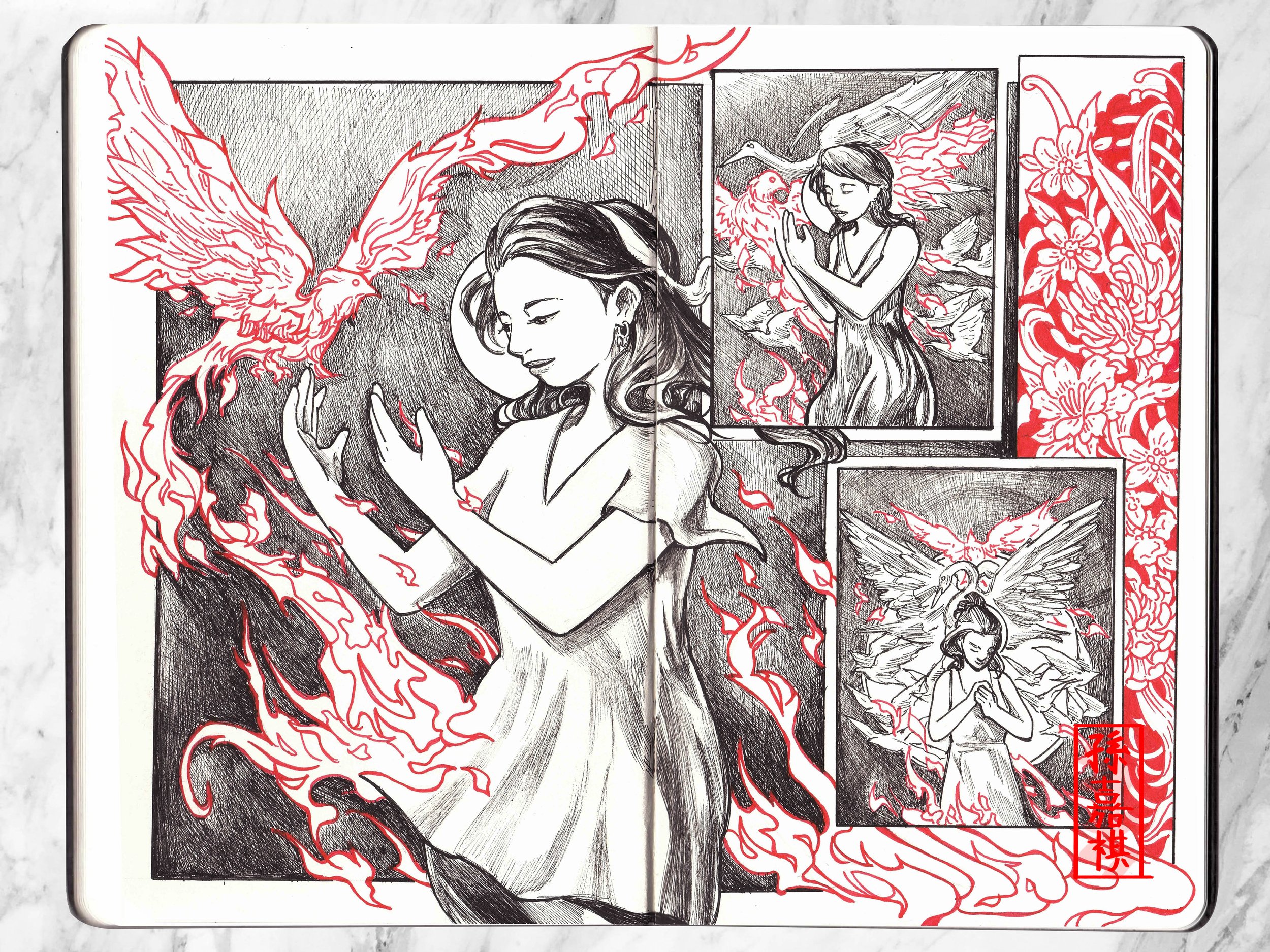
Courage. That is the vision to be uncovered. That is the essence of the image to be drawn. This is the battle within for my friend. It is also the battle within for myself. An artwork becomes a faithful thing when it externally overcomes the battle within and without, it then portrays what it’s supposed to in its essence. Nineteenth-century poet Gerard Manley Hopkins called this essence “inscape” and described it as “the very soul of art.” One can take a photo of a room, and perhaps bland white, fluorescent lighting is certainly best if you’d like to see all the details. No corner will be left untouched in the harsh light. But to truly capture the inscape or the soul of the room, the way the light dances off the cracked windowpanes, the smell of pine and turpentine, the creak of the floorboards, and gilded gold shining—no, a normal photo won’t do, not with such sterile dead lighting. You’d need to frame it well, perhaps focus on the way the light bounces off the pencil shavings on the floor, showing just a corner of an ornate golden frame. That would show how the smell of pine rises from beneath, the toil and work of years and oil smears, then eyes rise above to something glorious.
Where inscape is the soul of art, “instress” is the process of uncovering the soul. It is also the process of becoming. Because the world is governed by relationships, the uncovering of the soul never occurs solely internally, or in stasis. But one changes, slow as the growth of a watered seed or fast as the stars shine to twinkle the eye. Instress is a loving process because the uncovering of the soul nurtures and allows inscape to change the self. It has been said that artists are all romantic because they pay attention to the things only a lover would. They understand that love and the object of love is never isolated, for we can only describe love in its context. To poets like Shakespeare, the lover is like a summer’s day; to Browning, she is an olive; to Donne, she is abundance. To the Psalmist, God is good, He is love, He is justice.
Van Gogh saw this also. He’d sit and paint for hours and days, the same wheat fields, the same wheat sheaves, rain, snow, sunrise, and sunset, until he felt he had captured the soul of what it was. Until within he too was as calm as the wheat fields he saw without, and until the white canvas was flecked with delicate colors and swirls. Till the dabs of lucid colors moved to show the beauty of deep-down dappled things. At last, when the inscape of the wheat fields was finally portrayed, then his task felt finished. The external calmness and its inscape has been captured and transforms him.
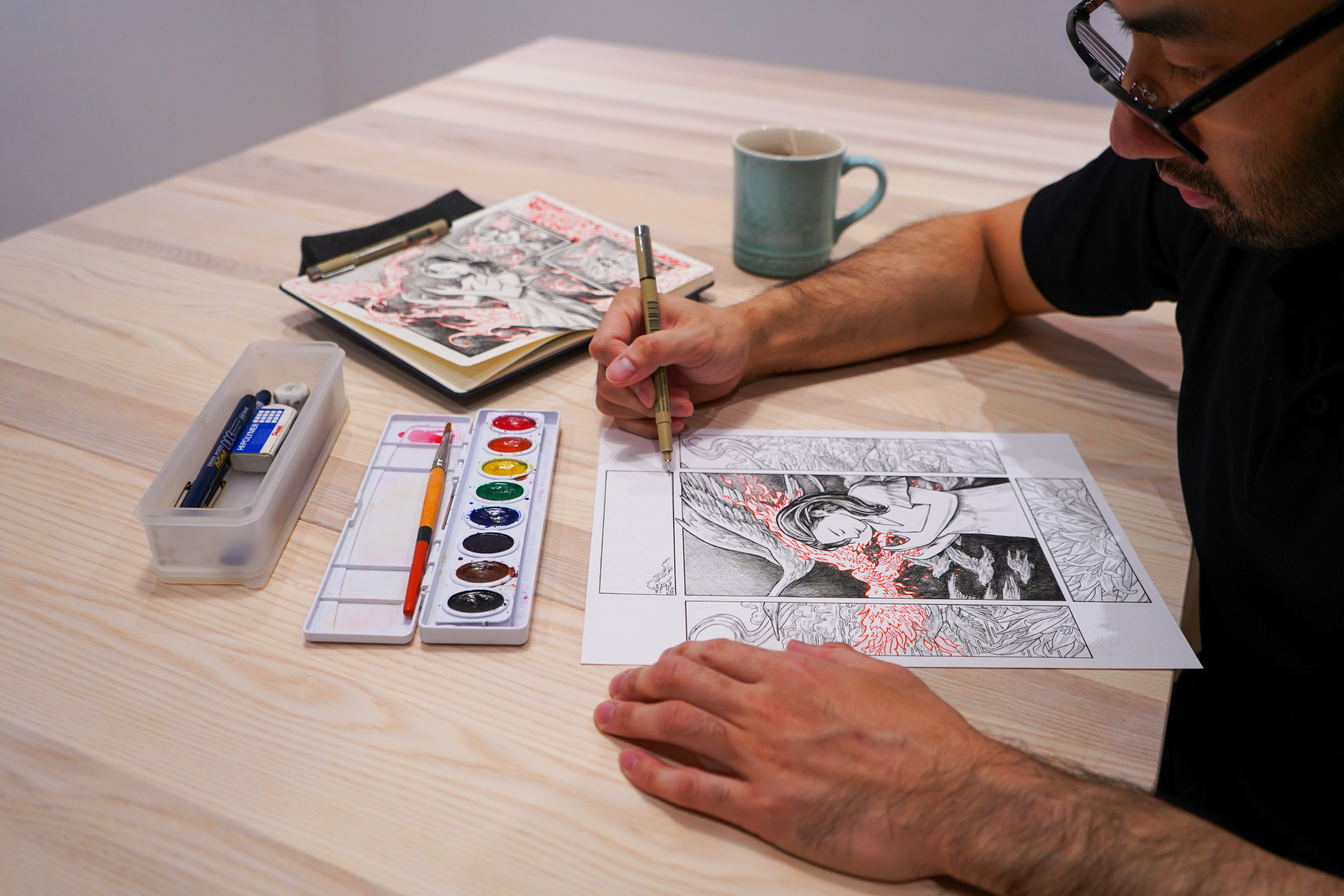
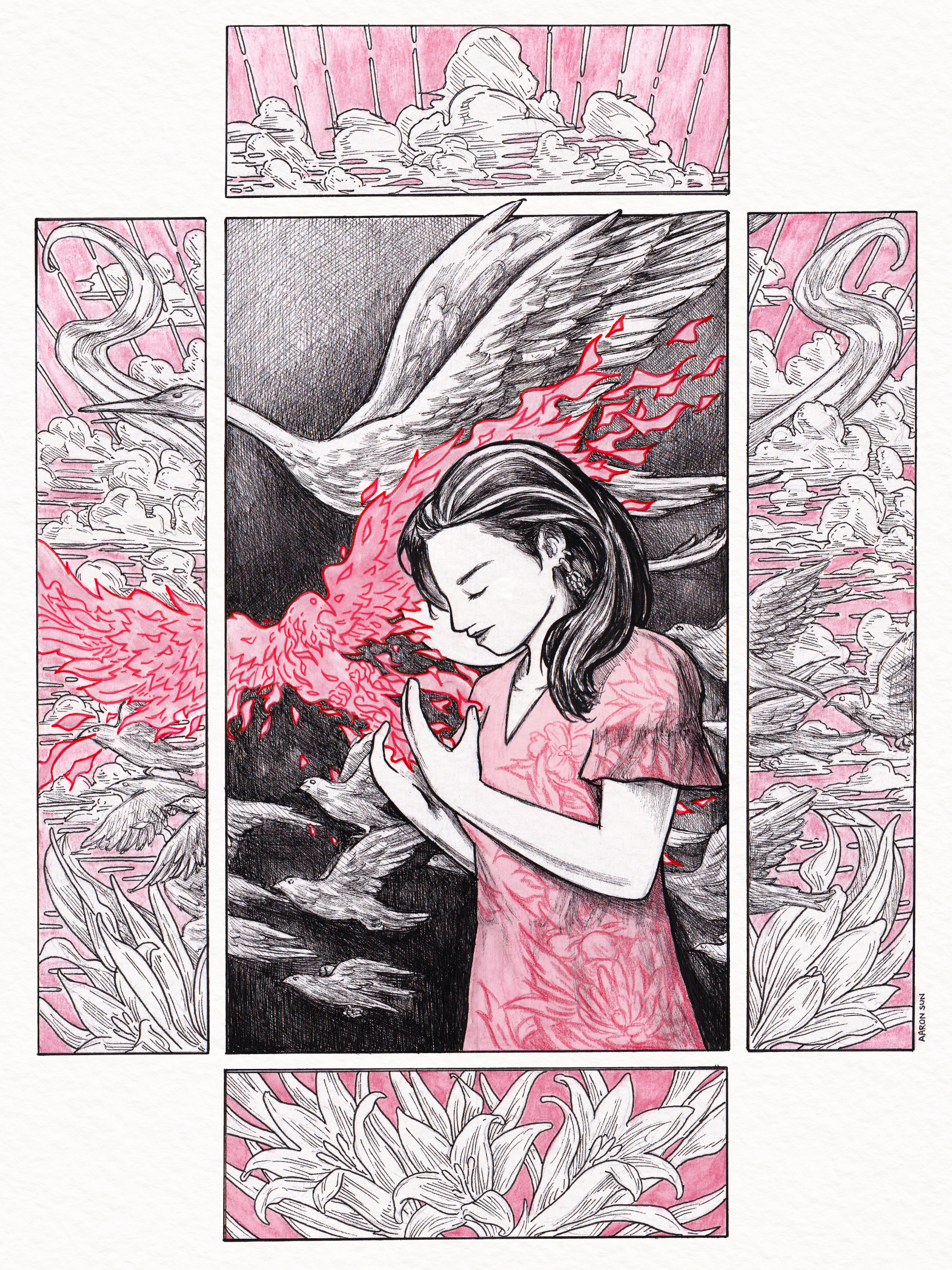
The battle without starts the artwork, at least in the physical realm. It always starts the same, the paper is blank. Thumbnails (small compositional sketches) and drafts are drawn and refined. The pencil is brought to the paper, and order is beginning to be brought into chaos. It is carved out of chaos, as an uncovering and revealing of a vision underneath. What is courage? It is a peaceful thing, it musters forward in the face of adversity, and so it’s also violent. It forges forward in the presence of wounds, of war, as through fire. From out of the dark depths of void and nothingness, as in a wilderness, it flames out of ashes, a Spirit over a watery deluge.
Courage is serene, peaceful in chaos, and without timidity, a humble power. It looks forward and orients itself to a red dawn, a hope of new beginnings even if new beginnings are tinged with the grey of stormy clouds. Courage is also not alone, it cannot be alone, for fear cannot be conquered in loneliness. It is surrounded by community and by the Spirit. The same Spirit over the void, over the flood, that leads into the wilderness, that gives life and creates with power. No, it is never alone.
Courage is also part of the character and the heart of God. Who gives without expectation, and with the expectation of grief. God who creates knowing that creation will be marred and decay through gifts misused and abused. But it doesn’t stop God who knows that creation destroyed will be made new again. As for me, I am not God; the struggle within and without is continual. What if we’re no longer friends in the future, and what if our house church dissolves? Or what if by some power of my own paradoxical prayer she stays? What if I mess up and this drawing is terrible, surely it won’t be appreciated then? Then all this effort would seem such a waste. But this is what courage is. It gives even if it might break, even when it has been broken, even when it hurts. It puts a pencil to the blank page of chaos and begins.
Text & Artwork: Aaron Sun