
What a Christian community in the Alps taught me about living in Toronto’s hustle

I woke from a deep slumber, temporarily at a loss for where I was. The room was dark and silent, except for soft breathing from the bunk beds. Outside the window, silvery fog was slowly rolling in this early November morning in 2018. I could just make out the snow-covered mountain peak, shaped like the slanted roof of a house. Soon the fog—a thick, cotton blanket—covered it and the sleeping village below. I lay there, relishing the moment of stillness.
At 8 a.m., the sound of a cowbell echoed throughout the floors of Chalet Bellevue, announcing that breakfast was ready. Approximately 20 people filed into a family-style dining room and settled around several tables. Over the fragrance of homemade bread and freshly-brewed coffee, conversations flowed easily -- especially as cellphones were absent from the table.
My friends and I had travelled by plane, train and bus just a few days earlier to the remote village of Huemoz, Switzerland. We’d come to stay at L’Abri (French for “The Shelter”), a cluster of chalets founded by Francis and Edith Schaeffer some 60 years ago for those seeking answers to their spiritual and existential questions. L’Abri visitors reside in a four-storey house called Chalet Bellevue, living dormitory-style for the length of their stay. Without the technological amenities of internet or wi-fi, visitors adhere to a structured daily schedule, including both work and study time.
After each day’s breakfast, everyone is assigned either work or study until lunch. Though Switzerland is an expensive country to live in, and L’Abri operates entirely on donations, visitors are charged only about one third the normal rate of accommodation. To help keep the costs down, everyone takes turns doing chores such as cooking or cleaning, and L’Abri lives frugally, reusing or recycling everything it can. It’s not a hotel so much as a home, and visitors are not guests so much as they are family members.
On this particular foggy morning at L’Abri, I was to help with making lunch—the traditional Eastern European dish of cabbage rolls. Joining me in the kitchen was Justin, a tall, athletic 30-year-old American who’d been staying at L’Abri since September. Just the day before (one of the two days in a week where everyone had the afternoon off), Justin had disappeared for six hours to climb one of the mountain peaks covered in waist-deep snow. Now, while we peeled the cabbages, he began to let his story unfold.
Justin grew up in the Midwest as one of six siblings, yet never felt quite close to them. After high school, he worked in construction. For the next decade, his job took him to many different places across the United States. While the labour was hard, he was making a handsome amount of money.
“At first I really enjoyed it; it felt good to be making money and seeing different places. But it soon got old. I was moving every five or six months but didn’t know where to call home. My friends came and went, and I never had a real community.”
“Is that why you came to L’Abri?” I asked.
“Yeah,” Justin continued. “All the time I was spending money and moving further and further away from God. So, I came to L’Abri to experience what it’s like to live in community, like [Dietrich] Bonhoeffer said: ‘Doing life together’. When I eventually move back to the States, I want to settle down somewhere, with a good community of Christians, where I can call home.”
Like Justin, many of the people I met at L’Abri—across all ages, occupations and nationalities—came here seeking; some staying for just a few days and others for several months. Whether they sought an experience, a sense of belonging, help to discern the next chapter in life, clarity for their calling, or reprieve from hurt and pain, they all came seeking God. And God would meet them here—in the Swiss Alps.
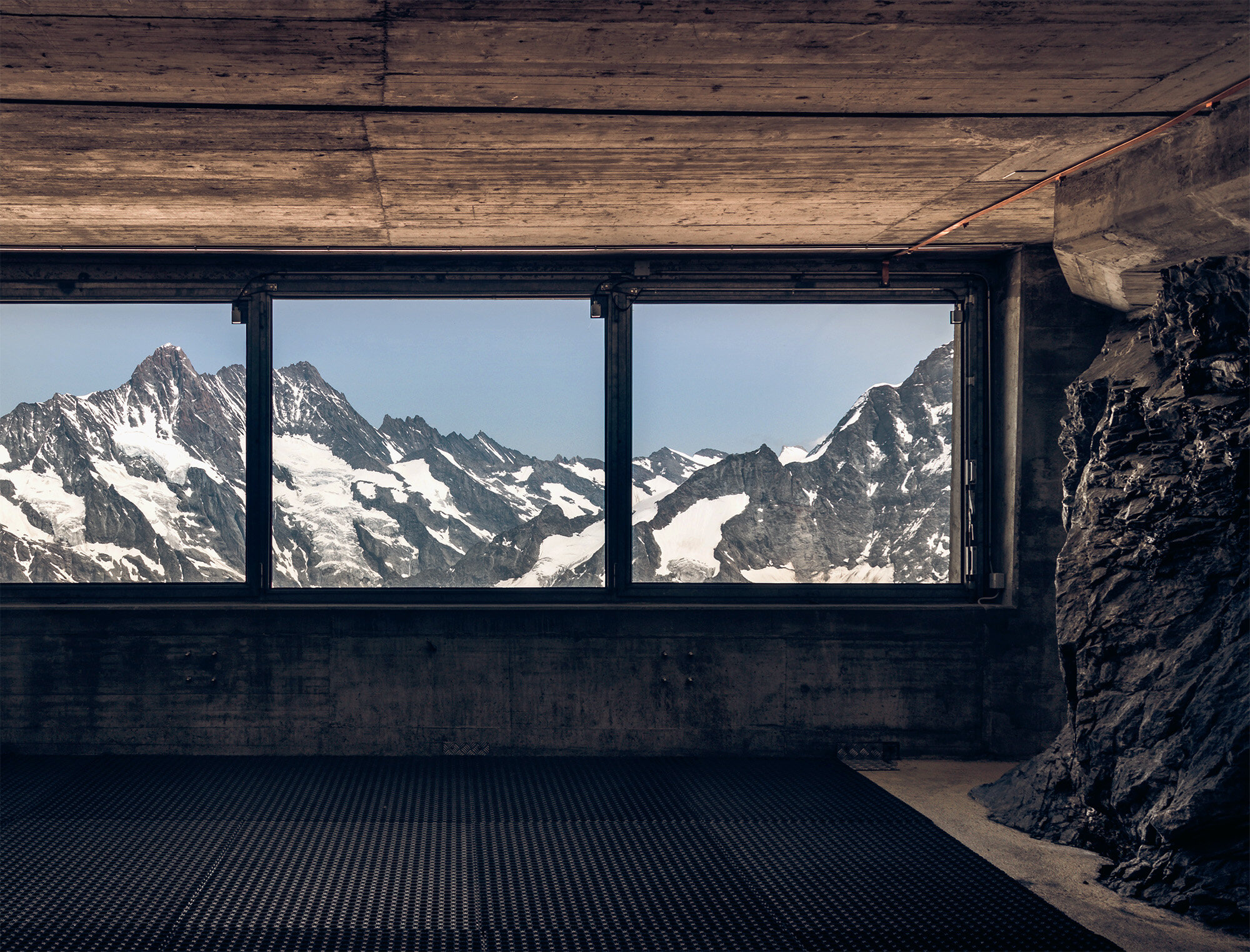
After lunch, I made my way to the chapel across the road from Chalet Bellevue for my afternoon study. The main floor of the chapel featured an impressive side of windows with a panoramic view of the mountain peaks, while the basement housed a library with books and audio recordings that people could borrow. By this time, the fog had dissipated, revealing a brilliant blue sky. Dents du Midi, the seven-summit mountain nestled in the Chablais Alps, stood magnificently, its snow and rusty rocks sparkling under the sun. To my left, a couple of people who had been assigned work duty were picking tiny flowers from the shrubbery to be used as decoration for the dinner tables. On a gentle slope in front of the chapel, a tabby cat stretched out lazily.
A cup of hot tea at hand, I settled on a couch with John Piper’s book, Desiring God, feeling excited for the next three-and-a-half hours of uninterrupted time. Initially, I had been nervous about how I would fill up this long stretch of time without access to my phone, but these Luddite hours quickly became one of my favourite things about L’Abri. Technology is supposed to engineer inconvenience out of daily life, giving us more time to do what really matters. Instead, it often ends up keeping us too distracted, hijacking our time like a modern-day Screwtape. As a result, our attention spans get shorter and shorter, our thoughts too jumbled to perform any deep thinking. By removing these distractions at L’Abri, I was able to focus on just one thing and give it my full attention. As I read and ruminated on scripture, time seemed to expand, and God’s Word came alive. “Delight yourself in the Lord,” I read from Psalm 37:4, feeling unbridled joy and peace.
I wasn’t the only one enjoying the benefits of being unplugged. Later that evening, I sat in the living room with others and chatted about this unique aspect of life at L’Abri. The absence of distraction not only gave us back the time it usually stole, but more importantly, it gave us time for each other. Like Justin, we all had our life stories, but we wondered: beyond L’Abri, how would we get to tell them? How would we give others the time to tell theirs? In fast-paced cities like Toronto, everyone is always rushing off to the next thing. Our interactions start with “How are you?”, and curtly stop at “I’m fine.” At L’Abri, away from the anxiety of fearing that we were not doing enough, away from the weight of carrying our status around as a visage, we were unhurried and uninterrupted, and people were finally seen.
It’s been almost a year since our brief stay at L’Abri, and I often reflect on how the experience has fundamentally changed how I spend my time. I used to pride myself on my productivity: the more I could get done in one day, the more accomplished I felt. Now I choose to do less but focus on the intention behind each task and pour more care into it, putting away my phone while doing it. I host more spontaneous gatherings as a way to spend more time with others, hoping to create the sense of deep community I experienced at L’Abri.
For us in this city, there may always be an ingrained tension between our desire for deep community and the pressure of achieving more, but at least for a few hours, I’m learning we can break bread and hear each other’s stories.
Even in Toronto, there are Luddite hours to seize and spend.
Text: Suzie Wang