
The Coming Day
The following is a work of fiction based on a real situation which occurred in Toronto on Easter Sunday, 2020, at a downtown grocery store.
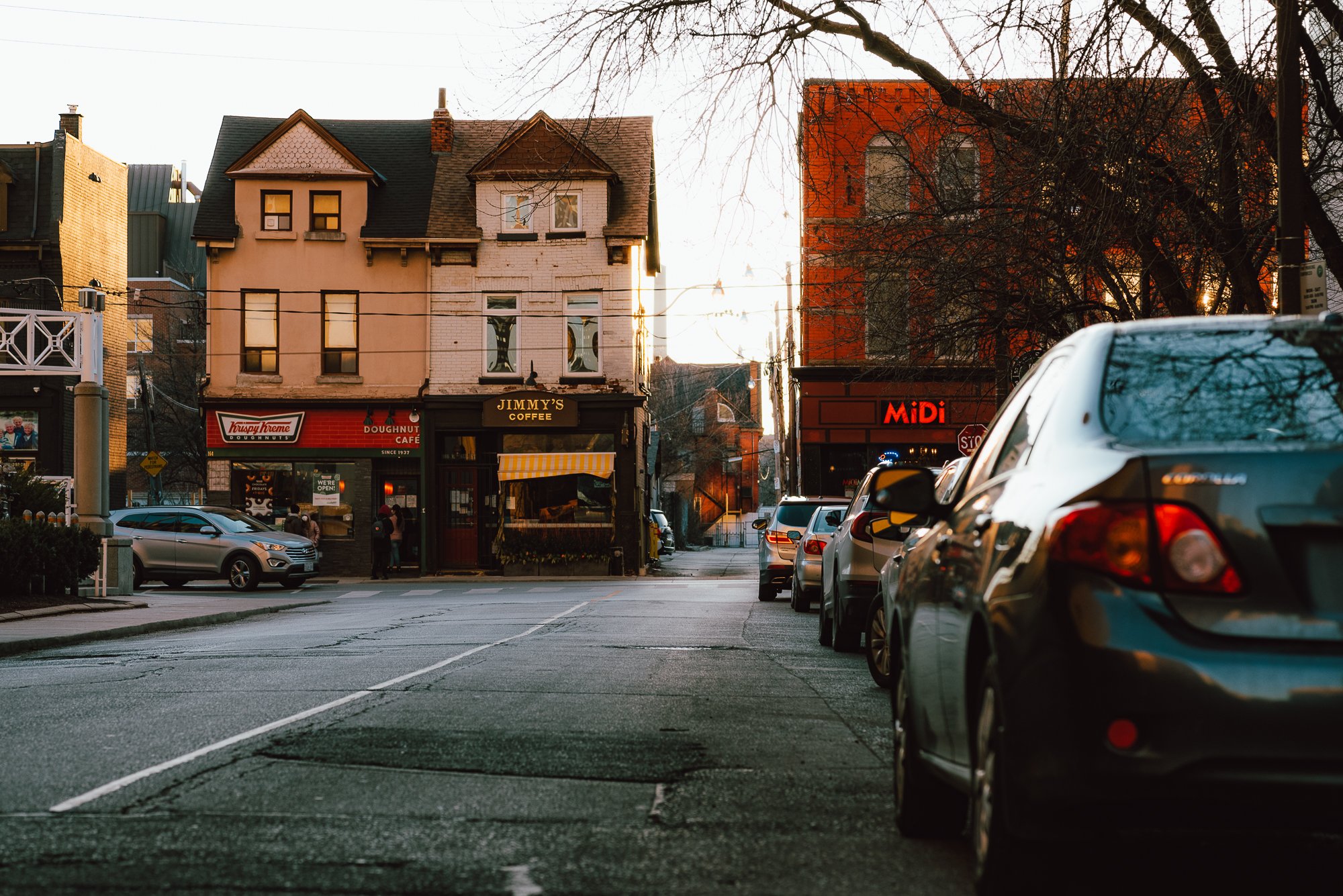
Sunday 9:42 am
David got out of bed and stretched. The sun had broken through the clouds and was streaming through the window, just reaching Jessica’s face as she slept. She was snoring faintly, her phone beside her head on the pillow.
As David brushed his teeth, he opened the window and felt a chill breeze. People will have no problem staying inside today, he thought, shivering. He looked at himself in the mirror. It was Easter Sunday.
On his way past the bedroom he considered making Jessica join him on his walk—the day should be observed somehow—but she was still sound asleep. He grabbed his jacket and left the house quietly.
Outside, the gardens on his street were dotted with yellow and purple flowers, seemingly unaffected by the cold. He thought of his mom’s garden up north—nothing would come up there until May Two-Four, maybe later. He realized he should call her; the emergency order would be hard on her today. He wondered if he should tell her what he’d heard about churches starting to livestream their services due to the pandemic. He doubted hers would do that kind of thing. Then he considered that she would probably nag him to watch a service himself, and he didn’t want to set any precedents.
At St. Clair Ave, he made a last-minute decision: instead of turning right to get a coffee, he turned left and headed east. When he reached St. Michael’s Church, he paused and looked up. It loomed before him, silent and still, like a disappointed grandparent.
He ascended the steps and placed a hand on the locked front door. He remembered Easter Sundays from his childhood: the stiffness of dress shirts and “good” shoes; the overpowering scent of Easter lilies in the narrow church lobby; the clear sound of the trumpet in all those dramatic hymns.
Low in the grave He lay, Jesus my Saviour
Waiting the coming day, Jesus my Lord…
He remembered the Easter egg hunt after service on the church lawn: the promising glint of pink, purple and gold in the grass, and the satisfying feel of his pants pockets afterward, stuffed full of chocolate eggs.
Thursday, 8:15pm
Three days earlier, the Forest Hill Loblaws had been busy all day. It would have been like any other Thursday before a long weekend, except that today some shoppers wore masks. Others clenched their carts with gloved hands, navigating the store as if it were a minefield.
Bonnie sighed. She had begun her closing duties an hour early tonight, beginning with the most casual walkthrough she could muster under the circumstances. She made notes of inventory, straightened products on shelves, smiled at customers as she passed them in the aisles. Most of them avoided eye contact, seemingly trying to melt into the shelves to keep their distance. She walked on, reminding herself to focus on what she could control.
She closed the checkouts one at a time, counting the tills with each cashier in the office. She made sure that the numbers balanced and locked the cash in the safe. Then she thanked each person for their work and sent them home.
Now, long past the time when the store should have been closed, she was stationed at the escalator to let customers out and lock the doors again behind them. She shifted her weight; her back ached. She watched Gina working cash number one and the customers waiting for her, stubbornly ignoring the self-checkout kiosks at the other end of the store. She closed her eyes and willed the day to be over.
“Hey, Bonnie!” exclaimed a cheerful voice. It was Ricardo, one of the store cleaners, strutting towards her with his arms spread wide. For a moment she was afraid he would hug her. “Happy Easter!” he exclaimed. He’d recently begun chatting with her before starting his shifts.
Left to his own devices, Ricardo would work with customers still in the building—singing hymns while breaking down cardboard boxes, cleaning the courtesy washroom with the door wide open. A month ago, Bonnie had asked that he wait until the store was fully closed before beginning his duties.
He continued to arrive early since then, striking up conversations with customers in the aisles, or with delivery people in the dairy section. Last week she found him leaning against the bunker of yogurt on sale. When she asked him not to fraternize with customers or vendors, he’d laughed then said with a grin, “Okay, Bonnie. You’re the boss!” She couldn’t tell if he was making fun of her or not.
Now he was telling her about the seniors’ home he worked at during the day. “There’s no celebration in their lives,” he said, shaking his head. “That’s why they go downhill. And now it’s worse—everyone’s afraid, everything is cancelled. How are they supposed to know what day it is?” He clicked his teeth. Bonnie looked over at Gina’s cash. She had three customers to go.
“So, on Easter Sunday I’m going to bring them fruits,” Ricardo continued. “The sweetest ones. Mangoes, pineapple, papaya. But…not from here. No offense, Bonnie, but the fruits you sell here, I don’t know where you get them from—they’re dried out. They should be juicier. There’s a guy uptown, he sells everything fresh and cheap, he’s getting a shipment on Saturday night. I’ll get some fruit and bring it home before I come to clean the store. I gotta work quick on Saturday so I can watch the midnight vigil online. That’s my plan, so I can see my seniors Sunday morning.” Bonnie studied his clean-shaven face, his laugh lines and bushy grey eyebrows.
“I gotta see my seniors,” Ricardo said, winking at her.
“You can start work now,” she replied, looking away.
Sunday, 10:18am
David was on his way home from his walk when he noticed movement at the Loblaws across the street. A woman was leaving the store, pulling a grocery buggy behind her. He paused to watch her drag the rattly cart along the sidewalk. A moment later a man left the store carrying several shopping bags in each hand. He was bald and strikingly tall. Despite the bags’ weight, he walked at a leisurely pace, as if out for a stroll with his grandmother. That guy is ripped, David thought as he watched the man approach him. Just before the man passed, David called out to him.
“Hey bro, is the store busy?” The man shook his head as he passed. “Nobody there,” he replied. He turned down a side street and disappeared.
David stared after him for a moment, then his eyes drifted back toward the store entrance. He slowly processed what he was seeing. There was no security guard at the door, no line-up of customers waiting to get in. He suddenly remembered hearing on the news that all grocery stores would be closed on Friday and Sunday of the Easter weekend to limit transmission of the virus. Then it dawned on him: The store is open, but everyone thinks it’s closed. He crossed the street and hurried toward the entrance.
Once through the automatic doors, he ran up the escalator and took stock of his surroundings. The store was fully lit, but empty. Music was playing on the sound system. He could see a couple at the far end of the produce section, but no employees. He hurried to the healthy section, grabbing two bags of Jessica’s gluten-free bread. He got his favourite cookies and a carton of milk. Then he headed for the checkout, reaching for the cash in his pocket. He stopped short when there wasn’t a cashier in sight.
Maybe the self-checkout kiosks are open, he thought. But when he got there, the display on every monitor read “Closed.” Goosebumps formed on his skin. It’s like Zombieland, he thought. He glanced at the exit: no one was there. He could be out in twenty seconds. His heart rate quickened as he looked around to make sure he was alone. His eyes fell on a nearby display of Easter eggs, baskets and plastic grass. He stood still for a moment, cradling the groceries in his arms. Then with a feeling of emptiness, he laid them down beside the display and turned toward the exit.
Just then the couple from the produce section came out of a nearby aisle and stopped, looking at him.
“Hey guys,” he said, blushing. “Do you know what’s going on? Is anybody working?”
The woman shook her head. “This place is supposed to be closed. We actually just called the police.” David felt a wave of relief, and of guilt.
“I saw a guy leaving with a lot of bags,” he said quickly.
“The tall one? We saw him too,” the guy replied. “He said he was shopping for his mom and would come back to pay later. I don’t think he was trying to steal.”
The woman rolled her eyes. “Please. It doesn’t matter who he was shopping for. Anybody can be a thief.” David looked away.
As they walked toward the entrance, David noticed a bearded man sitting on a bench near the escalator. He was looking down, with one hand placed in his lap and the other clutching a grocery cart, as if clinging to the treasure inside. As they drew near, David could see a mass of items in the cart which must have taken the man some time to collect: various cans and dry goods, cartons of juice, a potted Easter lily.
“He was sitting there when we got here,” the woman whispered. The man was wearing an old winter coat which had likely been blue at one point, now bleached by the sun into a dull grey. There was something hopeful and patient in the way he sat, and David felt a sudden kinship with him.
“Sir,” he said, clearing his throat, “the store is closed.” Slowly the man lifted his head and fixed his watery blue eyes on him; David’s heart lurched. Then he reached into his pocket.

Friday, 11:51am
On the morning of Good Friday, Alison forced herself to revise her monthly budget. She stared at the numbers, bereft of inspiration. The hours were crawling by. Her son, Thomas, had left the TV on some random channel when she’d sent him outside; a gospel concert from last year was being rebroadcast. A soloist in a purple robe was clutching her microphone with both hands, her eyes closed.
Vainly they watch his bed, Jesus my Saviour
Vainly they seal the dead, Jesus my Lord…
Seeking distraction, Alison clicked on the Instagram video that Jessica had sent her at 4:37am, with the following message: “I want us to start doing these when the salon re-opens.” It was a montage of before and afters, various cut-and-colour jobs done by a stylist in Florida. Alison sighed. Who cares about social media presence when we’re not even working?
She was halfway through the video when she heard a familiar grating voice downstairs. “Get away from there—you’re provoking him! Hey! Hey, you—look at me!” Alison groaned and shoved her feet into her sneakers.
When she got down to the front porch, her landlady Edwina was leaning on her walker, looking intently at the chain link fence which separated her property from the neighbour’s. On this side of the fence, Thomas stood completely still, transfixed by the neighbour’s German shepherd. On the other side of the fence, Rocky was barking as if to earn his next meal.
Edwina wheeled around to confront Alison. There was a vein bulging in her forehead. “Your son is aggravating that dog. Look at him! Anything sets him off. The owners let him bark all day, they don’t care, but the rest of us have to listen to him. Tell your son to stay away from him! Anyway, he should come inside, it’s cold out. He should be doing his schoolwork.”
Alison’s jaw tightened. “He can’t spend all day on the computer,” she muttered. “He needs some fresh air.” The truth was that Thomas’s screen time was largely spent playing Fortnite. Alison felt guilty about this but didn’t see much alternative. She felt hopeless about her role in his remote learning, overwhelmed by the assignments in his virtual hub. She herself lacked the motivation to create rhyming words at the Pre-Primer level (how do you find a word to rhyme with ‘a’?!) and to put each one in a sentence.
“Send him to the playground!” Edwina exclaimed. “Let him run around a bit. Boys need to let off steam, they can’t do their schoolwork if they’re sitting still all day long.”
Why can’t you mind your own business? Alison screamed inwardly. “The playgrounds are closed,” she finally managed. She called for Thomas to come in. He didn’t move.
“Too bad he doesn’t have a father to throw a ball with him,” Edwina said, shaking her head. This was a new low. Alison recalled an evening last summer, after she’d met Neil online. He had taken her and Thomas on a picnic, and they tossed a frisbee around. After they’d said goodnight on the porch, Edwina came out and asked who he was. Alison had made the mistake of telling her and endured a tirade about meeting men on the Internet. “Don’t tell him your bank PIN. You can’t afford to lose any money!”
It didn’t work out with Neil.
“Thomas!” Alison shouted. “INSIDE. NOW!” Then she turned abruptly and went inside.
Sunday, 11:02am
Bonnie could not stop shivering, though the heat was on full blast in her Mazda 3. The sound of the forced air filled her ears as she clenched the steering wheel, waiting for the light to change and staring straight ahead.
After showering that morning, she had checked her phone and seen four missed calls and a text message from her boss, Gloria. “Store is unsecured, people inside. Police on their way. Please go immediately, call once you get there.” So much for her Sunday off.
Now as she entered the parking lot, she could see a police cruiser pulled up to the entrance. She parked her car, steeling herself for what she would find inside. The automatic doors opened to reveal a working escalator. She stepped on and tried to steady her breathing, wiping her palms on her jeans. Music was playing on the sound system, but she didn’t recognize the playlist.
As she neared the top, two police officers came into view. They were chatting from a distance with a man and woman.
“I’m the manager,” Bonnie said weakly, stopping six feet away. “What happened?”
The first officer put his hands in his pockets. “Did you close the store last night?”
“Yes,” Bonnie said.
“Was anyone else with you?”
“One cashier was with me after closing. After counting her till, I sent her and the security guard home; I did the final lock-up myself.” The officer raised his eyebrows. “I followed our standard procedures,” she said, stiffening. “Everything was shut down and locked.”
“Anyone else have access to the store last night?” he asked. Ricardo, Bonnie thought. She felt a wave of nausea.
“Our cleaning staff work overnight,” she replied. “I didn’t see the employee who was scheduled for yesterday, I’m assuming he came after I left. I’ll check the security footage.” She paused. “Has there been any…any...”
“We did a quick inspection. No major theft or damage, as far as we can tell.” Bonnie processed this slowly.
“We arrived twenty minutes ago,” the second officer explained, nodding at the man and woman standing nearby. “Saw this couple here. They say they saw another four individuals in the store. He’s the only one left.” He jerked his head to the left and for the first time Bonnie noticed an elderly man sitting on the courtesy bench, holding onto a grocery cart filled with items. He was looking down at his shoes.
The man of the couple spoke up. “Two people said they’d come back to pay for their groceries. One was a food bank employee—she gave me a list of what she took, and included her contact info. Here,” he said, lunging forward to hold out the paper. Bonnie accepted it mechanically.
“And that gentleman over there,” he continued, lowering his voice, “I don’t know if he understands that the store is closed. We tried to explain it to him. The last guy we talked to felt bad for him, so…he gave us this to give to you.” He leaned forward and reached out his arm again. Bonnie looked down at what was now in her hand. It was five twenty-dollar bills.
Sunday, 11:05am
At first Alison thought the voices were coming from Thomas’s game, but then she realized there was an argument happening in Edwina’s apartment. She put down her coffee cup and listened.
The first voice was a man’s—it began in a low tone, then was interrupted by Edwina’s shouting. The man shouted back, then all was silent for several moments. Just when she thought it was over, she heard Edwina screech, “Just do what I say!”
“You’re impossible!” the male voice stormed. A few moments later there were heavy footfalls on the stairs, and a knock at Alison’s door. Thomas stopped playing and turned to look at her. She walked to the door, putting her hand on his shoulder as she passed. Taking a deep breath, she opened the door.
In the hallway stood Bruce, Edwina’s son, his height filling the doorframe. His face was flushed, and he was holding several shopping bags in each hand. “I have groceries for you,” he said.
Alison blinked at him. “Sorry?”
“My mother wants you to have them,” he said, slowly raising both sets of bags as if doing a bicep curl.
“I…don’t understand.”
“I went to the grocery store for her just now, like I do every Sunday. She gave me a list. She didn’t tell me these were for you until just now.”
Alison was speechless. “I can’t accept this,” she said finally. “I never…”
Bruce put the bags down with a sigh. “Look. My mom is stubborn, okay? You probably know that by now. When she gets an idea, forget trying to reason with her.”
“Yeah, but—”
“That’s your son, right?” Bruce nodded towards Thomas, who stared back at him. “All this is for him. I should have known she doesn’t eat Shreddies, peanut butter, ravioli…” He rubbed the back of his bald head and winced. “She wants grapefruit and Dimpflmeier bread.”
“How much did—”
“Never mind,” he interrupted. “Just take them. I know it’s weird and whatever, but it’s easiest for everybody if you just take them.” He looked directly into Alison’s eyes. She was suddenly struck by his resemblance to his mother, and by the gentleness in his expression. She had never seen Edwina look that way. “Please,” he said quietly.
Thomas joined her timidly in the doorway and held her hand.
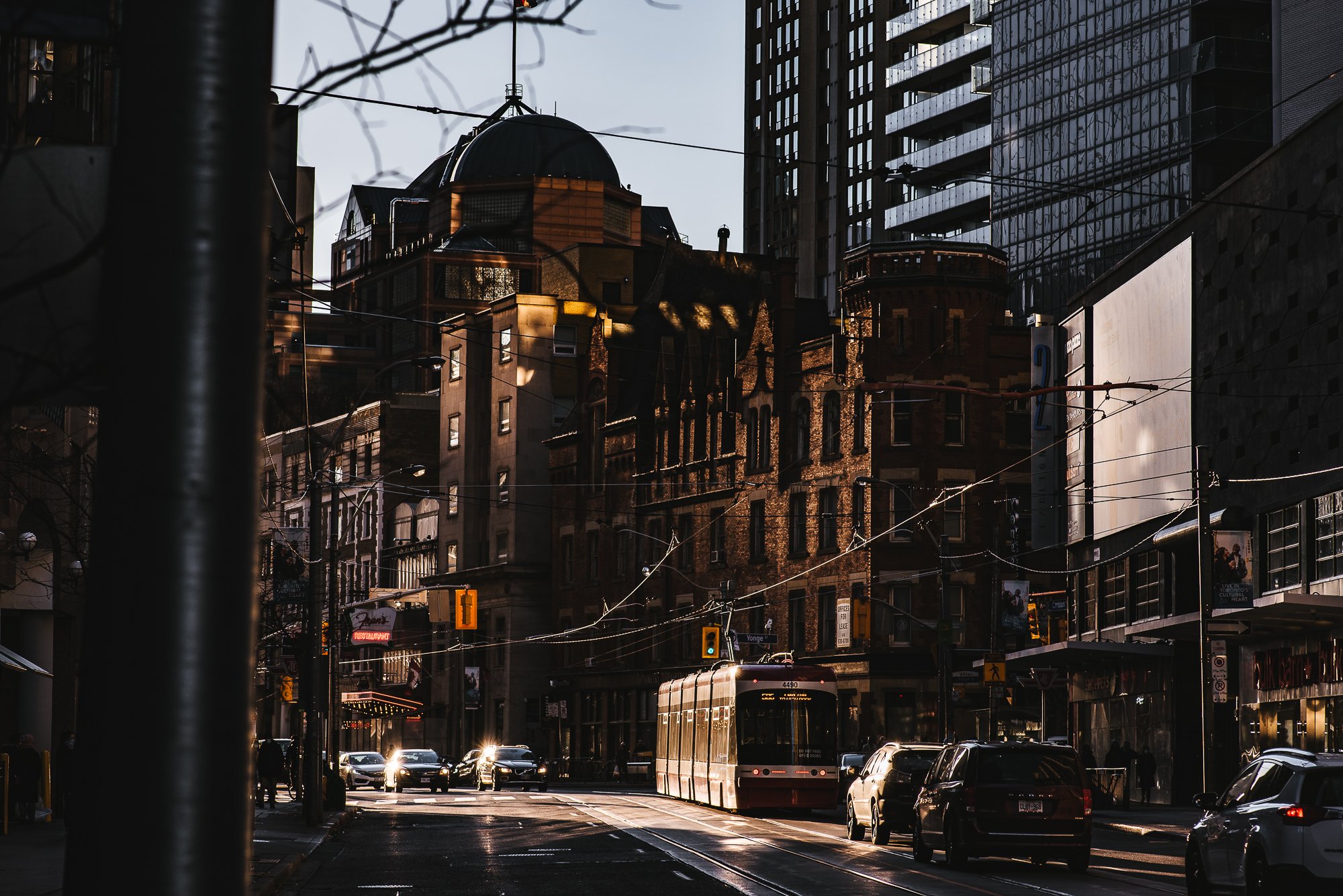
Sunday, 11:28am
Bonnie was sitting in the store office, $100 cash and a grocery list on the desk in front of her. She sped through the security video, starting from the time she locked up the night before—8:52pm. There was nothing until 11:37pm, when the front door cameras recorded a figure wheeling a bike through the doors in the darkness. It headed directly to the alarm control panel. After a few seconds it moved to the escalator and turned it on; then it rolled the bike onto the escalator and went upstairs.
A camera at the top of the escalator captured the figure moving to the lighting panel, and the store was illuminated. Ricardo got on his bike and pedalled to the office. He adjusted something on the sound system, then biked to the back of the store. Another camera showed him leaning his bike against the back wall, taking off his jacket, and grabbing a push-broom. Bonnie gasped as he burst into a run, pushing the broom ahead of him. For the next several minutes he would disappear from one camera angle, only to reappear seconds later in another. Sometimes he would pause at the end of an aisle for breath, holding the broom in one hand and leaning on his knee with the other, looking down at the floor.
He ran to the washroom with cleaning supplies, a new package of paper towels under his arm. He re-emerged three minutes later with a full garbage bag. She watched him bundle this in his arms with items for recycling, each movement skilled and exuberant, as if part of a dance. When his arms were full he ran out to the bins behind the building. At last he re-entered, put on his jacket, and wheeled his bike out the back door. The store was still lit. Escalator still running. The whole thing had taken sixteen minutes.
Bonnie remained still, watching the motionless footage continue. She knew there would be nothing more to see until the first unsupervised customers entered the store. The only question was when that would be.
She thought back on what she had witnessed. She thought about her job, and the responsibility she carried. She was suddenly reminded of group work in high school, of having to trust students who were a potential liability to her. There had never been any choice in the matter—she had been forced to rely on them. Instinctively her fists clenched on the desk.
Sunday, 11:31am
Alison was leaning against the kitchen counter, watching Thomas eat a bowl of Shreddies at the table. He had abandoned his game as soon as Bruce left, and was now studying the kids’ trivia on the back of the Shreddies box. Milk dribbled down his chin, and he wiped it absently with his sleeve. Alison drank her coffee.
Her phone chimed. It was a text from Jessica.
“Omg did you hear that Loblaws was open by mistake? David saw people leave without paying. They straight jacked Loblaws!!! Someone is definitely getting fired, lol. Happy Easter!”
Sunday, 11:42am
Bonnie was still staring at the static video feed when she became aware of what she was hearing on the sound system. She let it wash over her for a few minutes, realizing why she hadn’t recognized the playlist before. It was church music.
Death cannot keep its prey, Jesus my Saviour
He tore the bars away, Jesus my Lord…
She jumped when her phone buzzed with a text from Gloria. “Are you there?”
She sped through the remaining hours of video, watching the quality of light gradually change as morning dawned in the store. She resumed playback at 7:01am, when a hunched figure shuffled through the front doors. Painstakingly he approached the escalator, put a wrinkled hand on the railing, and stepped on. It was the man from the bench.
At the top, he got a shopping cart and moved slowly through the store. He selected each item and placed it lovingly in his cart, as if preparing for a feast. When he got to the Easter lilies, he stooped down and picked up a plant with both hands. Slowly, he raised the blooms to his face and closed his eyes. Bonnie felt a lump in her throat.
Suddenly she had a mental picture of Ricardo cutting up pineapple in the early morning. She could see him slicing off the leafy top, then the base of the fruit. She saw the paring away of the rind, the deft work to cut the core out of the flesh, the juice seeping onto the cutting board as he worked. She imagined him singing.
Then she picked up her phone.
“Gloria?” she began, taking a deep breath. “It was my fault.”
Text: Jen McNaughton
Photography: Leemarc Lao