
Slava! Tracing the Roots of a Rallying Cry
The human experience of glory coalesces around moments like Ukrainian President Zelenskyy’s defiance of the Russian invasion of his country. But what was the significance of his rallying cry?

“Ah perfect, I have the exact part that you need,” said the man hunched over on our kitchen floor intently studying the inner workings of an obstinate dishwasher. Glory be! I silently confess that paying a professional is often worth every single cent. All of my cents, in fact, and all of my sense.
In the background, CBC’s coverage of the 2022 Winter Olympics droned on, dissecting the Russian doping scandal that had soured the women’s ice skating events. The Olympics coverage showed the unsettling ways that the sports had become politics. The only reason that Russian president Vladimir Putin wasn’t currently invading neighbouring Ukraine, the anchor said, was because of the famed international competition. That, in fact, waging war on another country during the Olympics might be at odds with the sense of global solidarity that the games inspire.
I mentioned this to Yevhen who was slowly but surely reviving our dishwasher. “Well, yeah, I agree with that.” He said this casually, and began to list off a number of reasons why a larger conflict is inevitable in his homeland. My husband chimed in that his family has similar concerns: “We’re one small island in the Pacific, facing a global superpower.” They bond over Taiwan and Ukraine’s twin perils.
During the earliest days of Putin’s invasion of Ukraine, the viral video of President Volodymyr Zelenskyy’s evening walk in Kyiv amazed me as much as the millions of others who watched it. The clip, all of two minutes long, shows the president standing with his cabinet members along a quiet street. The invasion had just begun and Kyiv was expected to be taken in only a matter of days. Seeing the situation rapidly deteriorating, the United States offered Zelenskyy a route out of Ukraine, along with the prospect of governing in absentia. Zelenskyy’s response, which will undoubtedly go down in Ukrainian cultural history, was said to be “I need ammo, not a ride.”
So, in the self-recorded cell phone video, with lamplights causing glare streaks on the screen, Zelenskyy reassures his country of his presence. He motions to each member of his cabinet, saying firmly, “Here.” Finally, focusing the camera on himself, he says “President: here.”
He ends with a phrase that has become recognizable worldwide: “Слава Україні!” Slava Ukrayini!
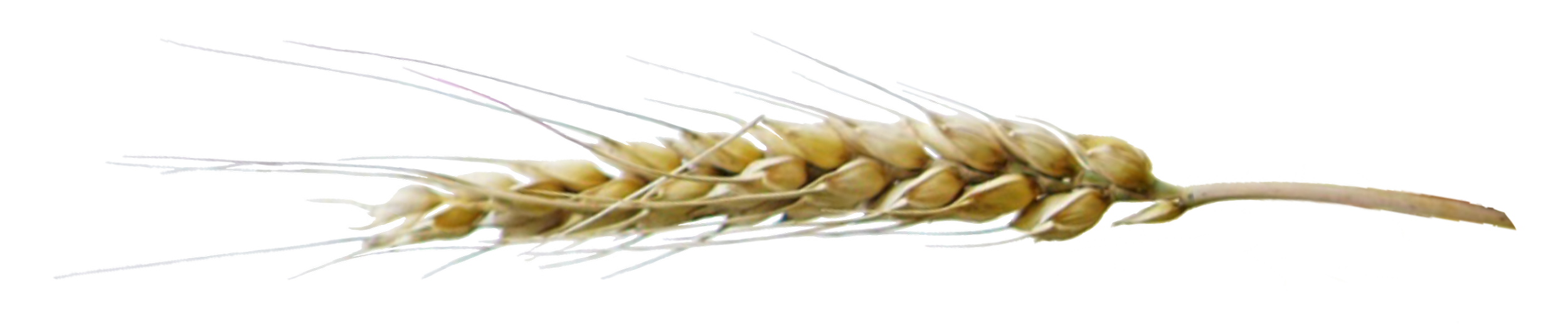
Slava. In most Slavic languages, the word carries meanings like “glory,” “fame,” “honour,” and “renown.” Yet, hearing the word so often, and especially in the context of the war, caused me to wonder what it means for Ukrainians, or anyone else for that matter, to bring glory to their country.
Human efforts towards glorification can, of course, take terribly twisted turns. We’ve seen this throughout history, and will continue to witness it. The most malignant eras of human history have been born out of glorification. We have glorified certain peoples, certain ideologies, certain ways of being human. When something—even something that can be positive in and of itself—is put on a pedestal yet not fully qualified to be worshipped, the pedestal will implode. The very proclamation of the good begins to cannibalize its own truth. Such is the power of worship. This is why the Christian worldview holds that the only being worthy of our highest praise, and possessing enough integrity to bear the weight of true glorification, is God himself. We all fall short, very short, of perfection. He doesn’t.
In a biblical sense, glory finds its origin in God. His personal glory often refers to his intrinsic glory: the worth, brilliance and majesty of God’s many perfections and attributes. Yet, it seems that glory can spill out and onto the things God has made. The Imago Dei, means that all people, to an extent, reflect God’s glory. For Christians, though, this is more pronounced: the Holy Spirit enables us to “put off the old self . . . and put on the new self, created in the likeness of God.” Christians begin to live and desire things in new ways that reflect the nature of their God.
Glory can be reflected, but it is also given. As a barefoot Moses fell to his knees in front of a burning bush, or an astonished Roman soldier confessed Christ’s identity under peals of thunder, worshipful human responses to the presence and splendour of God give glory to him. Stunningly, Jesus declared that even if humans would choose to resist these acclamations, all the rest of creation could not. Even if “[people] were silent,” Christ taught, “the very stones would cry out.” Creation responds to the glory—the true, wondrous essence—of God.
When we encounter language that calls us to praise a country or culture, it’s worth exploring what this is encouraging us to do. The early twentieth-century roots of Slava Ukrayini’s usage is debated, but many suggest that it initially began, as many movements do, with a group of university students. The students were likely inspired by a verse from celebrated Ukrainian poet and cultural icon, Taras Shevchenko.
The phrase was increasingly employed by nationalist political figures, though, and especially during the Second World War the phrase Slava Ukrayini! and its rejoinder, Herojam Slava!, were used by groups pushing extreme nationalist ideologies. The polarizing figure of Stefan Bandera, seen as equal parts Ukrainian freedom-fighter and Nazi collaborator, used this phrase in association with the militant Organization of Ukrainian Nationalists (OUN). Under Soviet rule, the phrase was prohibited in an attempt to suppress Ukrainian national expression. With the dissolution of the U.S.S.R., this slogan became once again a way to promote Ukrainian identity, albeit one that was increasingly unfettered from ultra-nationalist forces. On his 1995 visit to Kyiv, American President Bill Clinton proclaimed “Slava Ukraine!" alongside “God Bless America!” in an address to the newly independent country.
2013’s EuroMaidan movement, also termed “the Revolution of Dignity,” cemented this even further. As government officials rejected agreements of political alignment with the European Union in favour of stronger ties with Russia, Ukrainian citizens organized grassroots protests. The mass demonstrations, eventually growing into powerful statements of national resistance, resulted in violent altercations between protestors and law enforcement. Notwithstanding the centuries of complicated history shared between the two nations, the aftermath of EuroMaidan (including the 2014 Russian annexation of Crimea) helped set the stage for the current Russo-Ukrainian war.
It was in this environment that Slava Ukrayini! came to represent the endeavour to protect Ukrainian identity and independence, rather than its original fascist sentiments. Political scientist Vyacheslav Likhachev writes, “The fact that, after becoming president, [Volodymyr Zelenskyy, an] ethnic Jew, quite organically began to use the slogan ‘Glory to Ukraine!’ in the appropriate context illustrates what unexpected metamorphoses the far-right symbolic repertoire can experience in the complex Ukrainian context.” When EuroMaidan protesters yelled the phrase, it was understood as a way of projecting, even creating, a hope-filled future. This wasn’t a country that was rallying behind a leader; by then, theirs had taken the proverbial taxi. Slava Ukrayini! Herojam slava! had become a stark reminder that they were a people that were fighting for themselves, by themselves.
Not far from High Park, in Toronto’s west end, the Taras Shevchenko Museum sits nestled amongst dental offices, nail shops, and local eateries. At 1604 Bloor, I crane my neck upwards, spotting a striking portrait of Shevchenko gazing intensely out over the street from above. Born to a peasant family in central Ukraine, Shevchenko’s work is often regarded as the foundation of Ukrainian literature. His use of Ukrainian legitimized the language and, many believe, contributed massively to an awakening of Ukrainian national consciousness.
Most striking to me was the fact that Shevchenko was born into a family of serfs, and had to be quite literally bought out of his serfdom by friends and patrons. With this as his backdrop, Shevchenko spent his colourful career demonstrating that Ukrainian culture was far from second-rate or inelegant.
Even from my brief visit to the museum, I could see Shevchenko’s emphasis on and delight in the physical land of Ukraine: the “mighty Dnieper” river, the “spreading plains,” the “boundless steppes.” Many have noted that this insistence on geography enabled Ukrainians to visualize a physical map of their land and heritage. Shevchenko especially celebrated the sound of the Ukrainian language itself. He titled his most well-known collection of poetry Kobzar (published in 1839), a reference to a travelling Ukrainian minstrel who roved the country singing folksongs and playing the kobza. Shevchenko didn’t have to travel the country singing his pieces in lilting Ukrainian, though, because his poetry was so warmly received in his own lifetime that the nation naturally put the words to music.
An excerpt from “To Osnovianenko,” a poem from Kobzar, reads:
Laugh, then, ferocious foe,
But not too loudly, for our fame
Will never be laid low.
It will not perish, but proclaim
The annals of our age,
What is our justice, what our wrong,
And what our parentage.
Our epic and our ancient song
For ever shall remain,
And that is where our glory lies,
The glory of Ukraine.
The last line of the excerpt is, of course, the genesis for the phrase that is echoing across the world. “The glory of Ukraine,” was the inspiration for the rallying cry, Slava Ukrayini! In “To Osnovianenko,” Shevchenko locates his country’s glory in their “fame,” their testament. Ukraine’s glory is in its story—specifically, the fact that it does indeed have its own story, a Ukrainian one. Just like the epics and ancient songs sung in other countries, Ukraine’s narrative is legitimate, worth celebrating and protecting.
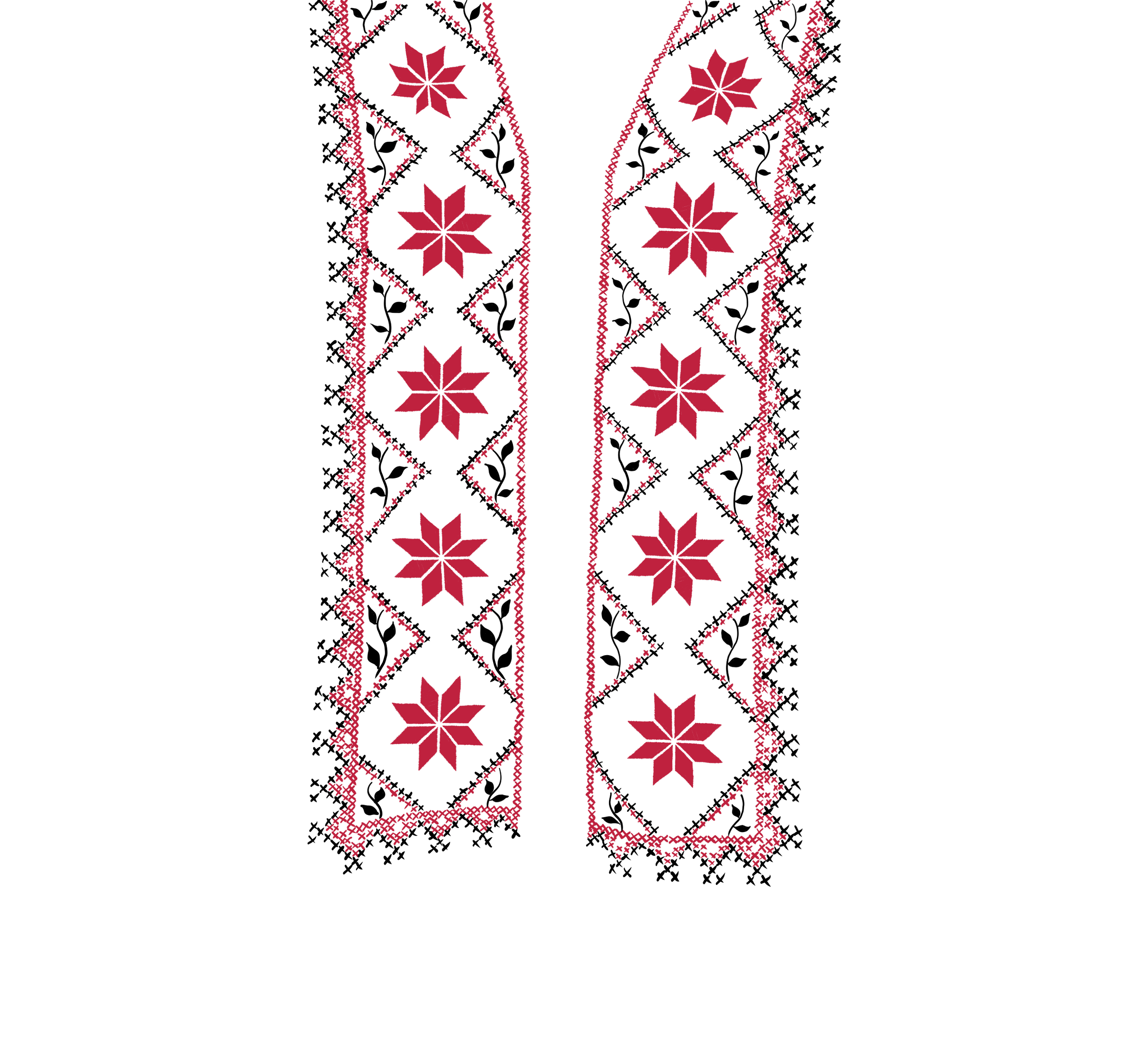
The pride clearly emanating from Shevchenko’s work was outdone only by the wild, intricate patterns running down clothing in the museum’s folk costume exhibit. Brilliantly embroidered cottons, shining medallion necklaces, intricate crowns made out of flowers and beeswax, all lined the exhibit walls. Each particular pattern spoke to the region from which it came. As my eyes traced the skillful, ornamental patterns down dress sleeves, I thought I understood the message: we understand who we are.

Human praise and approval is often brutally misplaced for the sake of certain agendas. And yet, there are also moments when we, too, honour and celebrate something because it rings closer to the truth. The sudden, widespread embrace of Volodymyr Zelenskyy is a compelling example of the power of approval and glory, and their place in the human heart. We seek to be the people in whom others can recognize the good, beautiful, and true. It speaks to something innate in us that, in the presence of even a shadow of true goodness, we reflexively reach towards praise.
When President Zelenskyy recorded that cell phone video over a year ago in the shadowy streets of Kyiv, he didn’t know doing so would win his country the war. The military action continues, but the war for the soul of Ukraine—its culture, language, and legitimacy—was won the moment he pointed that cell phone at himself: “President: here.” Zelenskyy never took the ride and that much was clear for not just his enemies, but the world, to see. He stayed. In an article for The Atlantic, Franklin Foer wrote, “It is hard to think of another recent instance in which one human being has defied the collective expectations for his behaviour and provided such an inspiring moment of service to the people, clarifying the terms of the conflict through his example.”
Zelenskyy clarified the terms: the Ukrainian story was certainly not immaculate, but he would remain part of it. The story would remain theirs to tell if only he would resist. And he did. We have embraced the phrase Slava Ukrayini with enthusiasm because of what it has come to represent: a moment, if in a context more thorny than we can grasp, of something worthy. Amid the brutal geopolitics playing out in Ukraine and around the world, sightings of faithfulness, service, and fortitude have stirred us. “Amen!” our hearts seem to say. Slava!
Text: Caitlin Condit
Art: Sharon Lam