
Sing a New Song: An Interview with Mike Janzen
My first memory of Mike Janzen’s music comes from years ago, in a charming theatre tucked away on a Kitchener, Ontario side street. Lounging cheerfully at the grand piano, a lanky man jabbed ham-fistedly at the chords of a catchy Broadway song, his hands stuffed into a pair of oven mitts. The tune was from The Wizard of Oz, the Scarecrow’s comic lament “If I Only Had a Brain,” and Mike matched the feel of the song’s stuttering, falling-forward rhythm with physical comedy of his own, flopping and floundering on the piano bench like he was the one filled with straw. The audience was wiping away tears of laughter as we applauded this entertaining combination of showmanship and tongue-in-cheek musicianship. It was a totally fresh take on the oft-covered 1939 tune, and the oven mitts became a signature wink for Mike leading up to his 2012 Christmas album Carols, which features a mitten-shaped grand piano in outline as the album cover art.
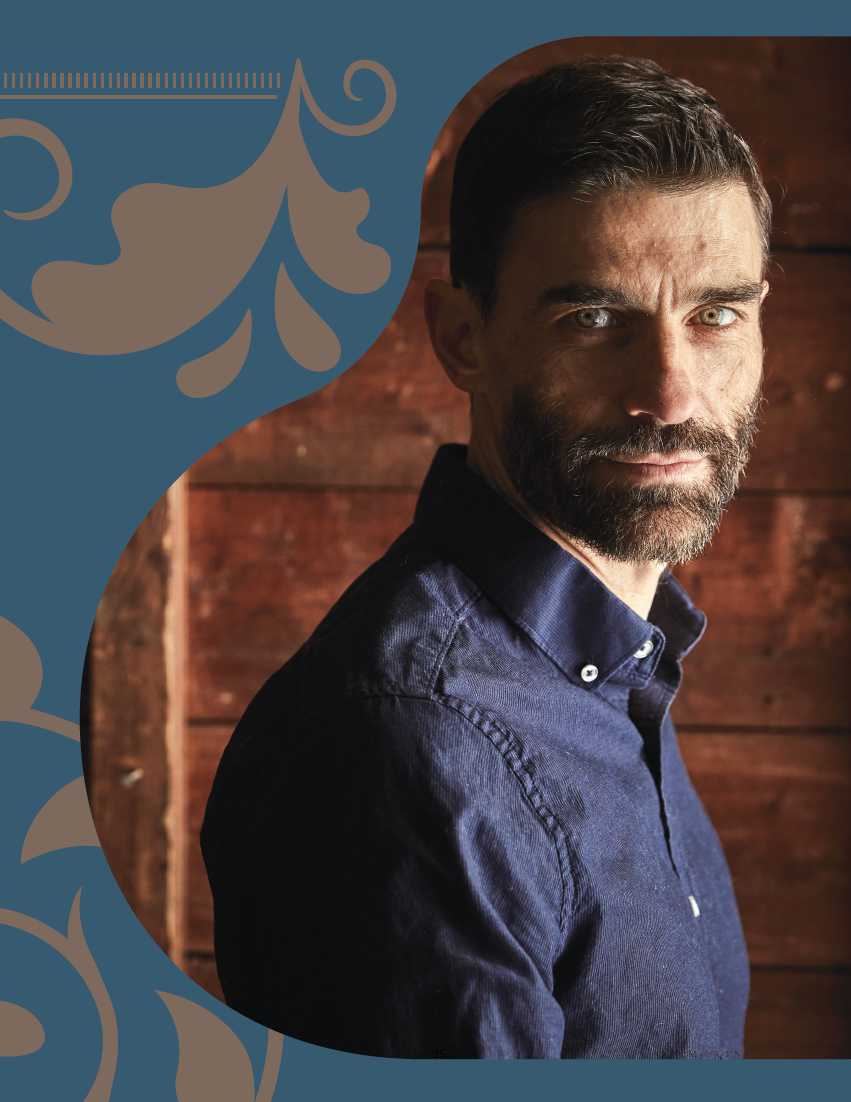
What this visual language captures for me is Mike’s commitment to playing old songs in a new way, something he’s done throughout his career with a mix of jazz fusion, show tunes, folk ballads, and neoclassical music. All of that was derailed when Mike suffered an extremely serious concussion. Forced into darkness and silence, Mike turned to a far older artistic tradition, praying and meditating through the words of the Psalms. As he slowly found his way back to the piano (en route to a complete recovery), Mike’s own versions of those ancient biblical songs emerged as a very personal set of compositions. The Psalms Project Vol. I & Vol. II were recorded during the pandemic and released in 2021, including guest performances from award-winning Canadian musicians such as Steve Bell, Laila Biali, and Joey Landreth; Vol. III followed in 2023, along with live concerts across Southern Ontario and Western Canada. These three albums cover a wide range of emotion and musical soundscapes, gospel choirs and rich orchestrations lending their energy and textures to the balladic central thread of Mike’s piano and vocals. They are by turns celebratory and longing, joyful and yearning, aching and at rest. They are, in short, the Psalms.
Christian musicians have been writing adaptations of the Psalms for centuries. Following the Protestant Reformation, vernacular Psalm-singing exploded across Europe, with collections of psalms (“psalters”) produced for English, Dutch, and Polish churches, among many others. These psalters are translations of entire Psalms into the language and musical vocabulary of ordinary people, songs which became their daily bread amidst persecution, poverty, and repression. Although Psalm-singing was gradually replaced by hymnody in the Western church, the last couple decades have seen a resurgence of Psalm adaptations. Two of my personal favourites are from a group in my own Dutch Reformed tradition called The Psalm Project (Psalms Unplugged [2017]), and Canadian singer-songwriter Steve Bell (I Will Not Be Shaken: Psalms Collection [2015]). Both of these also emerged out of despair and darkness—in the wake of Dutch pianist Eelco Vos’s cancer diagnosis, and in the mire of depression in which Steve first put Scripture to music with the words of Psalm 90. What all of these efforts, historic and modern, have in common is a recognition that the Psalms invite us to take ownership of these heartfelt, majestic songs at the most intense moments of our lives.
I’m grateful to Mike that he joined me in August 2024 to talk about his own Psalms Project, which illustrates so personally what makes the Psalms a unique biblical text to which to return. The following interview is drawn from that conversation, and has been edited for clarity.
Find Mike’s music online here: https://www.mikejanzentrio.com/.
Joel Faber: How did you get from performing and recording carols, Broadway tunes, and jazz compositions, to writing with the Psalms?
Mike Janzen: This all started out back in 2016, when I went out for sushi with a good friend of mine. He was increasingly feeling that we ought to be singing the Psalms more, and asked me if I’d ever considered doing anything with them. I sort of nodded “Yes,” but inside I was thinking, “I don't have time for this.” I had a few jazz projects going, plans for more Broadway shows, music for radio—my career was really taking off.
Then in April 2016 I got up in the middle of the night, fell by accident, hit my head, passed out, and suddenly all of life shifted. Instead of getting better quickly I got worse and worse, until after more than two years in recovery I had to come to peace with the thought that I might never play music again. I couldn’t even listen to music back then, my brain would get so overwhelmed and dizzy. The one thing I could do—barely—was to start making my way slowly through the Psalms, just a verse at a time.
Music is great therapy when you're recovering, because it challenges your brain to be creative, to be disciplined, to think in melodies. As I was slowly getting better, trying to listen or make up little melodies as they came to me, the Psalms pulled me out of a lot of darkness. They became a lifeline of hope for me.
So, I didn't come to be writing Psalms by my own choice—it was desperation that made me go to the Psalms.
Joel: What about the Psalms in particular drew you there?
Mike: I think the Psalms have a deep heartache in them. Over a third of the Psalms are laments. So if you're going through a season of depression, anxiety, struggle, loss, whatever, there’s a resonance in the very fabric of the Psalms. There's permission there that we can come fully in our brokenness before God, in an honesty that is bathed in who God is. I think the Psalms hold a certain relationship quality, that God is close to the vulnerable. You don't have to get better to get to God! He's actually closest in those places of suffering.
In our society we are so oriented to doing well, in terms of wealth and success. That’s what makes us feel good, rather than simply being well and being known and being loved regardless. I found a great freedom there though: to sit on a couch all day, to produce nothing, and be at peace because God is enough. He's enough for our self image, for what we're trying to accomplish in life, just to be known and loved.
Joel: I think that the way Psalm 1 ends captures this beautifully. The way of the wicked will be forgotten, but “the LORD knows the way of the righteous.” The culmination of the righteous life is to be known by God.
Mike: I love the image in that psalm of being “planted by streams,” which has that quality of observing, resting, staying put, and being overwhelmed by the beauty of the water. One of my favourite songs of this year is by The Porter’s Gate, “In the Fields of the Lord,” which starts “in the fields of the Lord, our work is rest.” It's just a lovely Psalm 1 reference, that that’s our beginning right there.
Joel: Were there any particular images, or texts, or textures from the Psalms that were key inspirations for you?
Mike: Usually I try to be clever about planning, to stay ahead of the game, but in this case I wasn't thinking about releasing a record or getting a Psalms project out there—I was literally trying to survive. I tried every day to be faithful to sit, to listen, to make up little melodies if I heard them, and just to see where it went. I literally had one eye open looking at my phone. I started at Psalm 1, highlighted anything that stood out, and gradually went through the whole book of the Psalms. In that way, the whole project is really a lens into my recovery. Eventually I had hundreds of voice memos, and I thought that a few of them might actually be good, so I sent them to my good friend. He came back and said, “I love it.”
At that point I started forming the project more deliberately. I’d listen back to pieces of Psalm 86, for example, realize that I’d only written one verse and half a chorus, then go back to the psalm and look at whether I was being faithful to what was there. How does the song hang together? What images am I using? Am I being consistent? How can I tighten these lyrics up?
Joel: How do you think about the difference between a song that's inspired by a specific verse or image and a song that tries to tell a whole psalm top to bottom?
Mike: I think there's a place for all the above. Some songs on the project are full psalms, like Psalm 116, while others are inspired by individual verses or the Psalms as a whole, like “Remembers Me.”
I think the Psalms are these great poems and songs that let you bring your own story into the process. So there's room to read through a psalm, get the heart of it, and then launch out into your own words. That can create a powerful new kind of a song that's inspired by something in the original. I also think there's something beautiful about going word for word, picking a translation you resonate with and getting it like a memory into your spirit, so that when things come up in life the words you need are all there.
I grew up in the days of Bible memory work—sword drills, Bible camp, you know—and my two daughters don't have any of that reference. But what they do have are the words of songs that revolve around Scripture buried deep in their hearts.
We often experience life very differently than from the original context of a Psalm or other piece of Scripture, and in our postmodern world we’re often thinking completely individualistically, rather than corporately, so to be hearing words that aren’t our own applying God’s words to our lives, in our context, I think it’s crucial.
Joel: Psalm 96 begins “sing to the LORD a new song,” and there’s a way in which writing a new setting of a Psalm is doing exactly that, making a new song in the spirit of the old one. Jazz standards work in a similar way, I think—there’s a canon of familiar melodies, but every time you play one you make it your own. Has that part of your experience as a jazz musician informed how you think about playing the Psalms?
Mike: I love new expressions, especially musical expressions of the Psalms. I love artists taking chances. I encourage artists in the church to think outside the box. Instead of leaving the church because your musical style doesn't work, find a way to speak through your music and stay in the church, to bring something new into the worship community.
N.T. Wright has a beautiful analogy about Scripture being like an unfinished Shakespeare play. What do you do to complete it, if you want to perform the play? Well, you have to learn Shakespeare’s style and form, how he writes and develops characters, and then in the end you faithfully improvise the final act based on what you’ve learned. The Bible and music have this idea in common for me: we take in God’s words and teachings, we absorb it, study it, learn it inside and out—like learning a jazz standard—and then after we've done that work, we rely on the Holy Spirit and go forward ourselves! But everything that we do, even though it's new, it is being informed by the old. There's this wonderful marriage of old to new.
I love that about jazz. You're right about jazz standards, there's these simple melodies and they can sound like a million different things. A new solo can feel random to some people, but if you’re a jazz player, every note has its place within the chord structure and within that simple melody.
If you just launch off in spontaneity and don't worry about anything that's come before you, the music might not sound like anything, the faith might not hang together. But if it's rooted in truth, and in who God is, and you improvise off of the Spirit resonating those words inside of you, well, now you have something of substance.
Joel: The poetic voice in the Psalms has a collective quality to it. Even when we have an attribution, to David or the Sons of Korah and so on, it's also the Spirit writing, and it's also the people of Israel singing, and us making the words our own. We become psalmists ourselves, in a way—and I think your project has done that at a really local, personal, and meaningful way.
Mike: Oh, thank you! That means a lot. One of my favorite things is delighting in other musicians and finding other voices. In this case, artists who might not naturally come in contact with the Psalms, maybe whose careers don't leave room for that, but who really want to be a part of something like this. I love seeing their expressions on this project. Someone like Laila Biali, who is an amazing artist with a deep faith, having her voice on there singing from the deepest places and just delighting in the music, that was cool to see. I love bringing worlds together.
Joel: What are you working on next?
Mike: The Psalm Project is wrapped up, at least for the next season, but I'm still writing worship songs—I'm writing a historical song on the Church from Christ ‘till now, and just finished a song on Stephen. I’m also working on a bunch of little funky tunes, and I have a jazz record on the go.
Joel: Lots for us to look forward to hearing! Thanks for your time, Mike.
Mike: It's been lovely talking with you.