
New Worlds All Around
Six children’s books reward our attention and invite us to discover the power of playful storytelling.
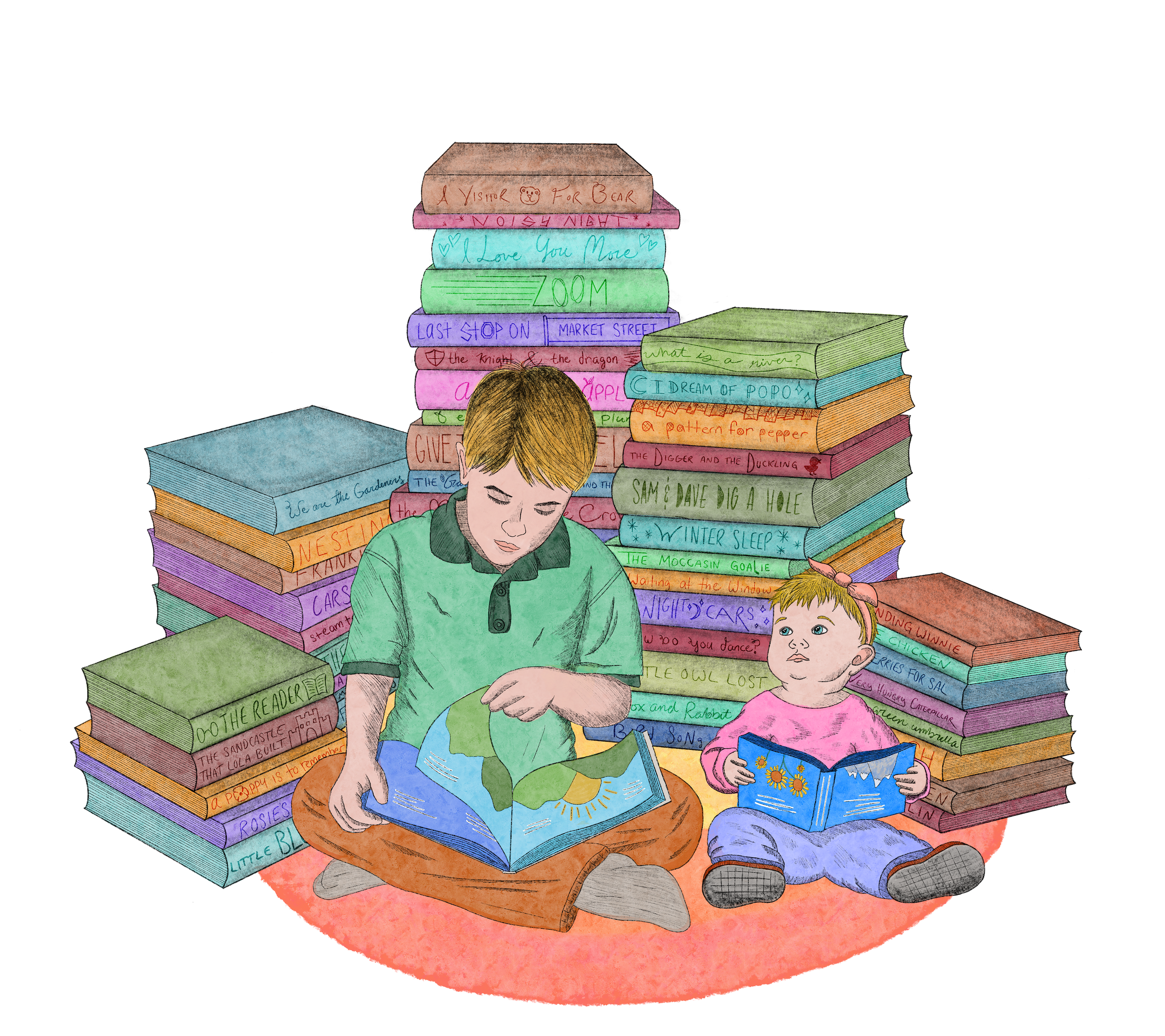
We’ve all grown up with stories. Whether it’s sharing collective memories as a family, hearing Bible stories from a young age, or reading (and listening) to books, our lives are shaped by stories. Storytelling is a rich and honoured tradition, and the ability to share stories is a gift. Stories have the power to change who we are.
This doesn’t mean that every single story carries the responsibility of transforming us. We have books for different reasons, just as we have relationships that play different roles in our lives. A book’s role can be simply to delight its audience and its lasting impact is that feeling of joy.
Children’s books are no exception to this. In turn, we can delight in the telling of a story, enjoy the movement and emotion captured in an image, or discover what the book teaches us about ourselves and the world.
Though it’s very hard to choose only a few favourites, here is a small selection of our more treasured reads.
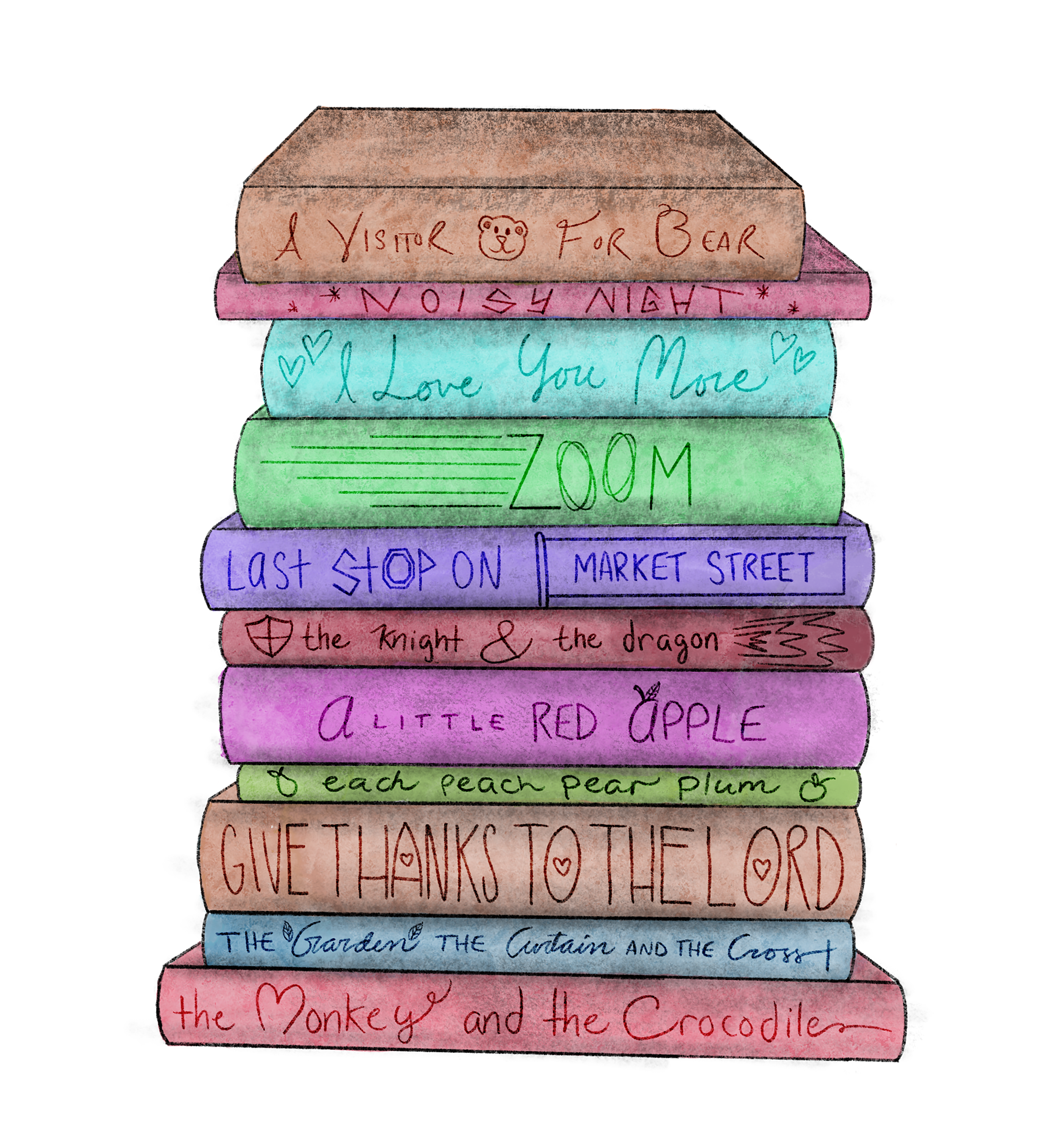
This first set is a special one spotlighting Ontarian illustrators. There is something resonant and rich in looking close to home and feeling a kinship with an artist simply because you share a current hometown. I enjoy imagining these stories happening within the city lines, as if they could happen just around the corner.
A Pattern for Pepper written and illustrated by Julie Kraulis
Pepper needs a new dress for a very special occasion and is having one made just for her! The tailor, Mr. Taylor, presents Pepper with many different patterns, teaching her about the history of that pattern. Toile, herringbone, tartan, argyle, and more. But which one will be the perfect pattern for Pepper?
Julie Kraulis’ story is fun and educational, an exploration of history through the particular lens of fabric and pattern. Her character Pepper is charming with a spunky personality as she selects the pattern that is just right for her.
The simple colour palette of the illustrations provides a cohesiveness to the book, weaving all the different fabrics together into a single story. Kraulis’ pictures are textured, which add a depth to the pages in a way that is warm and comforting.
This is also a book that explores expressing your own personality through fashion and pattern preference. There is no wrong pattern for Pepper to pick as she looks for one that reflects who she is.
I Love You More by Emil Sher, illustrated by Barbara Reid
Emil Sher has written a simple text based on a game he played with his daughters: “I love you more than ___ loves ___.” Sher explains how the little game works, writing, “This kind of word game always comes in pairs, and in a certain order: the second part of the pair makes the first part feel happy because it feels needed.” This is something we’ve already tried in our home, and it has made expressions of love fun, imaginative, and playful. Some of our favourites that we’ve come up with are: “I love you more than shelves love books,” and “I love you more than tracks love trains.”
In the story, we follow a little boy, Des, through his day: getting up, walking through the city to go to school, and then home again. (There’s a fun Toronto bookstore cameo, too!) The closing line of the story is, “I love you more than trees love nests,” as Des tucks in his mother, who has fallen asleep on the couch. Their own little home, their nest, is safe in the tree of their apartment and their city.
Barbara Reid’s artwork always captures warmth and tenderness. The stories and details in the illustrations are full of fun surprises to discover, telling a story of their own. This book encourages its readers to engage deeply with the text, whether that is by looking for clues in the pictures to tell a story, or to see new connections between objects.
Zoom (trilogy) by Tim Wynne-Jones, illustrated by Eric Beddows
Zoom is a small grey cat who loves to go on adventures, following in the footsteps of his uncle, Captain Roy. In the first book, Zoom at Sea, he meets a friend named Maria who shows him the sea by turning a special lever in her home. When she does this, water comes pouring in! On a different magical adventure, Zoom explores the North Pole in Zoom Away by climbing up a staircase and going through a mysterious door. Finally, in Zoom Upstream, the plucky grey cat makes his way to Egypt through an extraordinary bookcase in order to rescue Maria.
This series has been read countless times in our home. Wynne-Jones’ words flow so smoothly while reading aloud and create a world where anything is possible. Of course the sea can be found by turning a crank in one’s home! Every moment in the cheeky cat’s adventures that might be frightening to a young reader is lightened by a comforting note: “From a dark room Zoom heard the howling of wolves. ‘Owwwwwwwww.’ Maria suggested they sing a song so as not to be afraid” (Zoom Away).
All the illustrations in the series are in black and white, adding to the mystery and timelessness of the stories. The play of light in these grayscale images helps to focus the readers’ attention to key actions and gives the audience the freedom to imagine their own colours. Beddows’ images are rich and textured, with small details that are delightful to discover when looking closely at the pictures.
Each story ends with the anticipation of another adventure. Though Zoom is content with his latest escapade and enjoys his due rest, he is eager for the next one to begin.
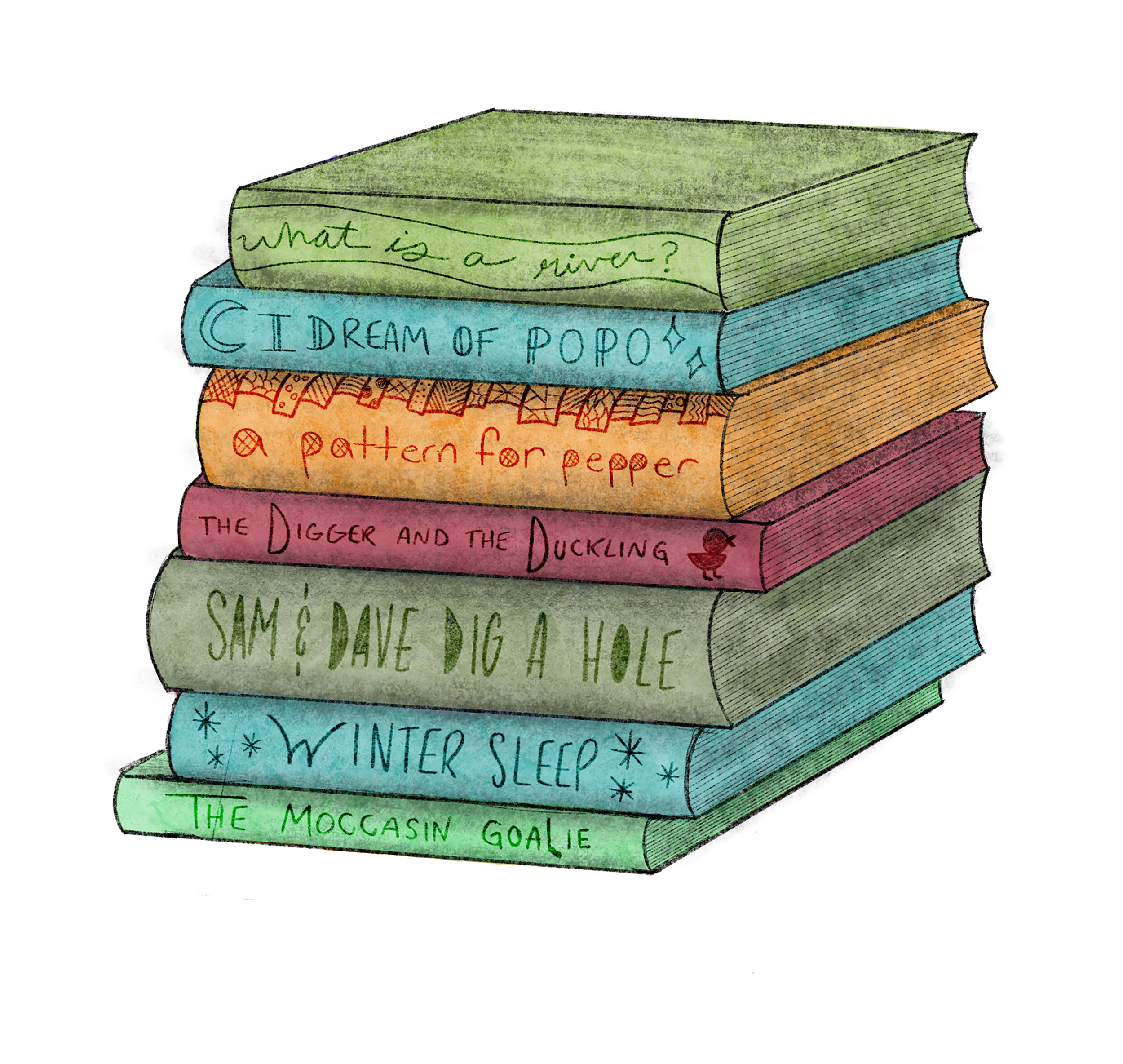
This next set of stories exemplifies different ways in which characters have to learn something about themselves and so adopt a new perspective of the world. Books can make us more aware of our immediate surroundings, and they also have the ability to teach us to look beyond ourselves to the people and the world around us.
A Visitor for Bear by Bonny Becker, illustrated by Kady MacDonald Denton
We borrowed this book so many times from the library that we decided we needed to own a copy for ourselves.
The titular character, Bear, enjoys his quiet, but a persistent Mouse continues to pop up in unexpected places, requesting some food and shattering Bear’s solitude.
These two are a humorous duo. A Visitor for Bear is one of my favourite books to read aloud because the text and the images both encourage a dramatic reading. Becker’s words are carefully selected to add delicious suspense, followed by quick comedic relief. The words are delightfully complemented by Denton’s expressive illustrations which capture the emotions of the characters so vividly.
Sam & Dave Dig a Hole by Mac Barnett, illustrated by Jon Klassen
We stumbled upon this book at the Toronto Public Library a while ago. When we finally got a copy of our own, it became an instant favourite. My three year old will regularly pick up this book for our daily reading time.
This story is about two friends, Sam and Dave, who go out and start digging a hole. Don’t discount this ordinary activity, though, because they are on a singular mission to find something spectacular.
This story reminds me of my boys digging for treasure at the beach or in a sandbox. They love digging and often find rocks, pretending they are dinosaur bones. They don’t usually find anything spectacular, but it is always a fun undertaking! I think little readers might relate to Sam and Dave, which makes the story funnier to read and experience. And, the addition of the dog is brilliant . . . that dog seems to know something about a jewel that the boys do not.
While the story is humorous, it also raises some of the following questions: What is your mission in life? What is the spectacular thing you are pursuing? Did you find this thing and was it what you really needed?
Last Stop on Market Street by Matt De La Peña, illustrated by Christian Robinson
CJ and his Nana are on their way by bus to an important destination. On their trip, they interact with different people who are all made equal by taking the bus. There’s a blind man, a man who plays guitar, as well as a woman who has butterflies in a jar.
I love how De La Peña captures a different voice for each of the characters, helping readers understand the individual personalities. For example, Nana is caring and playful, remarking that thirsty trees drink through straws. She is also very clearly a grandma: “Boy, what do we need a car for?”
Robinson’s brightly coloured illustrations are a joy to look at. They quickly capture the attention of the reader and immerse them in a world of happiness and creativity. He reflects the vibrancy of a city with distinctive characters.
CJ begins his trip feeling rather resentful he has to go, and envious of others who have material things that he doesn’t. By the time he arrives, CJ learns to find beauty in unexpected places, whether in the magic of a song or in seeing a familiar face.
Some of these reviews were featured on the Instagram account @little.readers.corner. Copied and revised with permission.
This summer Grace Toronto opened a library of Christian books for kids, as well as resources for parents. The library is open Sunday mornings following the service. Please come visit and immerse yourself in some wonderful stories!
(Note: In the version printed November 2022, the library was open Sundays from 10:30 to 11:15 a.m. between services.)
Text: Maria Faber & Michelle Choi
Art: Kyle Simpson