
My Little Old Lady
I wanted to be kind and generous—but I always hoped my neighbour wouldn’t impose.
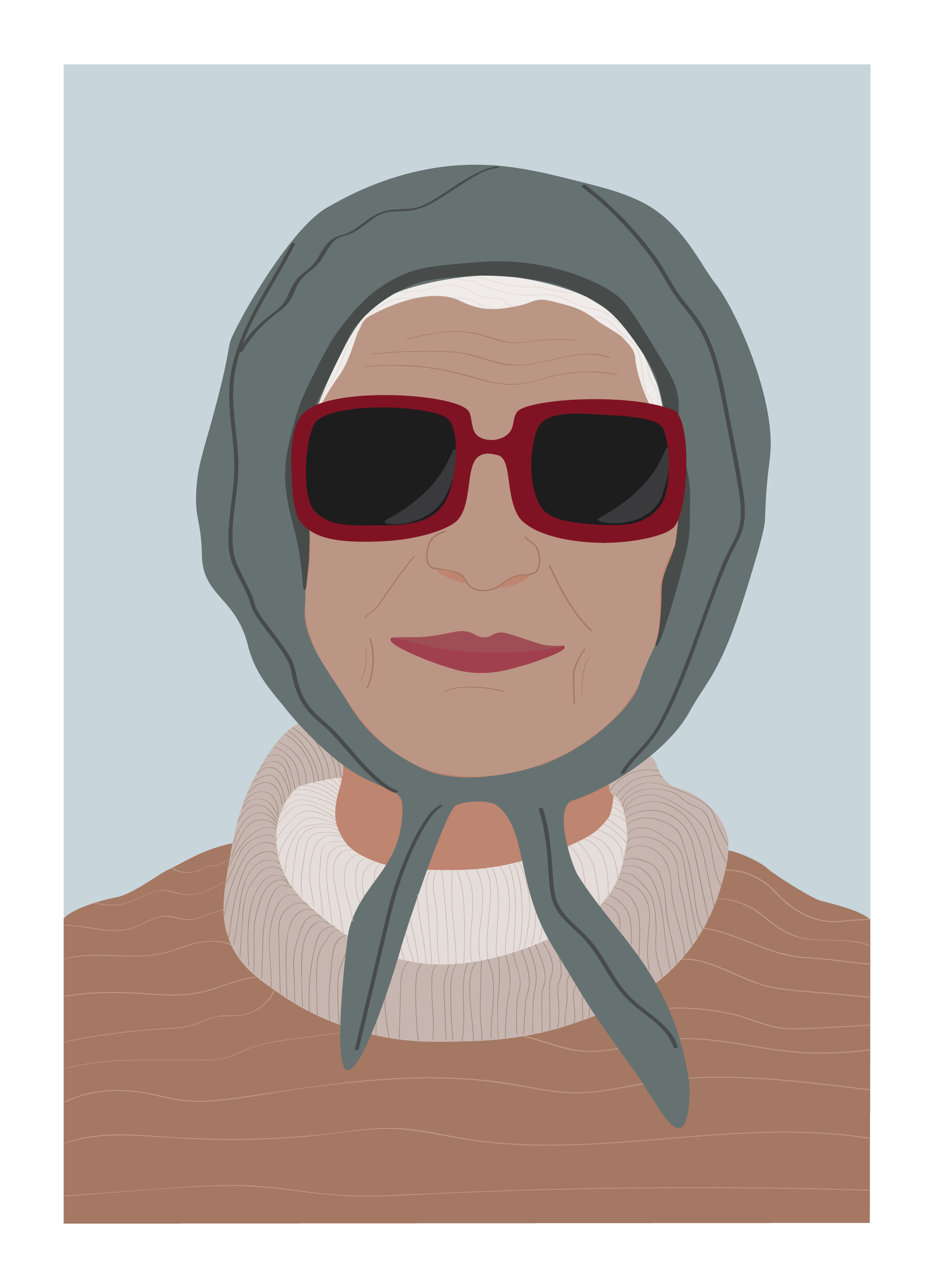
At first she was just my neighbour—and I liked it that way. A very tiny eastern European lady well into her 80s. A widow of five years, she lived alone, no children and all of her remaining family back in Croatia. We had been friendly at a distance for years. She reminded me of a small bird when I would see her out and about, not even five feet tall. It looked like a strong wind could knock her over, but only if it could match her stride and dared try to get in her way. She always walked with a silk scarf tied around her head, covering her pageboy platinum hair and oversized sunglasses regardless of the weather. If it was cold, she wore fur.
My neighbour would keep track of my coming and going, listening for the click of my key in the lock to try and catch me in the hall. Or, she would watch for me from her balcony on days when the weather cooperated. Occasionally, at her insistence or when she held one of my packages hostage, I would go over to her apartment for a quick cup of tea and a chat. She was bright, cheerful, and a tad judgemental. “She’s so lazy, and always blaming it on the cancer,” she told me, rolling her eyes when I asked about her one and only friend. Overall, she seemed harmless. I wanted to be kind, to be generous, but I was always wary.
Then came the pandemic.
While the world was full of noise about shutdowns and containing the spread, I could feel the panic as the realization set in that she was alone and I was alone and we were going to be alone together. There was a very real threat that she could become my little old lady.
I started to bring her groceries, giving her a quick call to check in every so often. I hoped God would give her the gentle spirit of someone who didn’t want to impose. Then, like whiplash, those check-ins became daily emails, requests, and tea every Saturday morning. It’s laughable how quickly my self-protecting boundaries were blown up. I soon found myself responding at all hours of the day:
To: lyndsie@gmail.com
From: My little old lady
Subject: TODAY
Are you home? Please come over to find the list of files which have disappeared. My fingers are famous for doing all kinds of mischief.
Your Friend, M
_____________________________
To: lyndsie@gmail.com
From: My little old lady
Subject: COME OVER
Will you come over to help with a few things on the computer? I need to create some order.
Your Friend, M
_____________________________
To: lyndsie@gmail.com
From: My little old lady
Subject: TOMORROW
This is to remind you that we have an appointment tomorrow at 10am. I will leave the door open.
Your Friend, M
_____________________________
To: lyndsie@gmail.com
From: My little old lady
Subject: REPLY
Hi Lyndsie
Did you get my reply? I tried to send it three times. Please respond.
Your Friend, M
She knew I worked from home, so when I didn’t respond immediately to her emails or phone calls, she would ask the landlord to check on me and make sure I wasn’t dead.
Per her demands, I spent afternoons calling Rogers about her bill when they hadn’t responded to her written letters. I dictated her voicemails—because she has difficulty hearing—only to find out the messages were more than a year old. One particularly brutal Sunday afternoon was spent on the phone with her travel insurance company trying to get a refund for the cancelled flight which might have been the last chance to visit her family. At the time, I was moved by emotion—until we entered a three hour time loop, alternately placed on hold and transferred “to another agent.”
Once, she asked for my help printing a letter. She pointed to a printer on the floor. It was probably the first printer ever created and the size of an oven.
“There’s no way that printer still works,” I told her as she bent down to plug it in. About 700 lights started to blink, and a loud Morse code staccato filled the room.
“It’s just missing a part but once we replace it, it should work,” she yelled over the noise.
“It’s too old,” I yelled back, finding the off button and hopefully killing the machine. “I’ll help you buy a new one. They sell them on Amazon very cheap,” I said.
“I don’t want a new one, all I need is a new part,” she insisted.
“The cost of the new part is probably the same as 20 new printers. I don’t even think I can hook it up to your computer once we have the new piece.”
“But we should try.”
“No we shouldn’t,” I snapped. I sent her an email later that night apologizing for losing my patience and offered for her to use my printer for the meantime. She’s been using my printer ever since.
“I have a gift for you,” she said over the phone one morning. “I’m coming over. Leave the door unlocked.” I tried to explain that I was on a call, but she had already hung up. Thirty seconds later I heard a knock. “I told you to leave the door unlocked.”
My neighbour strode inside, holding an enormous picture frame with the ugliest print I’ve ever seen: two beastly-looking hands lifting up to heaven, the fingers in flames. “Someone tried to throw this frame away and I had this print and I thought it would look lovely in your living room since you have no art. Let’s hang it up.” She did not care that I was in the middle of a virtual meeting on my computer.
Flustered, I went to grab a hammer. “You know,” I started, “I’ve been thinking about doing some redecorating, so instead of making holes now, why don’t we wait until that’s done and find a place for it then?”
My neighbour was insistent. “You need to enjoy it now, not wait for later,” she said, hammering in a nail.
She made regular visits to my apartment. I tried making fewer visits to hers. Walking into her apartment was like walking into a museum. The air smelled a little stale with a mix of vinegar, but it was bright. Every lamp in the apartment was always turned on, even in the middle of a sunny day. “Lifts your mood,” she would always say. Massive original paintings, by artists I had never heard of, were professionally hung on the walls. The furniture was gleaming and gilded. Everything was made of wood and intricately carved with gold designs. The dining chair legs ended with claws, and there wasn’t a cushion in the entire apartment. Persian rugs covered the floor, which was the only feature that added any warmth to the rooms. While brimming with history and art, the apartment was almost sparse, no clutter or crowding, and so clean you could eat off the floors.
“That’s a beautiful desk. It must be very old, I bet it could’ve been in a castle,” I said one day, struggling to make conversation.
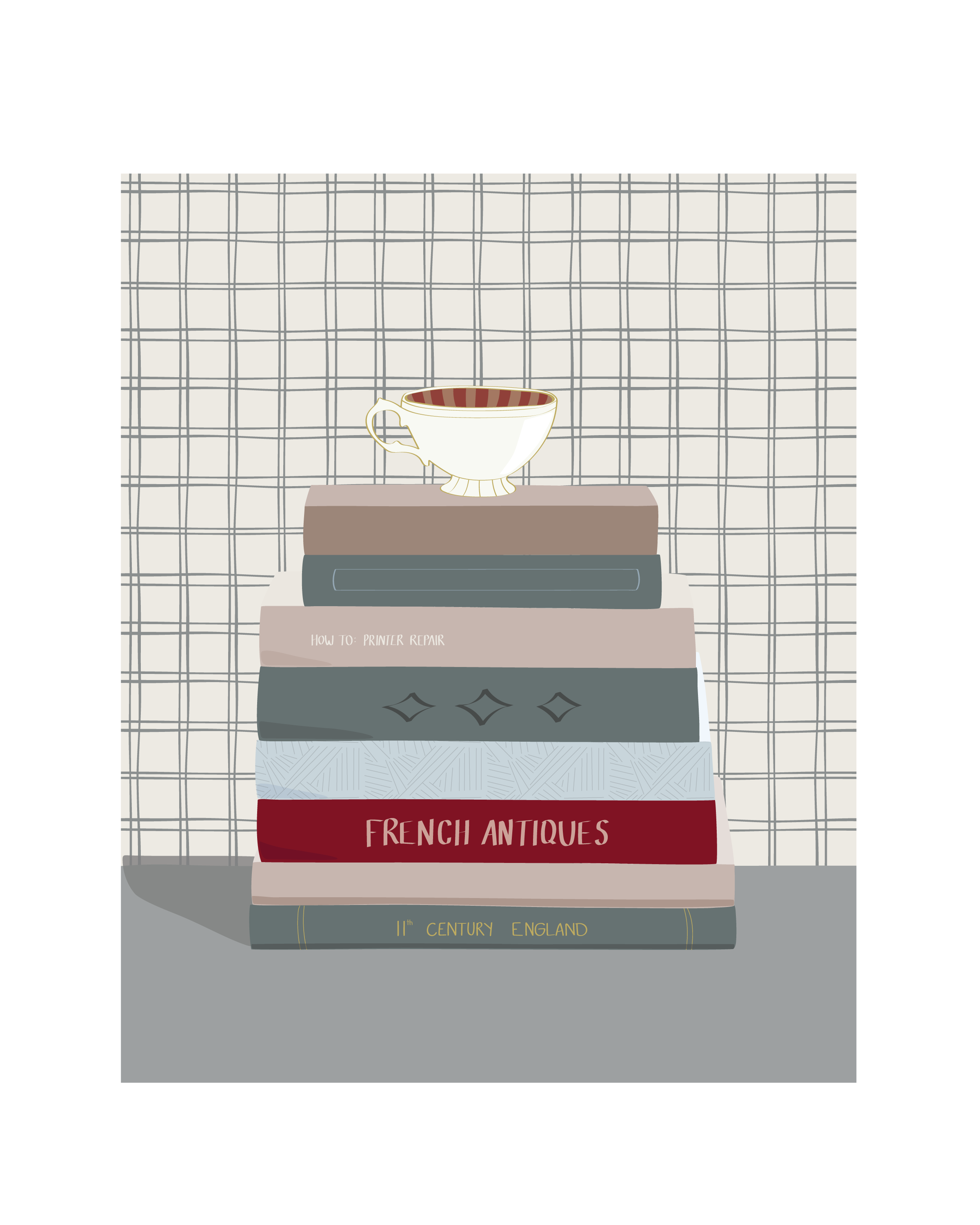
My neighbour looked at me, concerned. “It’s an 18th-century French…” I didn’t listen to the rest of her explanation, only wished the desk and the antique clock and the candelabra would come to life like they did in Beauty and the Beast. “Your lack of history is very concerning to me,” she said. Saturday morning coffees became lectures on 11th- to 16th-century England. She gave me textbooks to read and flashcards to study. She slipped discussion questions under my door that she expected me to prepare.
“Now what can you tell me about Henry II?” she asked me over tea in a tone one would ask a toddler what sound a cow makes.
“Is he the one that put his brother in a tower?”
“No,” she said curtly.
“The one who married his grandmother?”
“Nobody married their grandmother.”
“The one who signed the Magna Carta?”
“No.”
“Are you impressed that I knew Magna Carta?”
“If Henry II was the one who signed the Magna Carta I would be.”
“I give up,” I whined.
“You should take this more seriously,” she said, hitting the nerve of 16-year-old me. “Knowledge is treasure, and memorization of these facts is the beginning of understanding art and civilization.” I caught myself before she could see my eyes roll. I had agreed to this fake history class just to humour her, to give her something to do. I had wanted to obey God in being a good neighbour, but I drew the line at homework.
Months into my new role as part-time caretaker, I was missing my family, I was missing my friends, I was missing my life, and I was even missing the office. I felt extremely isolated and lonely. Meanwhile, my neighbour seemed to be living her best life. She had known isolation and loneliness, but this pandemic brought her a roommate. I found myself asking for forgiveness for my reluctance in befriending her at the beginning, but still begging God to pass the ball to someone else.
In the middle of all the frustrating chores and endless conversations about the fall of the Holy Roman Empire, my neighbour shared stories from her childhood during World War II and talked about her family members like I knew each one personally. She shared what it was like to lose her husband two days before Christmas and how she still can’t bring herself to go see the tall ships on the harbour because it was one of their favourite things to do together. We talked about where I get my strength to live alone, what my faith looks like and how it differs from the religion that ruled the kingdoms we had been studying.
More than a year later, we still meet for coffee every Saturday morning. Some visits the time passes quickly, but others I find myself watching the clock. More recently we’ve found a rhythm. She can tell when I’m not in the mood to learn, and I can sense when she is feeling overwhelmed and a cup of coffee will lighten her spirit. Neither of us is a replacement for those we miss and what we’ve lost, but we’ve managed to find a way to be lonely together.
Text: Lyndsie York
Art: Katrina Togeretz