
Métis Hospitality: The Poems of Marilyn Dumont
I have a love-hate relationship with poetry. I can’t be sure when the hate began, but it may have started with the time I wasted reading “The Waste Land” by T.S. Eliot. I understand that I am supposed to like this poem. Now, to be fair I don’t remember the undergrad lectures about what Eliot was trying to achieve. But I find “The Waste Land” pretentious. It’s the quotations from German, French, and Italian (untranslated); Eliot’s copious footnotes to his own poem; his allusions to the entire western canon; the sense that it was not written for comprehension. I think a lot of poems are like that—not written for comprehension; or written, rather, in a way that draws lines between those who comprehend and those who don’t.
So it was with trepidation that I picked up a copy of Marilyn Dumont’s collection, A Really Good Brown Girl. This is not one poem, but a whole book of poems. Are at least some of them understandable? Will it be another waste land?
I first became interested in the book because I heard a few of its poems at the Four Seasons Centre on University Avenue; it was a lunch time performance of works by Ian Cusson, a Métis composer working with text by a Métis poet. The first was Dumont’s poem, “Letter to Sir John A. MacDonald.” It begins:
Dear John: I’m still here and halfbreed,
after all these years
you’re dead, funny thing,
that railway you wanted so badly,
there was talk a year ago
of shutting it down
These words caught my interest—the history, the politics, but especially the voice. It’s a direct, no nonsense, confident voice. I wanted to read more.
So I did. And halfway through, I found Dumont expressing what I had often felt about poetry, but could never put my finger on. What is it about poetry? She said it, in her poem, “The Devil’s Language.”
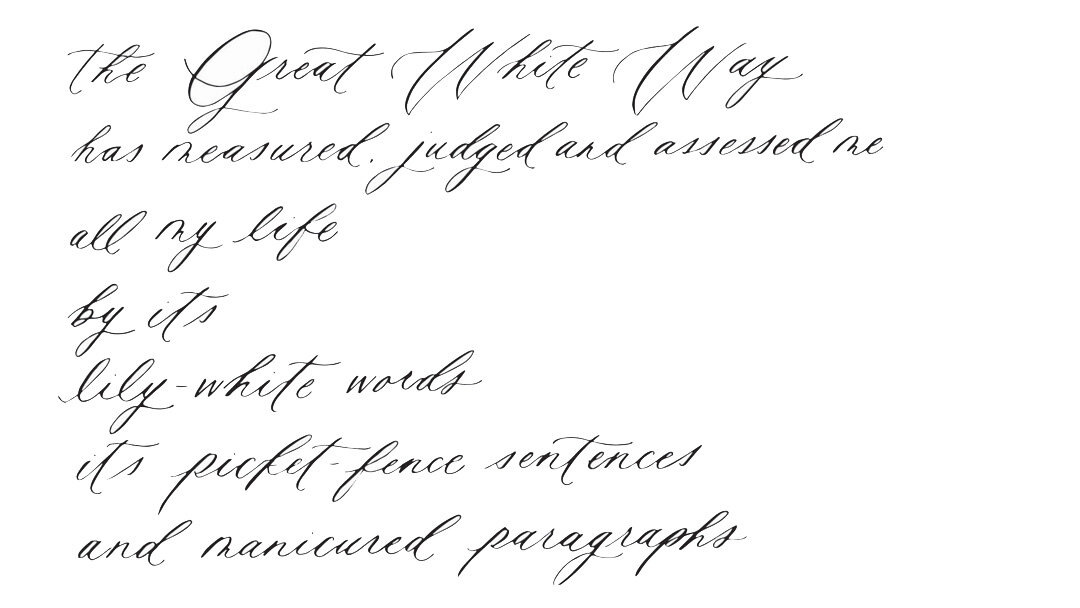
I have since reconsidered Eliot
and the Great White Way of writing English
standard that is
the Great White Way
has measured, judged and assessed me all my life
by its
lily-white words
its picket-fence sentences
and manicured paragraphs
What bothers me about poetry is exclusion. When I listen to many poets and what they write, I feel a sense of exclusion—the poem seems like it’s written for me, but it’s actually for the in-crowd. That’s what Dumont’s speaker felt, on many more levels, as an Indigenous woman reading ‘Eliot’ and the canon of white authors. At one point, the poet had accepted those standards; now, she has reconsidered them. Now she is seeing them clearly: “the Great White Way could silence us all / if we let it.”
An effective way to silence other voices is to demonize them. According to the Great White Way, this is what comes from the Devil: “your mother’s sound, your mother’s tongue, your mother’s language”—
where you sat on her knee in a canvas tent
and she fed you bannock and tea
and syllables
that echo in your mind now, now
that you can’t make the sound
of that voice that rocks you and sings you to sleep
in the devil’s language
The last line is rich with irony. The poem holds before us English and Cree. If the Devil came “to steal and kill and destroy,” as Jesus said (John 10:10), then whose language fits that description? Consider Duncan Campbell Scott (1862-1947), who presided over the expansion of residential schools. He advocated the forced removal of children from their families; he ignored official reports raising concern over sanitation, overcrowding, and disease; he said “I want to get rid of the Indian problem.” And his language is English.
The Métis family—sidelined and excluded from Canadian culture—is a recurring motif in A Really Good Brown Girl. The opening poem, “The White Judges,” pictures a homestead surrounded by watchful eyes:
We lived in an old schoolhouse, one large room that my father converted into two storeys with a plan staircase leading to the second floor […] At supper eleven of us would stare down a pot of moose stew, bannock and tea, while outside the white judges sat encircling our house.
And they waited to judge.
The last line serves like a refrain throughout the poem. All aspects of the family life—their food, clothing, hunting, language—everything is seen and sifted. Dumont’s poem allows the reader to fill in the identity of these judges. They may be the Roman Catholic Church, the Hudson Bay Company, Protestant settlers in the Red River, the federal government, Canadian historians, or the neighbours who surround Métis people at any time. These are the judges, who encircle Métis people, and watch, and wait.
There is no welcome for a Métis family among the white judges. But what strikes me about A Really Good Brown Girl is the author’s own hospitality to outsiders. Having grown up under the watchful eye of “the white judges,” Dumont invites her reader to listen, to hear Métis stories, to learn family history. In these poems, the white judges are invited to leave the circle, step inside the home, and sit on the floor. Dumont invites them to lay aside judgment, to watch the family. It’s not perfect—in the Métis home, pictured in “The White Judges,” the typical night will see a fight break out as likely as music and dancing. But all the same, there’s a place for you, the reader, to sit and listen. What do you see? A family with hopes, and wounds, and drift, and music—a family, in essence, like any other family.
Dumont gives place even to the mild irritations and idiosyncrasies of family life. Near the end of the collection, in “Instructions to my Mother,” she says, “Never list the troubles of my eight brothers and sisters / before hearing mine. / Simply nod your head and say ‘uh huh’ a lot.” Her pleas slide easily from humorous into the vulnerable. Dumont writes the voice of an adult artist, longing for the affirmation of her mother:
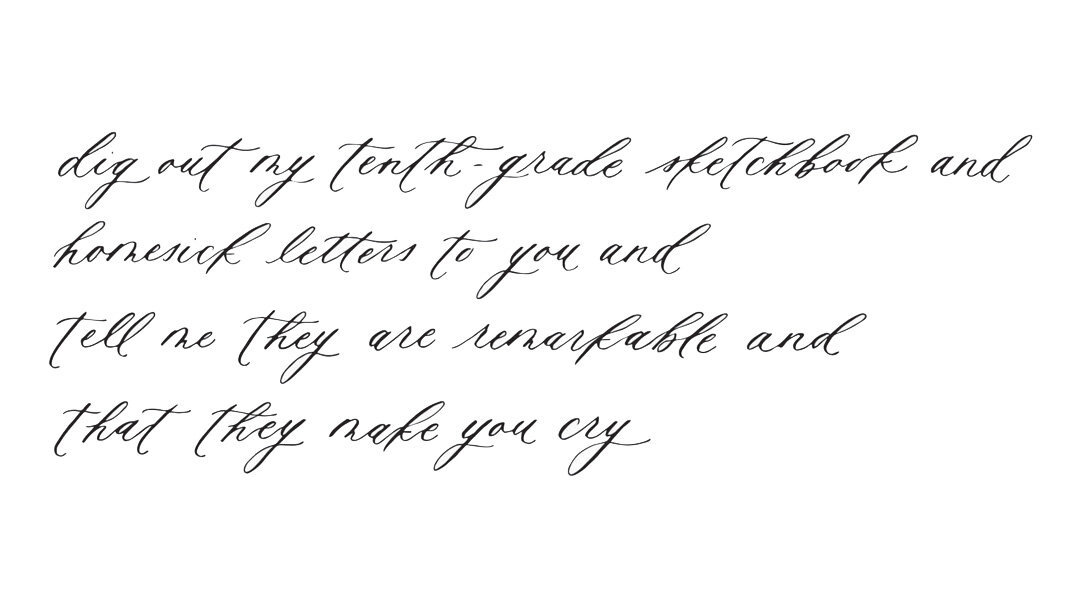
When I doubt my creativity,
Avoid listing the talents of my siblings first.
Instead dig out my tenth-grade sketchbook and
homesick letters to you and
tell me they are remarkable and
that they make you cry.
Here is true hospitality. The form is conversational and direct. Its content is the speaker’s closest relationships, her hopes, her insecurity, the beautiful and broken things of her family. This is what I find so refreshing about the collection. “The Great White Way of writing English” judged her, excluded her. But she offers grace and hospitality to her reader, whatever their background.
The speaker of Dumont’s poem says “I have since reconsidered Eliot.” And I have too. I used to think there was something wrong with me if I didn’t understand his waste land. I used to think I ought to spend my time reading others like him—the avant-garde of English literature. But it’s a weary task. And for what?
So with Dumont’s encouragement, I have walked away from the avant-garde with a spring in my step. I don’t know what Ezra Pound or John Ashbery are talking about. I understand only 15% of Shakespearean dialogue. I will probably never read a Russian novel. For me, literature has stopped being a ladder that I climb to compare myself with other people. Marilyn Dumont taught me to see in literature a far more noble, and liberating purpose. Reading her poems, I see the power of words to unravel prejudice, and to replace it with something like understanding.
Text: Jeffrey Hynds