
Lead Me to the Cross
What does it really mean to pray, “Thy will be done?”
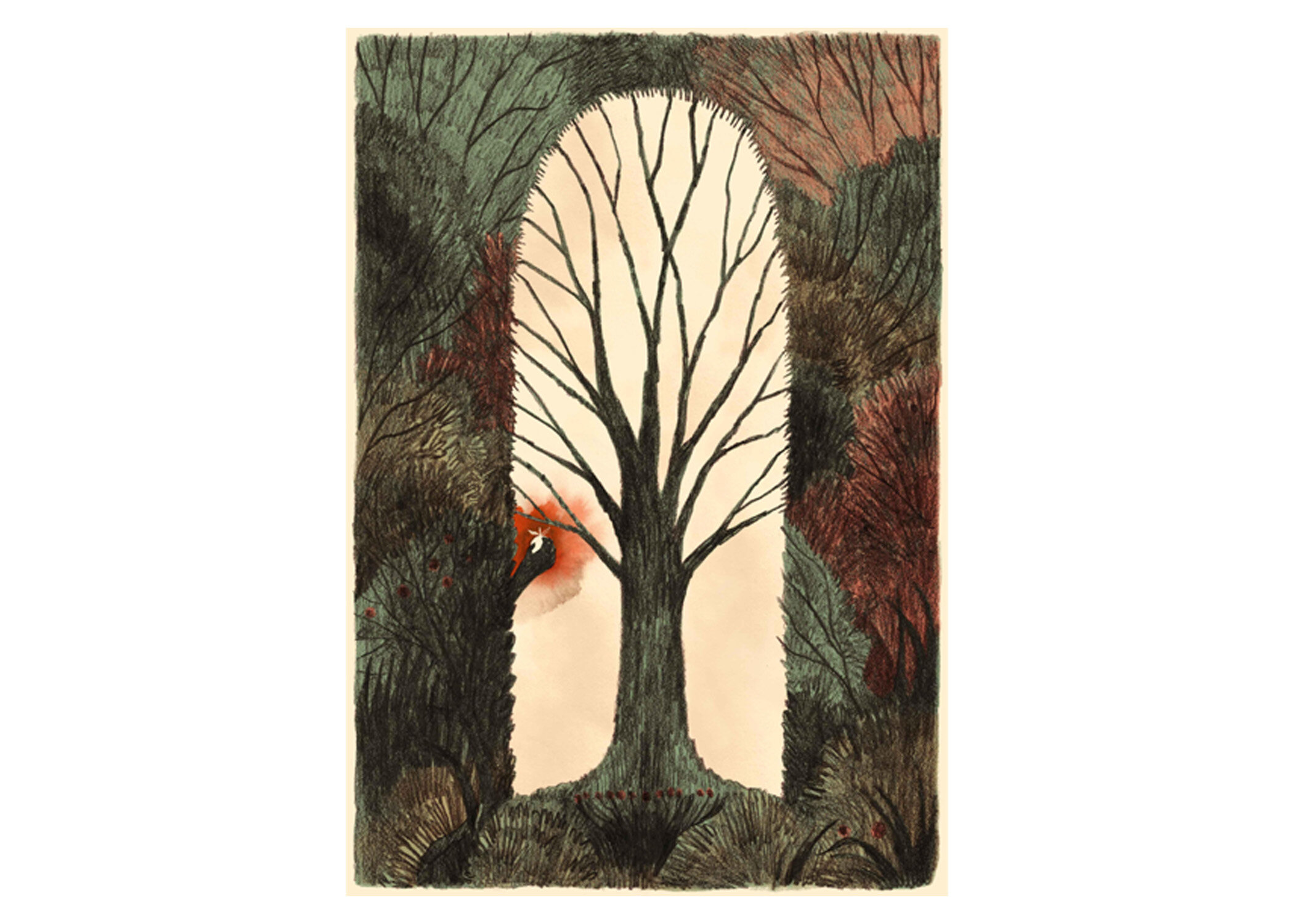
After years of failed infertility treatments, my friend sloughed hope with every new month. The desire for children became more urgent, and her doctor assured her and her husband that their chance of multiples was quite low if he implanted more than a handful of fertilized eggs. Four “took.” Four babies with pulsing hearts began growing in that once-hostile womb.
Seeds to become saplings to become trees.
When the doctor delivered the news, it was not the scene of Gabriel’s annunciation. The doctor insisted that my friend either “selectively reduce” two of the fetuses or face the possibility that none survived. She had spent a childhood of Sundays on kneelers, a lifetime praying the “Our Father,” but my friend was not prepared for this collision of wills: the divine will to sanctify life, the human will to manage the odds.
Her twins are beautiful, healthy children.
Your Best Life Now
The most recognizable of Christian prayers is what Christians across the centuries have called the Lord’s Prayer, or in other traditions, the Our Father. It begins with a call of white-flag surrender: “Your kingdom come, your will be done, on earth as it is in heaven.” Although these words can become a rote repetition, seemingly benign for their apparent banality, they collide forcefully with popular sentiments of freedom today like “You do you,” and “Live your truth.” In the drama of redemption beginning in a primordial garden, the grasping for self-rule was humanity’s first taste of death.
In his book, A Secular Age, Canadian philosopher Charles Taylor explores changing ideas of freedom and human flourishing across the centuries: from a time when the world was “enchanted” by spirits, demons, and other personal forces of good and evil to our current moment of “exclusive humanism,” where belief in god seems the least plausible option and the ethos of personal freedom reigns supreme.
In primitive tribal societies, “gods” were a given feature of the landscape. No one denied the invisible spiritual realm that lay behind the veil of material reality. While these gods might have been alternatively benevolent or hostile, they did not necessarily demand self-renunciation. One offered sacrifices to the gods, yes, but these sacrifices were efforts to secure temporal benefit: fertility, prosperity, protection, and long life. Though one might well have feared the gods, they did not fear the gods would demand the surrender of their own happiness. Ordinary human flourishing was a shared project of heaven and earth.
Christianity, however, represents a significant shift from primitive religion. It invokes higher goals for human flourishing than good harvests and healthy babies. When God entered history, clothing himself with flesh in order to willingly die a humiliating, degrading death by crucifixion, it becomes clear that God isn’t only interested in human happiness. It becomes clear that human suffering can even be part of his eternal good.
In other words, Christianity makes no assurance that the followers of their crucified Lord get their best life now. As Taylor explains, at the cross of Jesus Christ, there stands an irreducible difference between the injunction “Thy will be done” and “Let humans flourish.”
The Good Life
If God does not will my immediate happiness, if he might even choose to permit my suffering, can God be trusted? This question, which is at the heart of so much faith struggle, is answered by the long history of God’s generosity.
Throughout Scripture, we see the goodness of God in his extravagant will to give. As the curtain opens on creation, the first command of God is not prohibition but invitation: “Be fruitful and multiply.” Even when he forbids our human parents from eating from the tree of the knowledge of good and evil, his generosity is on lavish display: “You may surely eat of every tree of the garden [but one].” From the very beginning, God the Creator is God the Giver.
Although humanity has an ancient (and long) history of despising God’s generosity, over and over God renews his pledge to give. When the people of Israel are poised to enter the Promised Land, having wandered forty years in the wilderness for their unfaithfulness, Moses sets before God’s people the alternatives of “life and good, death and evil.” He reprises God’s creation invitation: “Live and multiply and the LORD your God will bless you in the land that you are entering” (Deut. 30:16). It’s a witness of what Christians call grace: this persistent will of God’s to give to those who have deserved none of his gifts.
The story of grace climaxes in God’s ultimate act of self-giving, when he loved the world so much that he freely gave himself into murderous hands. On the cross, Jesus paid the debt of humanity’s ingratitude. It’s an act of prodigal generosity illustrated in one of Jesus’ most famous parables. A patient and generous father, having already given half of the family estate to his rebellious younger son, gives more when the ingrate returns, the inheritance spent. “Bring the fattened calf! Let us eat and celebrate. For this my son was dead, and is alive again; he was lost, and is found.”
God gives—and gives again. And yet, as Jesus himself said, in the kingdom of God, God’s giving paves the way for a new understanding of human freedom: that the only way to save one’s life is to lose it first. This is the paradox of human flourishing in the Christian story, that while we affirm the self-giving of God, we also contend with its demands of self-sacrifice. It asks us to despise our families (Lk. 14:26); it commends heavenly treasure over earthly accumulation (Matt. 6:19); it forbids sexual license (Heb. 13:4).
The hard and holy truth is: God wants nothing less than every square inch of our lives.
Thy Will Be Done
St. Augustine’s conversion story, more than 1,500 years old, is still a resonant story today. Despite having a Christian mother who prayed for him and taught him the truths of the gospel, Augustine did not become a Christian until he was in his early thirties. He was taken with his own vain ambitions for professional success, and in The Confessions, he writes of his insatiable sexual desire. At some point, Augustine discovers that, although he has answered some of his biggest intellectual questions about Christianity, he still faces an ongoing obstacle to spiritual surrender: his lust.
“My old loves held me back,” he writes. “They tugged at the garment of my flesh and whispered, ‘Are you getting rid of us?’”
Augustine has a vision of a woman whom he calls, “Lady Continence.” In his despair, she says to him, “Why are you relying on yourself, only to find yourself unreliable? Cast yourself upon [Christ], do not be afraid. He will not withdraw himself so that you fall. Make the leap without anxiety; he will catch you and heal you.” It’s then that Augustine hears a voice, which implores him to pick up and read. He happens upon a copy of the Bible, opens to Romans, and the book falls open to 13:13–14: “Let us walk properly as in the daytime, not in orgies and drunkenness, not in sexual immorality and sensuality, not in quarreling and jealousy. But put on the Lord Jesus Christ, and make no provision for the flesh, to gratify its desires.”
Augustine grew to understand that human beings don’t flourish because they obey their most instinctual desires and follow their own yellow brick road of happiness. “Without [God], what am I but a guide to my own self-destruction?” he confessed. He grew into a better story of desire—the one Christ himself lived, who for his greater joy and our greatest flourishing, forsook his immediate good. Thy will be done. Now, as we are united to Christ, baptized with him into his death and raised to walk in newness of life, we are not simply improved: we are reborn.
To use the agricultural analogy that Jesus himself used, a human being produces fruit in keeping with her seed. Apart from Christ, we grow wildly and produce sexual impurity, greed, jealousy, and hatred (cf. Gal. 5:19, 20). To our peril, we call that fruit good. But when Christ is grafted into the failing trunk of Adam, a new tree forms, and its seed is genetically identical to the parent tree. The tree bursts into glorious bloom, bearing the fruit of the Spirit (cf. Gal. 5:22, 23). Love, joy, peace, patience, self-control: that fruit is for our eternal flourishing, and it feeds the world.
Cruciform Life
There is no ignoring the cross standing at the centre of our story, an irrefutable symbol of self-sacrifice. In Taylor’s words, the cross is not just a “merely regrettable by-product of a valuable career of teaching,” and it will always challenge our instinctive ideas about flourishing. On the one hand, Taylor assures readers that Jesus’s agony at the moment of his death upholds the dignity of bodily life. “It is precisely because human life is so valuable, part of the plan of God for us, that giving it up has the significance of a supreme act of love.” On the other, even bodily life is something we should be willing to lose at any moment.
Perhaps, as Ben Jolliffe, former pastoral intern at Grace Toronto Church, has suggested, we might imagine the life of faith standing on the knife edge of the salutation of the Lord’s Prayer: Our Father in heaven, hallowed be your name. God is a good Father, and as Calvin wrote, this “frees us from all mistrust.” Nevertheless, he’s holy. His ways are inscrutable, and he does what pleases him. Should we not marvel that what has stunningly pleased God is his own suffering and degradation, the emptying of himself in order to fill the brimming cup of salvation?
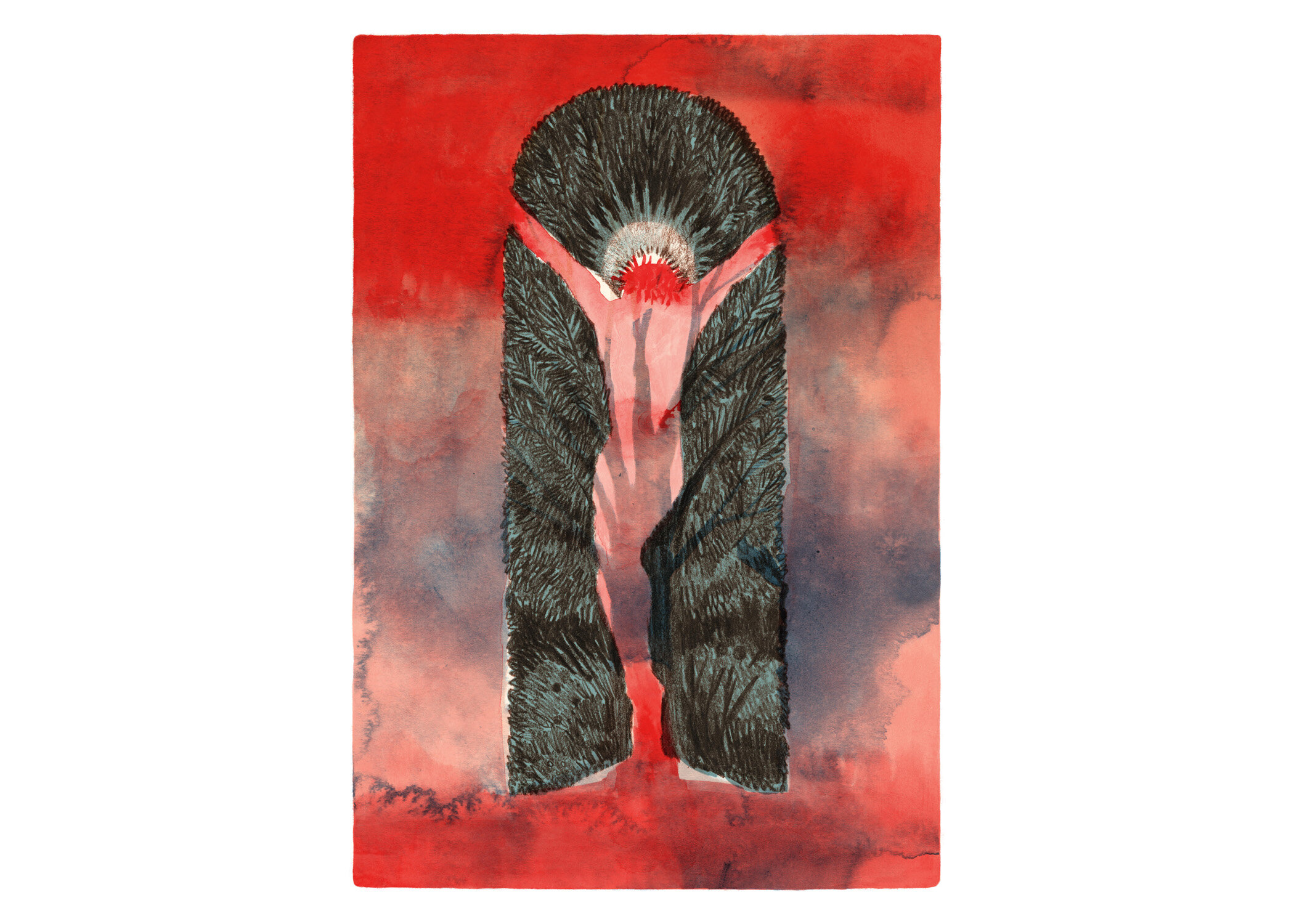
What does it mean to imitate that self-sacrificing love?
For one, when Jesus took it his cross, he laid down “fullness,” [to use one of Taylor’s terms] and it is a sobering example that God has never signed his name to our promissory notes of marriage, children, financial security, meaningful work, and health. If the empty tomb is the sign of a new creation, the cross is a sign of a broken one. Let’s not forget that we’re still in the middle act of the drama, groaning for God to finally and fully repair this world, which can’t help but disappoint. No one gets his best life now. As Elisabeth Eliot writes in her book, A Path Through Suffering, “Does our faith rest in having our prayers answered as we think they should be answered, or does it rest on that mighty love that went down into death for us? We can’t really tell where it rests, can we, until we’re in real trouble.”
Further, when Jesus took up his cross, he laid down, in a mysterious way, his freedom. To be clear, the author of Hebrews tells us that Jesus did not go to the cross against his own will: “Behold, I have come to do your will, O God” (10:7). And yet we have the scene of a kneeling, weeping, pleading Jesus in the Garden of Gethsemane where, in a dramatic reversal of humanity’s first act of self-sovereignty, God refused autonomy and chose surrender instead, emptying himself of prerogative and “becoming obedient to the point of death, even death on a cross” (Phil. 2:8). Our ethic is not autonomous freedom, but obedient love.
This seems like a particularly salient reminder for our pandemic moment, where there are daily calls to lay down our rights for the sake of others. The gospel tells us that we are free to deprive ourselves so that together, we might flourish.
Text: Jen Pollock Michel
Parts of this essay first appeared in Christianity Today as well as a chapter in Our Secular Age: Ten Years of Reading and Applying Charles Taylor, published by The Gospel Coalition.