
Formed with Every Fibre
Three lessons from a forester, a professor, and a luthier.
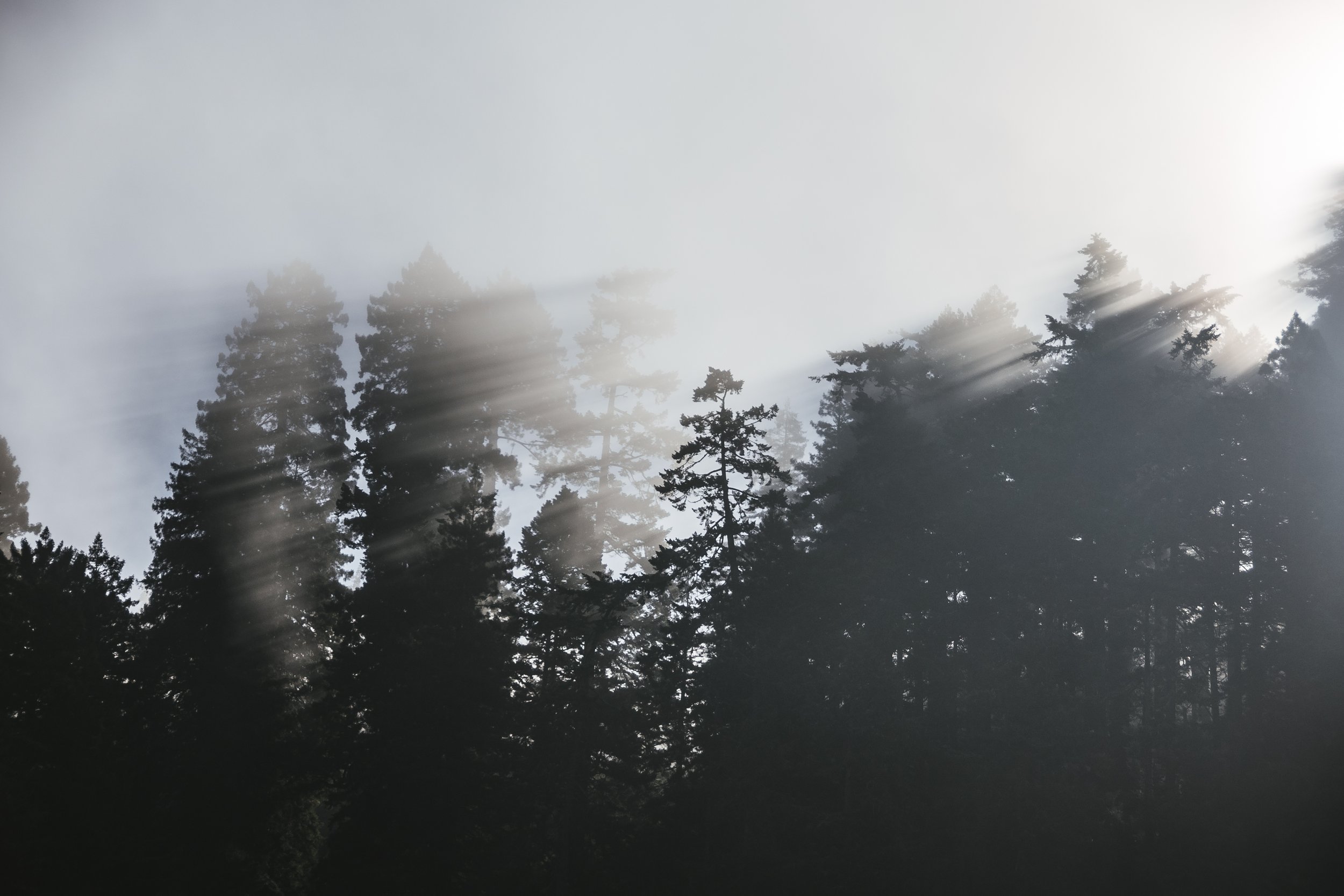
When you’re on a walk in the woods, have you noticed a sapling with a skinny trunk and wondered how long it would take before it becomes like one of the tall trees in the canopy? I’ve wondered how they ever make it, with there being so little light down there, and them having so few leaves. And have you counted the rings on a tree stump and wondered how old is old for this tree? Or what makes some wood especially good for crafting fine instruments or furniture? As an outdoor enthusiast I’ve definitely considered these types of questions briefly on hikes, but it was only when I read a book about trees, The Hidden Life of Trees by Peter Wohlleben, that I started to realize how a greater understanding of tree behaviour from that book and others could help me connect deeper with more of the human experience.
Wohlleben is a forester who studied and worked with trees, and this book was translated from German to English in 2016. It’s quite popular, as far as books about trees go, but not without controversy, as some scientists argue that it draws questionable conclusions that tend to anthropomorphize trees, or make them seem fantastically human. As a lay reader, I can’t discern which parts are scientifically true, so take what I write with a grain of salt. However, as someone with a little background in literary theory I would push back and say that there’s value in metaphorical and emotive truth. Tree metaphors and imagery make many appearances in the Bible, from the righteous man who is “like a tree planted by streams of water that yields its fruit in its season” (Psalm 1), to the wild olive shoots grafted in to “share in the nourishing root of the [cultivated] olive tree” (Romans 11). The abundance of biblical tree metaphors suggests there is value to meditating on how trees grow and live.
When I started reading I was mostly just interested in learning fun facts about trees, because we all know they’re ecologically important. As I considered more about how often trees are mentioned in the Bible, and how much tree imagery there is, I began making more connections with this and other books. Tree facts abound in lessons about community, patience, and resilience.
Communal soil
In Wohlleben’s book, a big part of the tree story is that a forest functions like a body with many parts. The trees in such a collective are connected to each other at the roots in a fungal (mycorrhizal) network, or a web of fungal threads that cover or spread into roots. This means that when a tree produces sugar, its food, this can get passed around to other trees that are part of this network. In this way, trees essentially share food, and the fungi get some benefits as distributors. Sick trees or those growing on poorer soil or in shadier areas, or saplings that are too short to reach light (I can relate) can top up by being tapped into the network. “The trees, it seems, are equalizing differences between the strong and the weak,” Wohlleben writes. Whether this is purposeful or inadvertent, this communal behaviour benefits all the trees by keeping the forest intact, which helps regulate temperature and humidity and other environmental extremes. This is something many of us have likely experienced on a hot summer’s day or a cold winter’s night: when you enter a forest the temperature is a few degrees different from out in the open, and any strong wind is dissipated. This felt to me like a clear connection to the community of early Christians as described in Acts 2:44-46:
“all who believed were together and had all things in common. And they were selling their possessions and belongings and distributing the proceeds to all, as any had need. And day by day, attending the temple together and breaking bread in their homes, they received their food with glad and generous hearts.”
Sharing makes trees collectively stronger, just as it can for us.
Wohlleben gets some of his information about fungal networks from the research of another forester from British Columbia, Suzanne Simard. I read some of Simard’s book, Finding the Mother Tree, out of interest and was particularly struck by her experiments growing tree seedlings in the soil of clearcut land planted with a monoculture of profit trees compared to growing them in old-growth forest soil mixed with other plants. After five years of experimentation she found that only the seedlings planted in old-growth forest soil (with the appropriate type of fungi) grew any new roots. The others grew no new roots and died. Planting tree seedlings in just any patch of clear soil wasn’t enough to support their growth. The seedlings needed the soil foundations of their community to grow, something passed down from previous generations. When we think of our call to be rooted in Christ, this is not just about an individual and their soil but what each individual cultivates in the soil, enriching it for future growth.
Growing while waiting
So those skinny little saplings. Wohlleben describes the strict “upbringing” that young trees have. They want to grow quickly, but the older trees’ high canopy catches most of the light, essentially disciplining the little trees to grow slowly, soaking up whatever diffused rays hit the forest floor until a fallen tree creates a clearing. While this feels unfair and tough, and no doubt many a young tree doesn’t make it, “slow growth when a tree is young is a prerequisite if a tree is to live to a ripe old age,” Wohlleben assures. Slow growth means cells are smaller and more compact because there’s little to no room for air. Slow-grown trunks and branches (a.k.a. old-growth wood) are more resistant to storms and breakage as well as to fungal infection. That brought to my mind the difference in wood quality between artificially fast growth and old growth as comparing budget IKEA furniture to heirloom furniture. This wait for a gap in the canopy can be decades-long, but it is not wasted time. It is an expectant, active waiting, much like the kind of waiting described in the Bible: “I wait for your salvation, O LORD, and I follow your commands” (Psalm 119:166).
How often do I look around and wonder why I’m not already in the canopy? There is no fair answer to why some saplings get a break of sunlight (first) and some don’t, but it doesn’t mean there’s nothing happening for those on the forest floor. For one thing, their community helps sustain them through their roots so that even if their soil were especially poor they can still grow in ways that prepare them to be in the canopy. When Simon Peter learned how he would die and asked Jesus about another disciple’s fate, the answer he got was “If I want him to remain until I come . . . what is that to you? As for you, follow me” (John 21:22). As the rings of a tree tell its unique story of growth, so do our timelines.
Refined by adversity
In one section Wohlleben observed that a dry spell was difficult for spruce trees growing in places that usually get a lot of water, but spruces growing in a dry stony area were used to drought conditions and thrived despite having limited water.
Reading this point, I was struck by something I had read in a book by Martin Schleske, a luthier or violin-maker (coincidentally also German). At the beginning of Schleske’s The Sound of Life’s Unspeakable Beauty, he describes his search for tonewood: the quality wood that makes wooden, stringed instruments resonate and “sing.” The ideal wood for the top of a violin’s body is mountain spruce that grows high up on the Alps, in the often poor soil of this harsh climate. These conditions force the trees to grow slowly so they develop narrow rings, making for a very fine wood grain. They also quickly lose their lower branches in the darkness of the forest and focus on the ones at the top near the light. This means the trunk is both finely-grained and mostly free of knots that would interrupt the wood grain and dull the sound. Schleske makes a spiritual observation about this: that we should also “prune off our deadwood” and learn to “cast aside things that will never produce true sound.”
Sun-loving succulents are similar to trees in this behaviour. I have a collection, and over the dark winter months they grow very long and leggy, giving up on their lower leaves and concentrating their efforts on the crown. This means that every spring I cut them back. With succulents this is commonly (though maybe unfortunately) known as beheading, and you then replant this head so it makes a nice compact rosette again. Without it, my plants in their little pots would literally fall over from their top-heaviness. Without the true Light, we too grow unruly; without pruning, we too are prone to falling.
Schleske also talks about how luthiers approach each violin differently according to the uniqueness of the wood grain. Each tree has different factors—unique history of growth, exposure to wind, location on slopes, pressure from the weight of snow—causing the fibres to become the way they are. There isn’t a standard way to cut every piece of wood, just as Jesus showed Peter that his life and calling would be unique to him. Schleske notes that the art of violin-making is to “fulfill” the sound potential of each piece of wood based on its grains and patterns, rather than use some law of predetermined form. He draws parallels to our lives, where we may experience adversity that shapes us, gives us lopsided wood grain in some areas. But he reasons that if a violin-maker loves the wood enough “to labor with its fibers, determined to work with what it has already become, however difficult it may be, how much more so will God.”
Wind and storms can take down trees, but some trees are more able to tolerate such adversity, even to the point of becoming prized for their wood. It is reassuring to consider the beauty that can come from weathering difficulty, beauty that becomes unique to each of us, but I’ve only scratched at the outer bark. What can a deeper understanding of fruit, seeds, pests, transpiration, and other aspects of tree life show us about our lives? I think all three authors would say “much.”
Text: Sharon Lam
Photography: Leemarc Lao