
Eye to Eye
As an ophthalmologist, I have had the privilege—and the pandemic risk—of seeing eye to eye with my patients. Did this proximity with strangers have something to teach me?
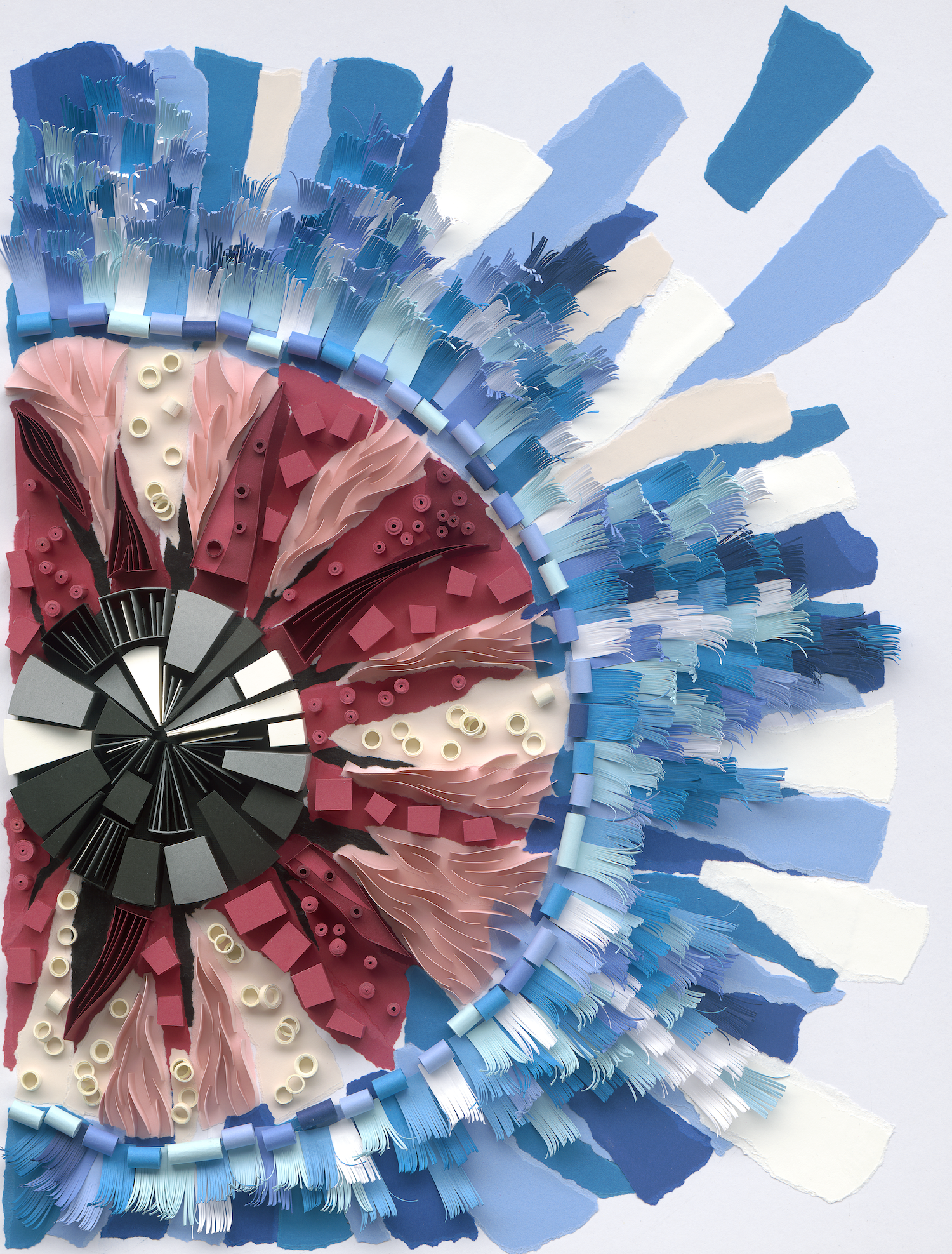
Everyone has their March 2020 moment. For me, it was literally at the eleventh hour, the night before my fully-booked surgery day, calling patients to inform them that their eye surgeries had been cancelled. What started as a two-week pause quickly became three months. Then, as with other areas of life, it became a year-long pattern of rushed restarts and immediate breaks. While patients understood the situation, many experienced disappointment when their hope of seeing was replaced with “wait and see.” It was not only their sight that was affected, it was their vision of the future that became murky and uncertain.
The realities of practicing medicine during the pandemic are constantly evolving and unique to each specialty. In ophthalmology, or eye surgery, unlike other areas of medicine that pivoted to virtual appointments, the physical examination component is so crucial to our diagnosis and management that many of our appointments still have to be in person. It also means that we have to contend with getting very close, often about six inches away, to a patient in order to examine them. We are literally seeing eye to eye. In a time when physical isolation is routine, this proximity is both a privilege and a risk. A privilege to be healing someone and to be in the same space as another person outside of my household; a risk due to the potential for the patient and myself to contract COVID-19.
As I was navigating this small space, I drew parallels to what it would mean when we come back together again. As we regain the simple habits of being with people we have missed during this pandemic, whether sharing a meal or hugging someone, I wonder about how we’ll relearn to navigate interactions with strangers. Will this time apart have put us further into our own echo chambers, and will we be able to interact with people with whom we do not see eye to eye? Will we only see those interactions as a risk, or can we recognize the privilege of these moments?
In the midst of dealing with the health crisis of the pandemic, our society also confronted the deep and longstanding disease of racism. From summer 2020 to spring 2021, movements such as Black Lives Matter and Stop Asian Hate brought to the forefront the painful, day-to-day experiences of people of colour. I had a personal experience of this crisis on the streets of Toronto when someone shouted at me to “go back to [expletive] China, you [expletive] Chinese!” It did not matter that I was born and raised in Toronto, nor did it matter that I was contributing to the health of our community; I was simply labelled as belonging “elsewhere” because of the colour of my skin. How do we begin to come together when we are fixated on our differences and the “otherness” of strangers?
Fortunately, I did not experience any physical harm. But for some time after the incident, I took the long route home to avoid the location where the incident happened. Even now, I approach the street intersection with much trepidation and look to make sure that no one is staring at me with hostility before I keep walking. I do not want to equate what happened to me with what others have suffered on a more serious scale, nor do I want to ignore the systemic racism that pervades our institutions and is a distinct form of racism separate from these individual incidents and also needs to be addressed. But during this time, I read a book that helped me process what it means to be together at a time when it feels like our society is tearing itself apart.
In Adam Grant’s book, Think Again: The Power of Knowing What You Don’t Know, Grant examines how to reconsider our opinions and sustain conversations across differences. His research includes a number of social experiments performed with Boston Red Sox fans and rival New York Yankees fans. It was found that many conventional approaches to humanize the other side failed to reduce the animosity between these two groups. For example, a fan of one team would write a letter with their identity hidden. The reader of the letter, a fan of the opposing team, would rate the writer positively. However, when the true identity of the writer was later revealed, the reader’s animosity towards fans of that team was not abated. They thought of the fan who wrote the letter as the “exception.”
The approach that did work, however, was to ask the fans to imagine what it was like to be born in a different city or grow up in a family of people who rooted for the opposing team. This revealed that team loyalties are more than a matter of personal preference to be changed at will. The stakes are much higher. Identifying with a particular team came to be understood as a measure of belonging—a marker of personal identity and personal acceptance. When people connected their beliefs about a team’s superiority with the felt measure of their belonging to their tribe, they were more fixed in their beliefs. If, on the other hand, they realized that team loyalties had more to do with geography than team superiority, they were less likely to vilify the other side.
Our beliefs are driven by our desire to belong, and this can help us understand the vehemence with which we defend our views. To return to the example of the racial hostility I experienced on the streets of Toronto, what the man did to me was unacceptable. Still, his reaction reveals the brokenness of our society: that to belong, we sometimes think we must lash out at another. Difference can feel like a threat to belonging. For those with whom we do not see eye to eye, who are not in the same “group” as us, the risk of animosity towards each other can arise quickly.
By contrast, gospel belonging is more than shared opinions and demographic similarities. It is not to be found in the societal groups that we ascribe to. Rather, it is a belonging to one another through our belonging to Christ. Through this grace, we can have the privilege to offer true healing in our fragmented society.
Text: Hannah Chiu
Art: Adam Hu