
Breadcrumb Tales: The Stories that Follow Us
The co-founders of Grace Toronto children’s library think through the importance of fairy tales and explore how stories root themselves in our hearts for a lifetime.
“A rich man’s wife became sick, and when she felt that her end was drawing near, she called her only daughter to her bedside and said, ‘Dear child, remain pious and good, and then our dear God will always protect you, and I will look down on you from heaven and be near you.’” — Cinderella
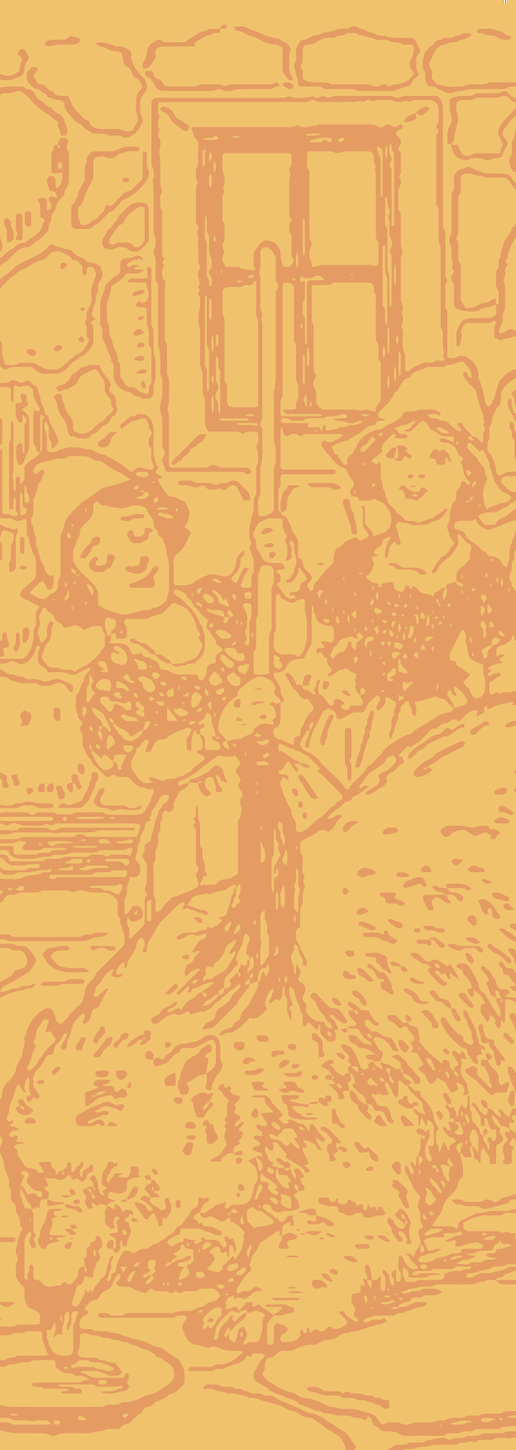
“There was once a poor widow who lived in a lonely cottage. In front of the cottage was a garden wherein stood two rose-trees, one of which bore white and the other red roses. She had two children who were like the two rose-trees, and one was called Snow-White, and the other Rose-Red. They were as good and happy, as busy and cheerful as ever two children in the world were.” — Snow-White and Rose-Red
The words “once upon a time” rarely fail to cast a spell that can transport an audience to any time, any place. For children, reading fairy tales is an immersion into a new world where anything is possible: where good and evil battle, where animals can talk, where witches build edible homes. Children can fully engage with a realm of experiences that they will never live themselves and be inspired by the virtues different characters portray. But adults have the distinct privilege to reread these stories and to share them with children. Rereading offers the opportunity to see more deeply the beauty and truth of stories. As C.S. Lewis wrote, “Someday you will be old enough to start reading fairy tales again.”
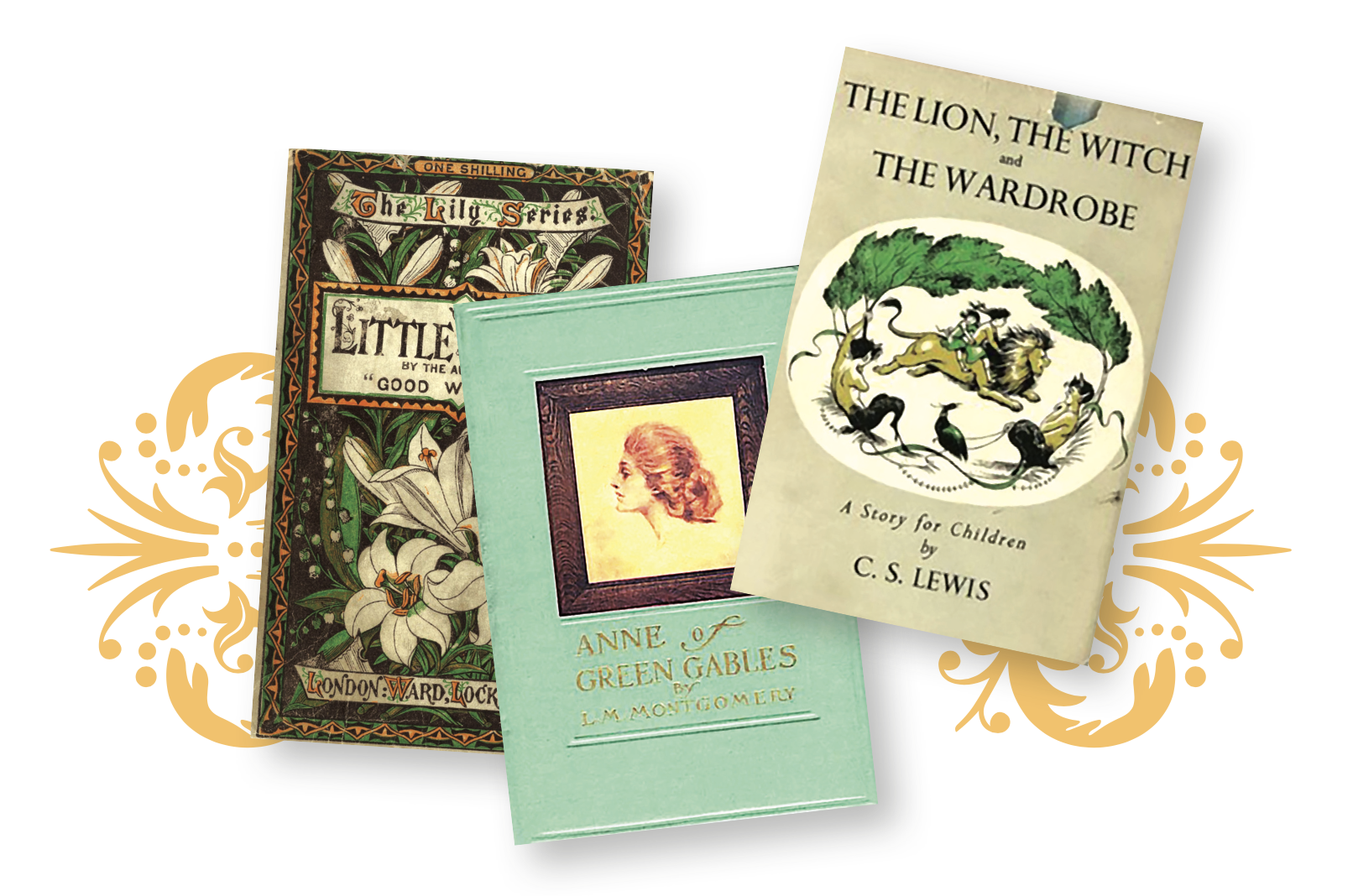
Fairy tales are written stories meant to be enjoyed and consumed as a fictitious adventure, while simultaneously having the capability to teach readers something about the world. We can include our most popular fairy tales in this category, such as Cinderella and Sleeping Beauty, while also including modern stories such as The Velveteen Rabbit and even The Chronicles of Narnia. Fairy tales are well known for their happy endings but The Literary Life Podcast’s Angelina Stanford adds a redemptive arc as part of the fairy tale definition. These stories give readers an assurance that good will triumph, even when all looks bleak. As G.K. Chesterton writes,

Fairy tales, then, are not responsible for producing in children fear, or any of the shapes of fear; fairy tales do not give the child the idea of the evil or the ugly; that is in the child already, because it is in the world already. Fairy tales do not give the child his first idea of bogey. What fairy tales give the child is his first clear idea of the possible defeat of bogey. The baby has known the dragon intimately ever since he had an imagination. What the fairy tale provides for him is a St. George to kill the dragon.
But why are fairy tales so important? Reading this kind of story gives us two types of experiences. First, that of imaginary adventures. We live vicariously through characters as they endure hardships, gradually fight towards victory, and finally celebrate the joy of overcoming. In the end, Hansel and Gretel will always return to their father, Frodo and Sam will see their beloved Shire again, and Cinderella will no longer be a servant to her stepmother.
Second, fairy tales and other excellent children’s fantasy offer a model of character for young readers. Time and time again, we observe the (sometimes surprising) virtues of different characters and come to learn that these are admirable and courageous ways of living. Lucy Pevensie is open to wonder, Charlotte the barn spider is unfailingly kind, and Pinocchio learns the value of loyalty and honesty.
By the end of the story, we are left emboldened by the small being powerful, the strength of true friendship, and the surprising fortitude that we can find buried within. This is the enduring work of excellent literature: stories help us look outward while changing us inwardly.
As we mature as readers, we recognize more and more how true it is that stories stick with us and shape us. In this section, we share two books that have impacted us and invite a few of the Grace Toronto Church staff to reflect on memorable stories from their childhoods.
Maria Faber
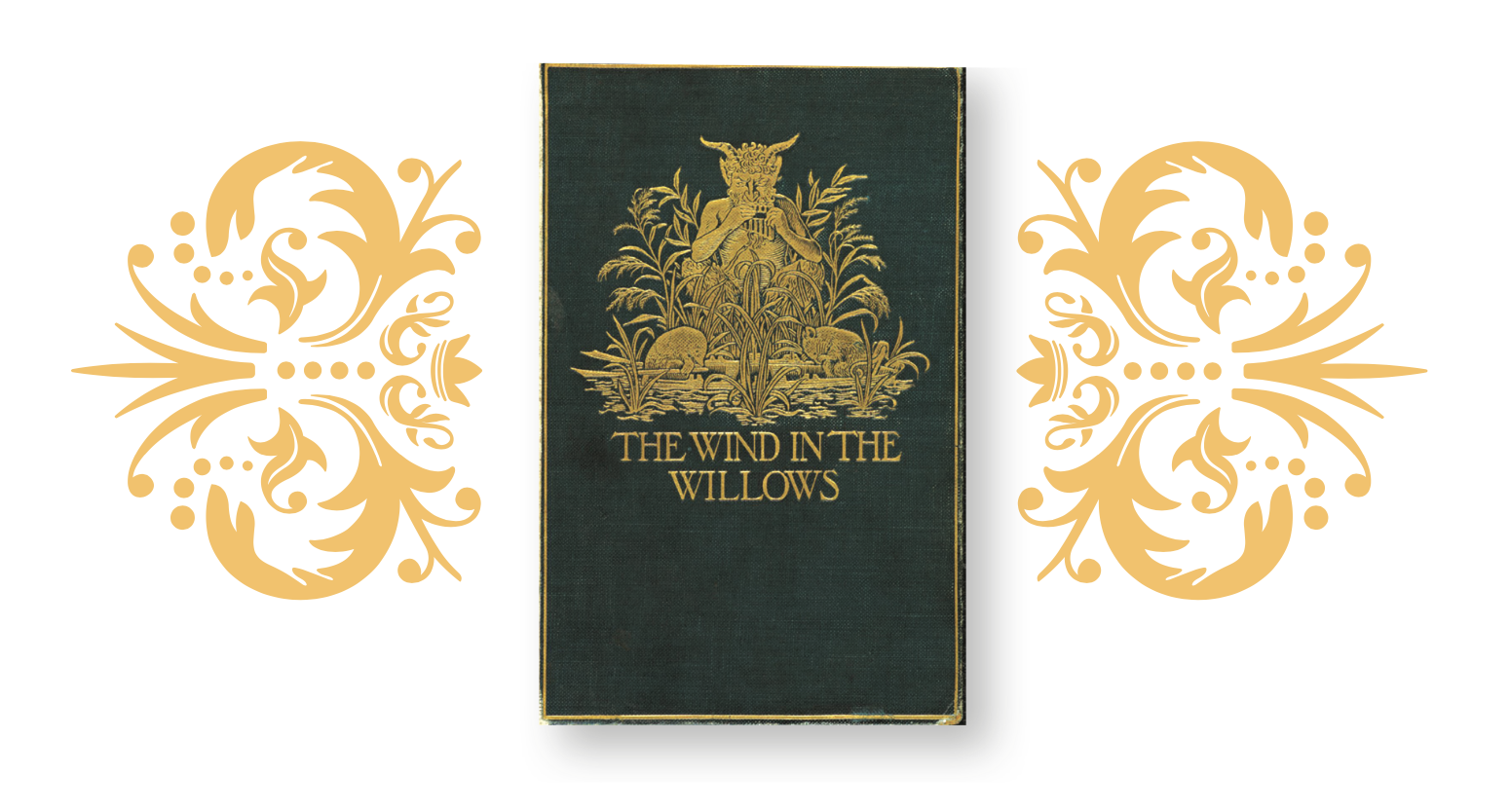
I grew up loving the Christmas season and always looked forward to seasonal TV specials. My favourite was an adaptation of a chapter from The Wind in the Willows by Kenneth Grahame. In it, Mole and Ratty are travelling together when they pass by Mole’s old home. Mole longs to go back and visit, but Ratty is impatient to get to their destination. Mole reluctantly turns away to follow his friend. When Ratty finally realizes his friend’s heartache, he immediately relents and encourages Mole to lead the way back. Sadly, when the pair do reach Mole End, it is cold, dark, and lonely -- not at all like the warm, homey place that Mole remembers. To make matters worse, guests arrive to sing Christmas carols and Mole has nothing to offer them. Ratty rises to the occasion, encouraging his friend and quietly enlisting the help of a field-mouse to provide food and comfort for all. The evening ends with full stomachs and full hearts.
The friendship of these two characters shines brightly in this chapter, and I find it all the more poignant as an adult. Both Mole and Ratty willingly put aside their own desires in order to make the other happy. Mole wants to return home “but even under such a test as this his loyalty to his friend stood firm. Never for a moment did he dream of abandoning [Ratty].” The decision to choose friendship over home is heartbreaking, and we can feel Mole’s pain as he follows his friend’s steps away.
We also feel Ratty’s regret for the pain he has caused his friend and his desire to make amends. He cajoles Mole into a good humour to make their walk easier, and keeps up their spirits even in the face of Mole’s despondency at seeing his home so neglected. He notices the small details of Mole End and commends Mole, lavishing him with the affirmation his friend needs.
These two examples, highlighting self-sacrifice and love for another, have taught me what it takes to build a relationship and how to be a true friend. Mole and Ratty are worthy of imitation.
Michelle Choi
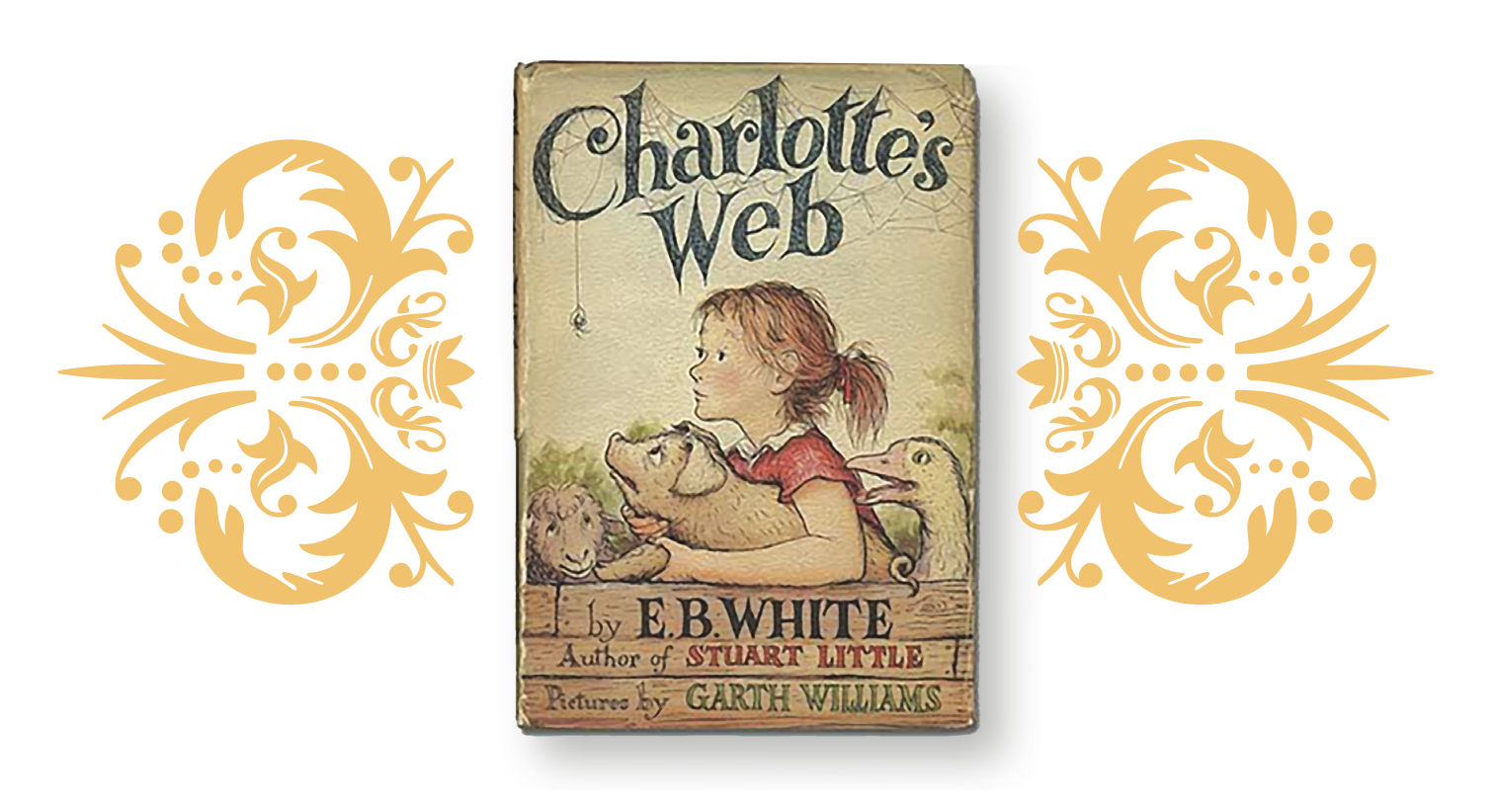
Charlotte’s Web is a timeless children’s story and considered one of the greatest children’s books of all times. Yet, I never read it in my childhood. I only picked up this book a few years ago to read to my children.
The story follows a young pig named Wilbur, who is the runt of the litter. Destined for the slaughterhouse, Wilbur is quickly rescued by Fern, the young daughter of farmer John Arable. Young Fern decries Wilbur’s death sentence, protesting: “But it’s unfair. The pig couldn’t help being born small, could it? If I had been very small at birth, would you have killed me?” Arable relents, and lets Wilbur live. From early on, we see compassion in the eyes of young Fern, who loves and cares for Wilbur. The themes of compassion and friendship are central to the story and are part of its profound yet simple truth: friendship is a powerful force that can shape futures.
Later on, we are introduced to the story’s namesake, Charlotte A. Cavatica. Charlotte is a barn spider who observes Wilbur as he tries in vain to make friends at the new farm where he now lives. One rainy day, Wilbur feels particularly lonely in his new surroundings: “Wilbur didn’t want food, he wanted love. He wanted a friend – someone who would play with him.” Wilbur asks the goose, the lamb and the rat named Templeton, to play with him, but to no avail. Charlotte, quietly observing him, says, “I’ll be a friend to you. I’ve watched you all day and I like you.” This is the beginning of an unlikely friendship that leads to an incredible journey.
Charlotte is, in many ways, the opposite of Wilbur. She is pretty and clever, but fierce, scheming, and even bloodthirsty! Like Fern, Charlotte shows compassion for Wilbur. Zuckerman, Wilbur’s new owner, keeps the little pig, but Wilbur is destined to become “bacon by Christmas.” After finding this out, Charlotte helps Wilbur avoid becoming Christmas breakfast, by weaving words like “Some Pig!” “Terrific!” “Radiant!” and “Humble!” in her web above Wilbur’s pen. This phenomenon puts a spotlight on Wilbur and he soon becomes Zuckerman’s famous pig.
The most pivotal and heartbreaking moment in the book comes when Wilbur realizes his best friend Charlotte is dying. He asks Charlotte why she decided to help him, and adds, “I don’t deserve it. I’ve never done anything for you.” Charlotte simply replies, “You have been my friend. That in itself is a tremendous thing.” Charlotte’s life, and her unforgettable friendship with Wilbur, has been permanently ingrained in me. Her boldness and compassion have inspired me to be a better friend, to think of others rather than just myself.
Gwen Sampson
I don’t ever remember a time as a child that I did not read or wasn’t read to. A childhood favourite of mine was Little Women by Louisa May Alcott. I was about ten years old or so when I read it. I even memorized a section of poetry from the book that I can recite to this day! It’s not quite a children’s book in the sense of being a fairy tale; rather, it’s a book that depicts certain life-realities. The period when I read it was a time of transition for me, almost like an awakening. I have often thought of the character Beth who was brave in the face of illness and who faced mortality as a young woman. Would I be that brave if it were me? The brilliance of this book is that it is suitable for readers aged 10 to 110 and is just as relevant for readers today as it was in the 1860s.
Mark Durksen
It's hard to choose a favourite, but I remember enjoying The Chronicles of Narnia. I remember taking note of the annoying characters, like Eustace and Edmund, who in their selfishness ended up causing trouble for themselves and others. I mostly took their choices as cautionary tales. While I think that perspective still applies, as an adult I also see their stories in light of the grace shown to them. I recognize the profound personal transformation that followed, and I feel I relate to them more than just hoping I'm not like them.
As people, we crave structure, cohesion, and purpose in our lives. We are looking for meaning, and stories help us find it. G.K. Chesterton poignantly writes, “I always felt life first as a story: and if there is a story there is a story-teller.” Fairy tales and timeless children’s fantasy stories help us recognize that we are not merely living from one isolated moment to another, but that we can place our lives within a larger narrative. Our own small narratives are really a part of the one true fairy tale.
Alisha Simpson
Some of my favourite stories growing up were The Chronicles of Narnia, Harry Potter and Anne of Green Gables. Listening to Narnia on many long road trips left me with lasting memories of being with my family.
I'd say that Anne of Green Gables had the greatest impact on me, though. I thought Anne was so brave, imaginative, and different. I loved that she had red hair and freckles like me. It is encouraging to hear stories about people who look and even feel like you do sometimes. It made me feel seen and less alone in the world. Anne inspired me to care less about what others thought of me and to dream big -- not things I do naturally! Perhaps I envied her a bit – she was so unique and wore her differences with grace and embraced the things that made her special.
Text: Maria Faber & Michelle Choi
Art: Karlo Matt Rian Ong