
A Haunted World
The end of my wife’s maternity leave helped me discover an alternate reality.
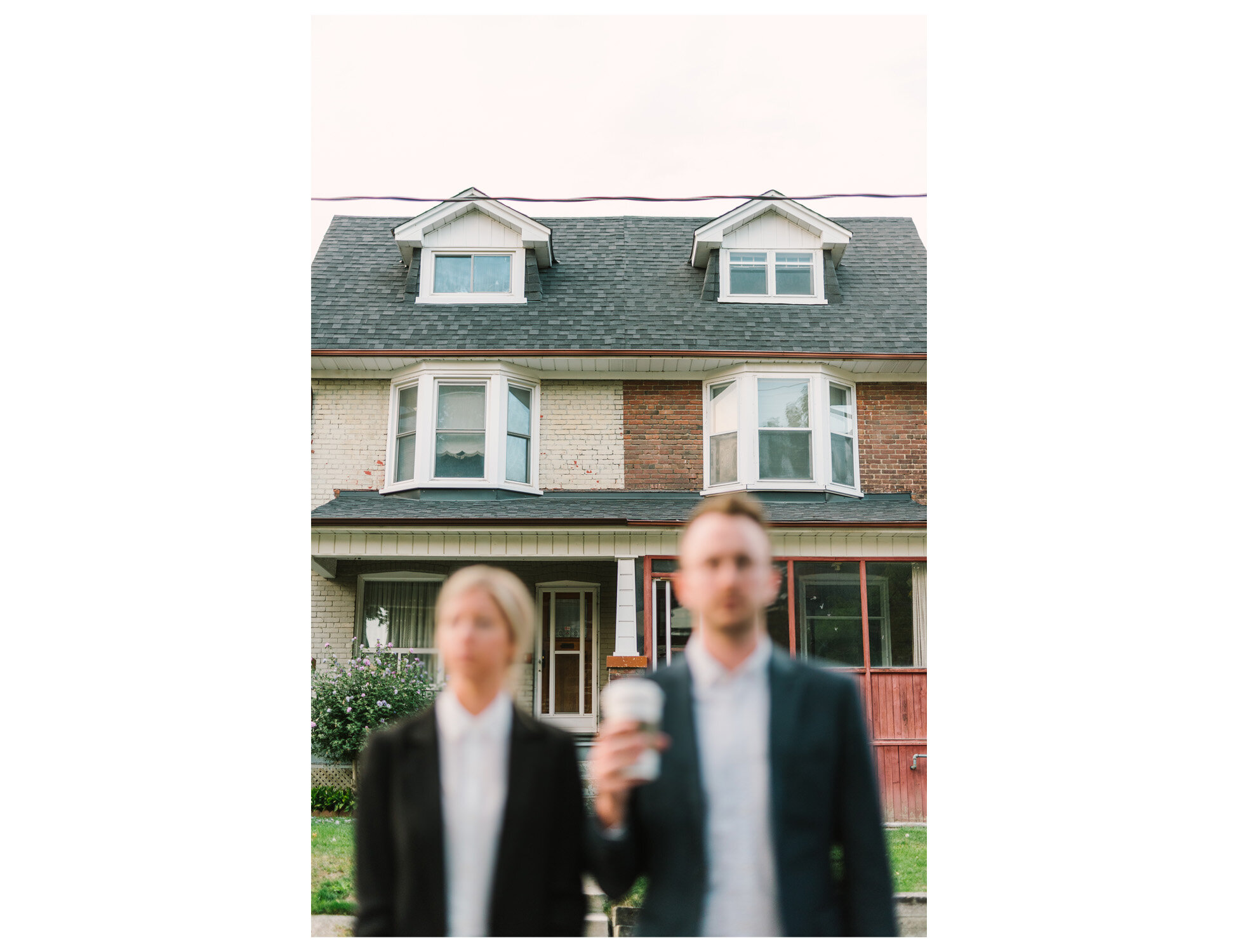
Our baby Fox—just over a year old at the time of writing—points at what he wants now, whether it’s his mother, a glass of champagne, or a knife. Tonight he took 21 steps, then started biting his mother. He disassembled a barrier to the dining room I had built out of a plastic wagon, three chairs, and a nonfunctional baby gate, and crawled into the dining room. When I prevented him from pulling a shelf down, he wept, and then pointed to his mother.
Tonight marks the end of my wife Mel’s first week back at work since she began her maternity leave some 53 weeks ago. Unlike the United States, where I was born, Canada provides fairly generously for new parents to be able to spend time with their children: 12 months is fairly standard, with an 18-month stretch option. Although we’ve benefitted from this domestic policy, we find we must now pass the baton of Fox’s care to his grandparents.
They arrived Monday morning around 7:30 with a bag full of supplies and lunch; we briefed them on the contents of a yellow notepad page we’d filled with Fox’s daily schedule and stuck with a magnet to the freezer door. Fox and Bingley, our enormous pug dog, were excited to see Mel’s parents, and their happy distraction allowed us to escape without being mourned.
During my wife’s leave, I had become accustomed to the sight of Mel with Fox on her hip, both waving through the front window as I would start the walk to my bus stop. On the first Monday after the end of her leave, Mel stood next to me outside, and we both waved at Fox as he sat on his grandmother’s hip. He waved back at us confusedly as we walked away.
Ten hours a day away from the boy: that is the allotment the world expects and takes from us, members of an advanced and highly developed society. In many places the expectation is higher, more exacting. I only recently started to realize that the arrangement is not temporary: we have entered a pattern of life that is meant to be durable, to remain in place until our potential has been exhausted.
To be clear, our situation is very good. We cannot complain. But part of me still feels someone should count the cost of all this—the little daily accumulations of discouragement for office workers: frequently alienating, abstract work; the petty rules and protocols that govern so many modern workplaces; the binding and loosing of so much of life to no apparent end beyond the temporary enactment of obscure functions. I cannot imagine Christ exhorting the apostles under fluorescent lights.
We have coped: the alarm wakes us a half hour earlier, and together my wife and I carve out a little sphere of privacy underneath the day, before the sun has come up, with tea and clutched blankets on the couch. We tag-team the first diaper if it’s full of solid waste, and then trade Fox back and forth so the person with free hands can put on clothes and take care of routine hygiene.
After leaving the house, Mel and I huddle together on the bus, which takes us to a train. The first day we talked the whole way into the city, enjoying the novelty of each other’s company on the commute, but by Tuesday we were back to familiar, quiet habits of reading and gazing out the window. It is important to resist the insistent symbolism of the beautiful early-morning landscape that slips past the moment you notice it from your fast-moving seat. Besides, the way you saw it for just a moment helped to make it beautiful. If you stuck around, the view would become as mundane as the inside of the bus, surely.
Meanwhile, back at home, Fox and his grandparents enjoy life unbounded, unloosed, unmeant to redound to shareholders’ benefit. They lay up treasures for themselves in heaven instead.
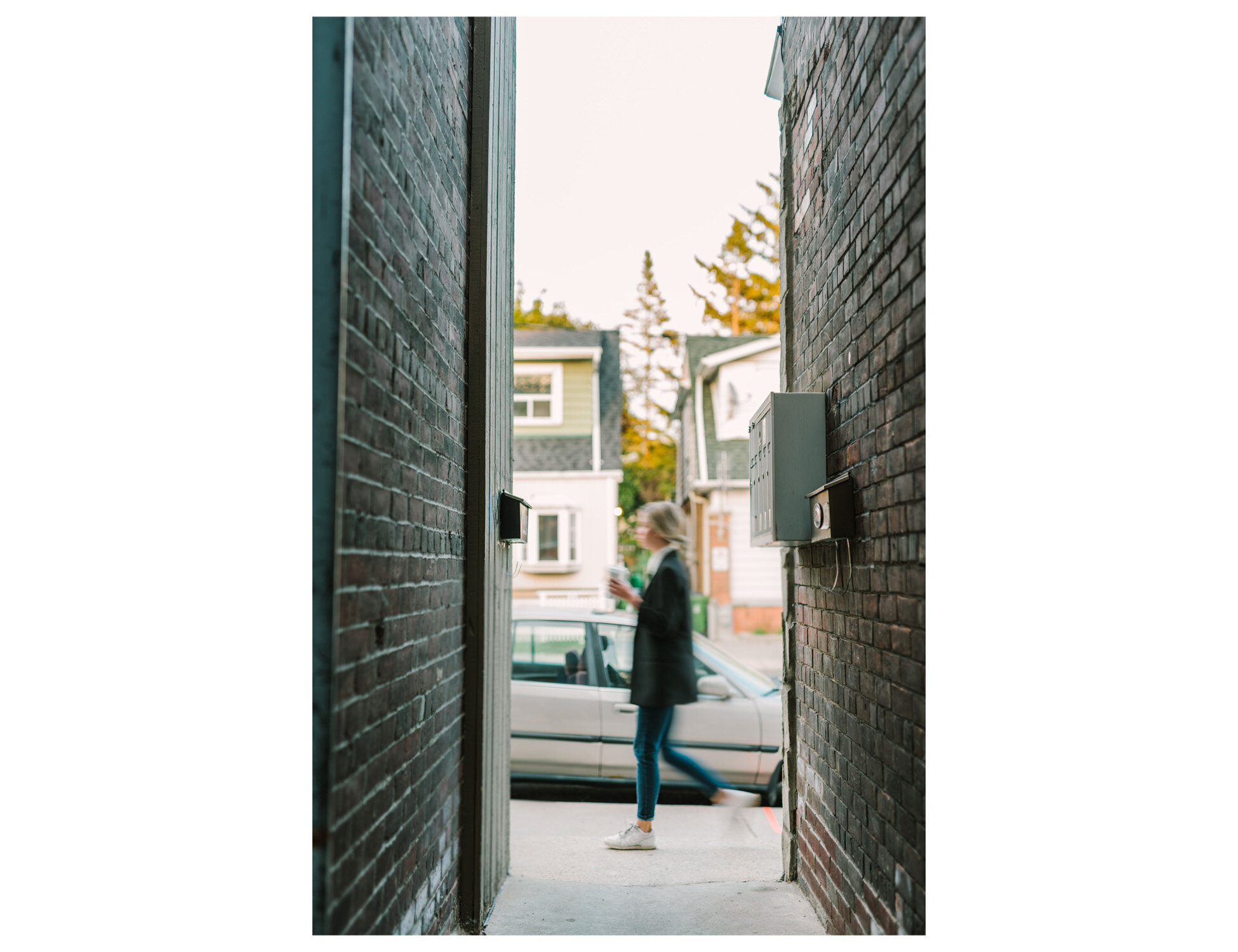
With another workday behind us, Mel and I return to find Fox waving through the same front window that framed his confused face when we left. The sun is beginning its slow fall into the trees to the west of us. In an hour and a half Fox will sleep, as we all would, were we living in the middle ages.
Mel and I take care of a handful of necessary chores and spread out across the couch. What to do now? Nothing that requires too much energy or effort. We started a puzzle early in the week; even that has come to feel too demanding. It remains jumbled across the dining room table, and we eat on our laps in another room.
We watch a couple of episodes of low-commitment television and go to bed, where we lie awake with restless eyes tricked by the artificial daylight of my laptop screen. If we’ve watched an entire movie before bed, I may lie in silence with tears sliding into the hair on my temples. I read once that screen usage is going to make our entire generation go blind.
We cannot complain, as I said before. We have it really, really good, by all accounts: reasonable maternity leave, retired grandparents who live close by and are willing to take care of our baby while we work, a straightforward commute that normally clocks in at under an hour each way, reasonably compensated and stable jobs.
We cannot complain. We cannot complain. Even if I wanted to, I’m not sure what I would say because I find it so difficult to imagine how one might change the existing state of things. If you starve the imagination—if you get to a point where you can’t imagine how things might be otherwise—the mind has a funny way of attempting to subsist on facts alone, even though facts alone will never nourish the mind with the truth it craves. For facts to contain the truth, they require the synthesis of the imagination, which gives the facts their context and meaning.
I am tethered to Fox. When I go into work and when I come home, I can feel the tightening and later, the slack. I would rather be close to him all the time instead of accepting a handful of hours with him at the beginning and end of the day. I would rather live in a different world, one that could allow that. My imagination overhears my thoughts, and says: “That world does exist, just above this one.”
Because it’s not hard to imagine a handful of alterations to our current arrangements of work and home that would allow more parents like me and Mel to be close to their children while also being employed. For all its terrible depredations, the pandemic—in full swing at the time of revision—has demonstrated this. And the world of possibility and our current world meet when our fingers feel out an unexpected pliability in the state of things—such as the great bending to allow a massive shift to remote work.
I give up my reveries but find that other world welling up in this one—or haunting it, depending on the hopefulness of your politics. But whatever your hopes, if you have imagined a better world, there will be occasional convergences of that spectral alternate universe and this reality, moments in which what’s happening here and there are the same.
Here is one such moment for me: Fox loves his mother. He points at her until she picks him up, and when she holds him, he laughs for joy.
Text: Martyn Wendell Jones
Photography: Luke Cleland